Viscosity Experiment ASTM D7483: Fit Your Sample
 testDSC.Admin
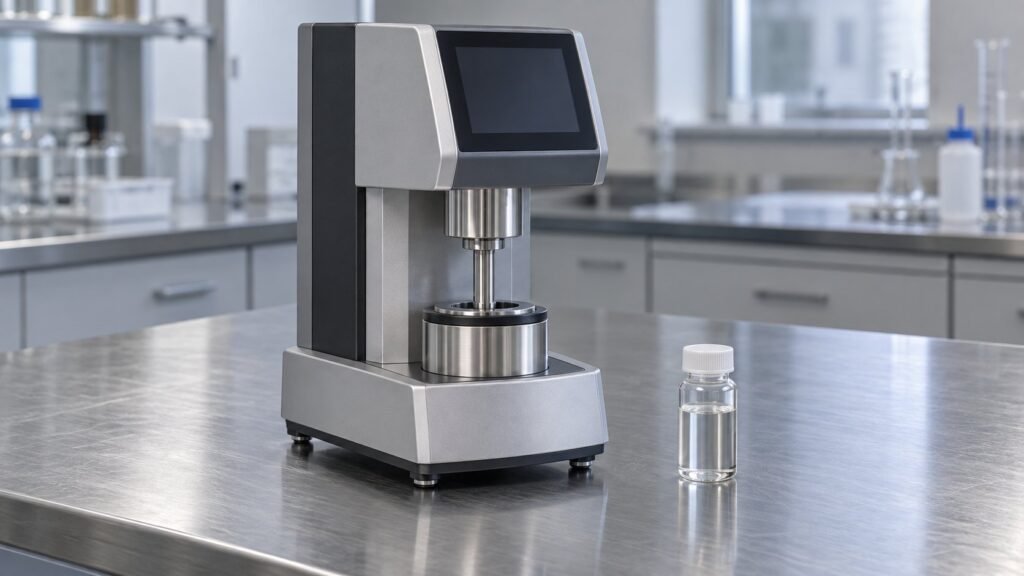
A viscosity experiment ASTM D7483 uses an oscillating piston to measure dynamic viscosity and derive kinematic viscosity. ASTM D7483-26 covers Newtonian and non-Newtonian liquids across 0.2–20,000 mPa·s and −40 °C to 190 °C, but its precision evidence applies to Newtonian liquids only. Your sample history and requested temperature determine whether comparison is defensible.
The customer-ready question is narrower than the instrument’s headline range: can your sample and temperature program be reported against the method’s precision evidence? D7483 Standard Test Method for Determination of Dynamic Viscosity and Derived Kinematic Viscosity of Liquids by Oscillating Piston Viscometer, ASTM D 7483:2026, and ASTM D7483 – 26 identify the current method. This brief converts those limits into a laboratory request.
What does a viscosity experiment ASTM D7483 measure?
A viscosity experiment ASTM D7483 measures dynamic viscosity directly and derives kinematic viscosity from the result using an oscillating piston viscometer. Clauses 1.1–1.4 define the measurement scope, applicable liquids, operating range, and SI reporting basis.
Clause 1.1 covers liquids such as new and in-service lubricating oils. Clause 1.2 also permits Newtonian and non-Newtonian liquids, but the precision statement was developed using Newtonian liquids. Clause 1.3 gives the operating envelope. Clause 1.4 makes SI units the standard reporting basis.
Which ranges can you claim under ASTM D7483-26?
ASTM D7483-26 separates the broad measurement envelope from the narrower ranges supported by its precision evidence. Use the first range to assess instrument scope, then use the second to judge whether a Newtonian comparison is supported.
| Reported scope | Value | Use when |
|---|---|---|
| Dynamic viscosity operating envelope | 0.2–20,000 mPa·s; −40 °C to 190 °C | Checking whether the requested measurement falls inside the published method range. |
| Precision range at 40 °C | 34–1,150 mPa·s | Comparing Newtonian new or used oils at 40 °C. |
| Precision range at 100 °C | 5.7–131 mPa·s | Comparing Newtonian new or used oils at 100 °C. |
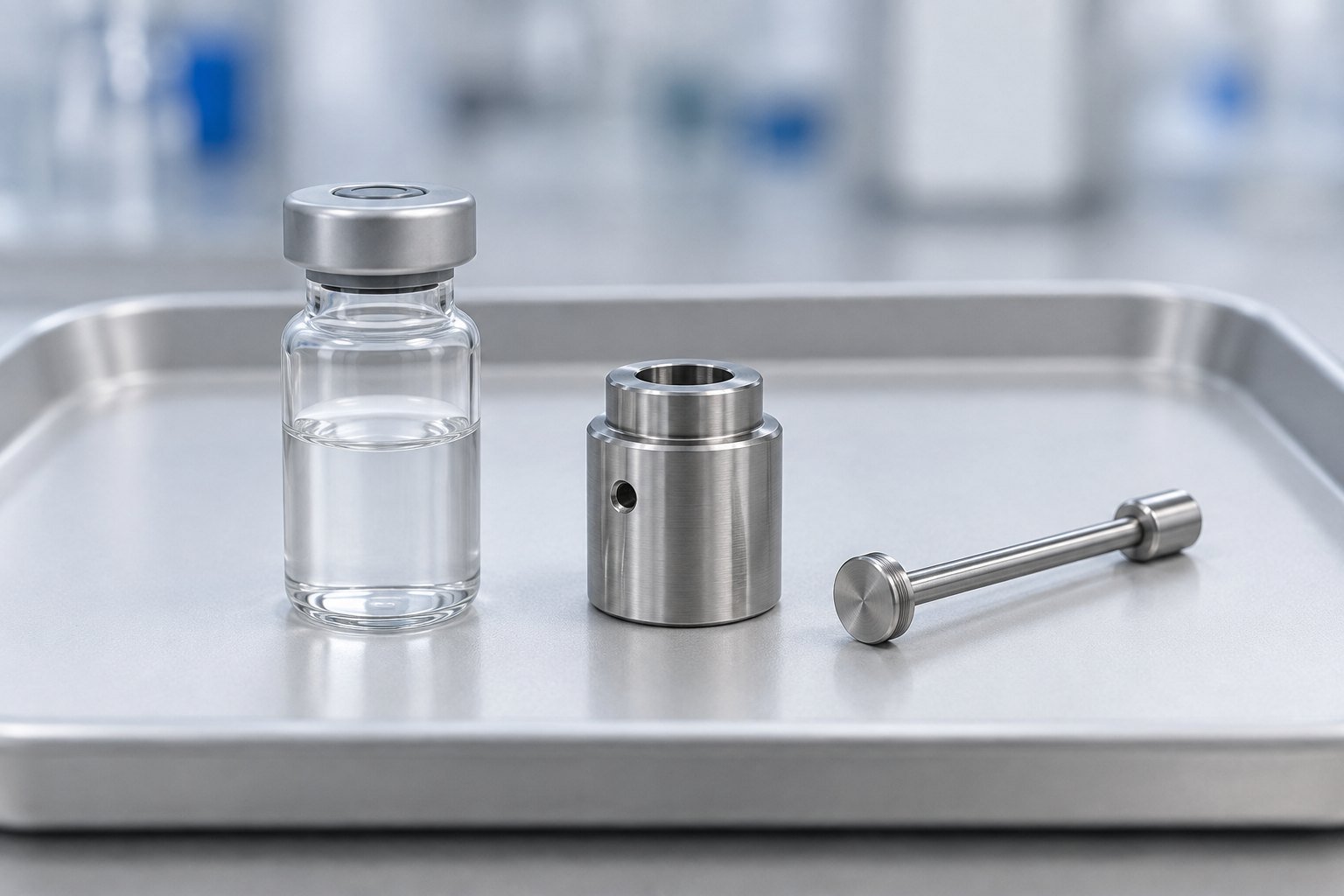
| Typical material requirement | Less than 5 mL sample; less than 10 mL solvent | Planning sample shipment, dilution, or cleanup volume. |
See also: The widest window: 0.1–20,000 cP across −30 °C to +40 °C
How do you turn the standard into a customer-ready brief?
Give the laboratory enough information to separate method fit from precision fit. Your brief should identify the liquid, temperature points, expected viscosity, sample volume, and any behavior that changes with shear history.
- Identify the sample and history. State whether the liquid is Newtonian or may change with shear history. Failure mode: treating a non-Newtonian result as universally comparable when the precision evidence is Newtonian.
- List every temperature point. Include the target temperature and allowed tolerance. Failure mode: requesting a condition outside the laboratory’s temperature range or outside the method’s −40 °C to 190 °C operating envelope.
- Compare expected values with both ranges. Mark whether each point is inside 34–1,150 mPa·s at 40 °C or 5.7–131 mPa·s at 100 °C. Failure mode: calling a value precision-supported when it sits only inside the broader operating envelope.
- Confirm material volume. Plan less than 5 mL of sample and typically less than 10 mL of solvent, as specified on the ASTM page. Failure mode: sending too little material for repeats or adding an unplanned solvent volume.
- Request repeat readings in SI units. Ask for each temperature, repeat value, and reported unit. Failure mode: receiving one unqualified number that hides repeat variation or omits the test condition.
See also: Small Sample Viscosity Test: A Decision Guide
What does a TestDSC result look like?
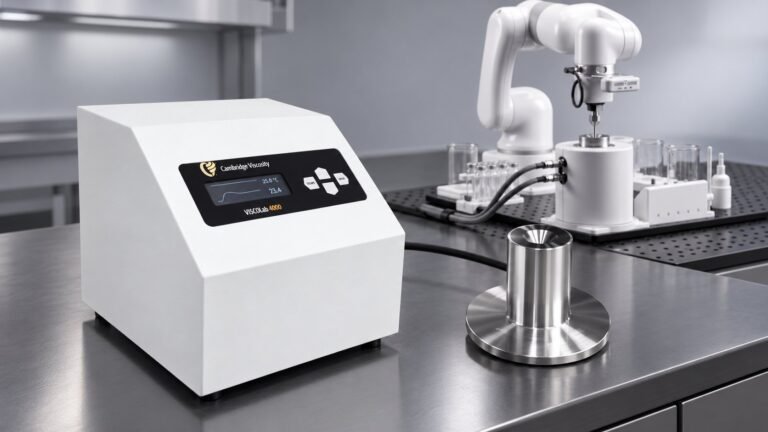
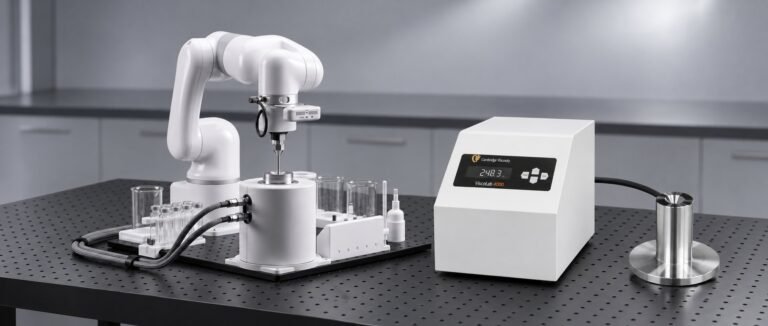
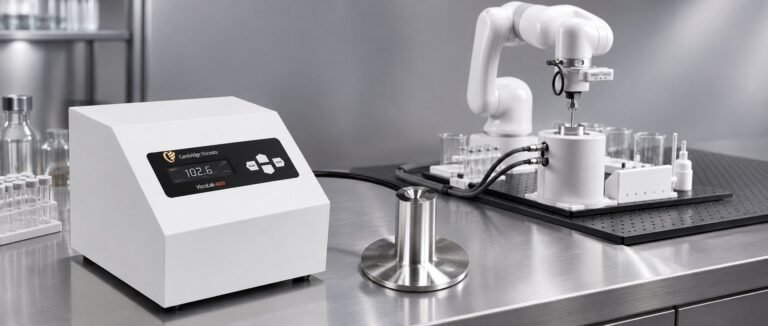
TestDSC runs an automated piston-based service from −30 °C to +40 °C with temperature increments of 0.1 °C. That range fits many room-temperature and low-temperature programs, but it does not cover the full ASTM D7483-26 envelope.
In one anonymized TestDSC service result, repeat readings were 412.6 and 413.1 mPa·s at 20 °C, followed by 188.4 and 188.7 mPa·s at 40 °C. We use repeat readings to show point-to-point behavior and to make the requested comparison traceable to temperature.
ASTM D7483-26 frequently asked questions
Can ASTM D7483-26 be used for non-Newtonian liquids?
Yes. Clause 1.2 includes non-Newtonian liquids, but the precision statement was developed using Newtonian liquids. Report the result with its test condition and avoid assuming universal comparability.
Does 20,000 mPa·s mean the result has precision support?
No. The 20,000 mPa·s value is the upper operating limit. Precision was determined only across narrower ranges, including 34–1,150 mPa·s at 40 °C and 5.7–131 mPa·s at 100 °C.
Can TestDSC run the full −40 °C to 190 °C range?
No. TestDSC’s automated piston-based service covers −30 °C to +40 °C in 0.1 °C increments. State your required program before submitting the sample.
What should you do before booking the test?
Send the sample identity, expected viscosity, temperature points, repeat requirement, and any known shear-history behavior. If the program fits TestDSC’s −30 °C to +40 °C service range, review the automated viscosity testing service and send the proposed conditions through TestDSC’s contact page →