DSC Sample Pan Pressure: A Selection Rule
 testDSC.Admin
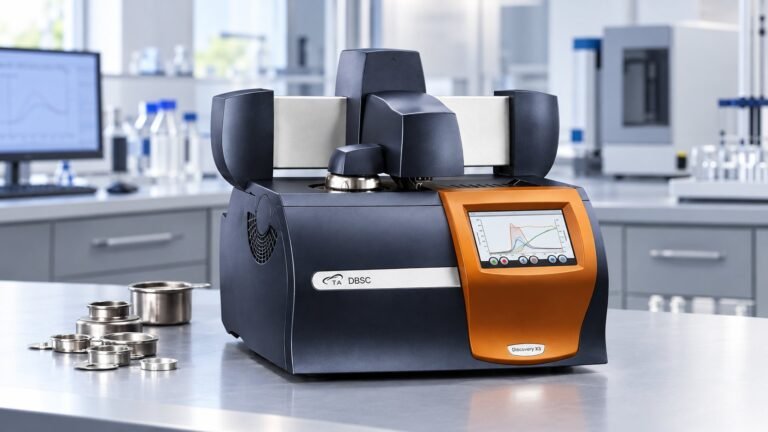
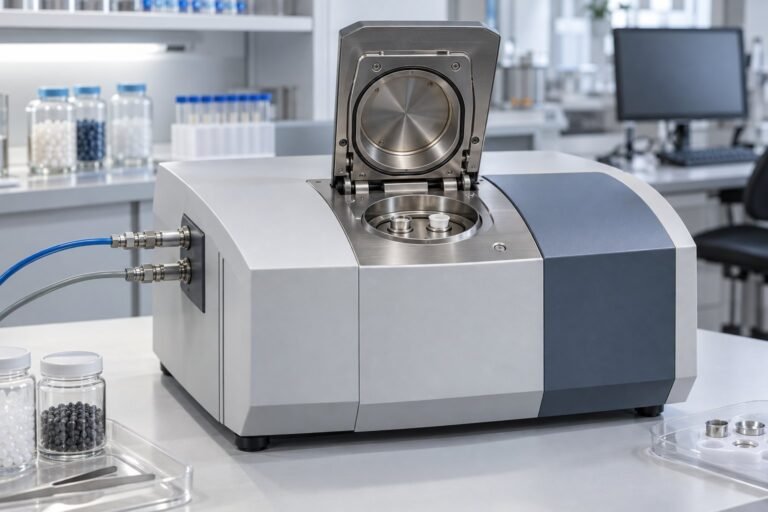
DSC sample pan pressure is a procurement decision, not a late-stage troubleshooting detail. A sealed pan can leak, deform, or hide mass loss, making the trace look like a material event. Choose standard, hermetic, pin-hole, or alternate-material pans from volatility, maximum temperature, expected pressure, and whether you need containment or controlled venting.
The University of Florida’s Experimental Conditions: DSC guidance assigns hermetic lids to liquid or volatile samples and requires them when TGA shows more than 0.5% weight loss over the requested range. These lids generally hold 2–3 atm internal pressure. The same guidance says the reference pan must match the sample pan type.
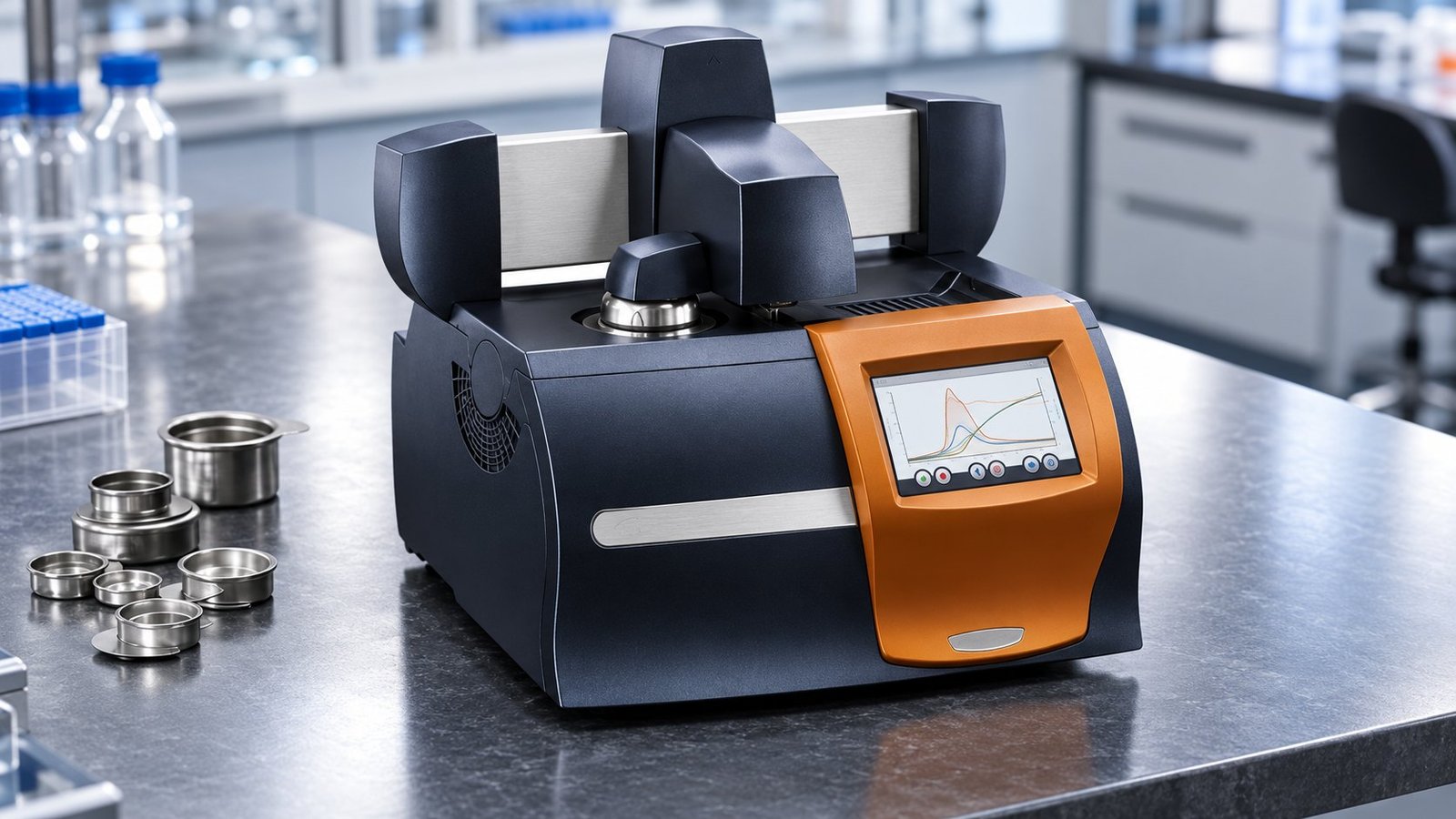
How does DSC sample pan pressure guide pan selection?
DSC pan selection should follow the sample’s volatility, the highest requested temperature, the pressure you expect, and the reportable objective. Use the table below before ordering pans or submitting a service request.
| Pan option | Sample volatility | Maximum temperature | Expected pressure | Use when |
|---|---|---|---|---|
| Standard aluminum | Solid and nonvolatile | Thermally stable range, normally below T95 − 10 °C | No intentional pressure increase | You need containment for a stable solid and no more than 0.5% expected loss |
| Hermetic aluminum | Liquid, volatile, or potentially decomposing | Below T95 − 10 °C and within the pan rating | Generally 2–3 atm internal pressure | You need containment and expected loss exceeds 0.5% |
| Pin-hole lid | Boiling or vapor-producing sample | Temperature range where controlled vapor release is required | Pressure is relieved through the hole | You need controlled venting while retaining most of the sample |
| Alternate-material pan | Reactive with aluminum, high-volume, or high-pressure sample | Often required above 600 °C | Candidate for pressure above 2 atm | The aluminum rating, chemistry, or volume is unsuitable; you provide matched sample and reference pans |
The University of Florida guidance says pin-hole lids require Lab Manager permission because venting can require cell cleaning. For alternate materials, both the sample and reference pans must be provided by the user. If your request must follow ISO 11357, state that reporting requirement before the pan is selected.
What causes DSC pan leakage or a false feature?
DSC pan leakage can begin with the seal, the fill level, the reference match, or the purge gas. A failure may create residue, a baseline change, or a start-up artifact that is easy to misclassify as sample behavior.
- An over-forced cold weld can cut into the pan and create an invisible seam. The University of Florida guidance says excessive pressing can produce a leak instead of a pressure-safe seal.
- Trapped expansion can buckle the seal or rupture the pan when a reactive or thermally expanding sample is overfilled.
- A leaking seal can leave discoloration or residue on the pan or in the cell. Stop and inspect the cell before treating the trace as reportable.
- An unmatched reference pan can create a start-up hook. TA Instruments’ Interpreting Unexpected Events and Transitions in DSC Results gives a 20 °C/min example using a reference pan weighing 0–10% more than the sample pan.
- Wet purge gas can produce a feature near 0 °C. Check the purge condition before assigning that feature to the material.
For best matching, the University of Florida guidance recommends the same pan base and lid type for the reference and sample, with the two pans within 0.5 mg. That mass match is separate from the sample’s own mass-loss result.
What should you include on a TestDSC pan-pressure request?
TestDSC needs enough information to select the pan and judge whether a mass change is reportable. We run DSC thermal analysis on customer-supplied samples, so the intake record must identify both the sample and the hardware.
- Sample mass in mg, including the target mass and the actual loaded mass when available
- Maximum temperature in °C, plus T95 if a TGA result exists
- Expected loss percentage, especially whether it exceeds 0.5%
- Pan model or part designation, including standard, hermetic, pin-hole, or alternate material
- Purge gas and flow rate in mL/min
- Whether the pan assembly will be weighed before and after the run
- Required reporting basis, such as ISO 11357, and whether containment or controlled venting is the objective
If you are comparing laboratories, the pan record is part of the method. Our Choosing a DSC Testing Lab: What to Look For article explains why sample traceability and reporting scope belong in the request.
An anonymized TestDSC intake example
One anonymized TestDSC record used 5.84 mg of a volatile liquid in a hermetic aluminum pan, with a 150 °C maximum temperature and nitrogen at 50 mL/min. The sealed pan assembly measured 28.612 mg before the run and 28.548 mg after it—a 0.064 mg decrease, or 1.10% of the loaded sample mass. The observed consequence was a baseline discontinuity, so the run was reported as mass-change affected and reopened for seal inspection rather than reported as a clean material event.

How should you document the result after the run?
Document the selected pan, reference match, purge condition, and pre/post mass whenever leakage or volatility could affect interpretation. A report should distinguish a measured mass change from a thermal event. If the work concerns oxidation induction, pair the pan record with our astm d3895 article. For aerospace materials, use the same discipline described in DSC Testing for Aerospace Materials: Ensuring Safety and Performance.
If crystallization behavior is the next question, the cooling method becomes a separate control. See our dsc analyse guidance after the pan-pressure decision is closed.
DSC sample pan pressure FAQ
What is hermetic pan pressure?
The University of Florida guidance states that aluminum hermetic lids generally hold 2–3 atm internal pressure. Treat that as a pan design limit, not a target operating pressure.
When should you use a pin-hole pan?
Use a pin-hole lid when the experiment requires controlled venting for boiling or vapor pressure behavior. Obtain Lab Manager permission because venting may contaminate the cell.
Why weigh a pan before and after DSC?
Pre/post weighing helps separate sample mass loss from an apparent thermal feature. It also gives the report a direct check against DSC pan leakage.
Choose the pan before the trace is ambiguous
Give TestDSC the sample mass, maximum temperature, expected loss, pan designation, purge gas and flow, and weighing plan before the run. We can then align containment, controlled venting, reference matching, and reportability through our dsc service.