Small Sample Viscosity Test: A Decision Guide
 testDSC.Admin
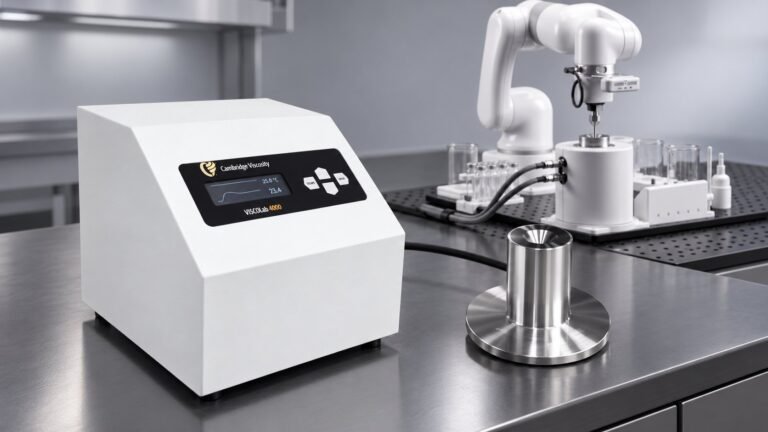
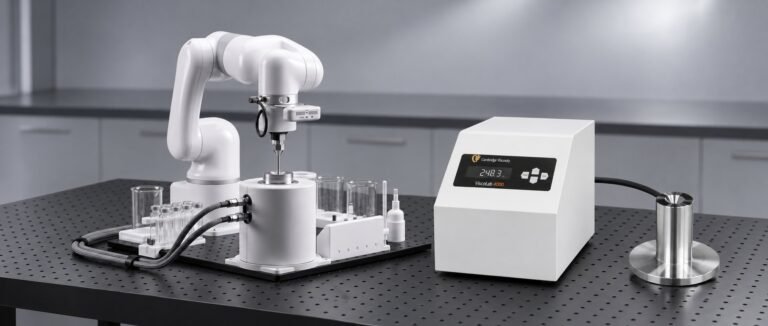
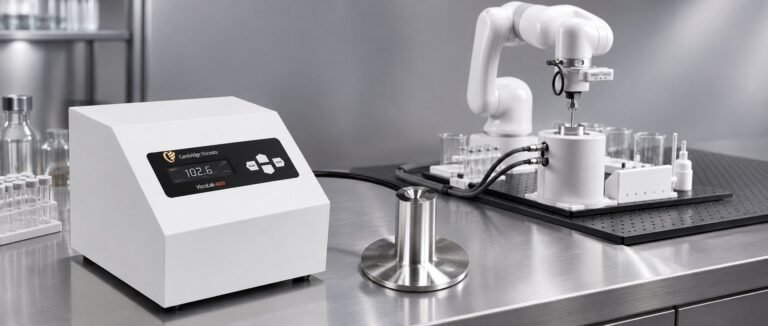
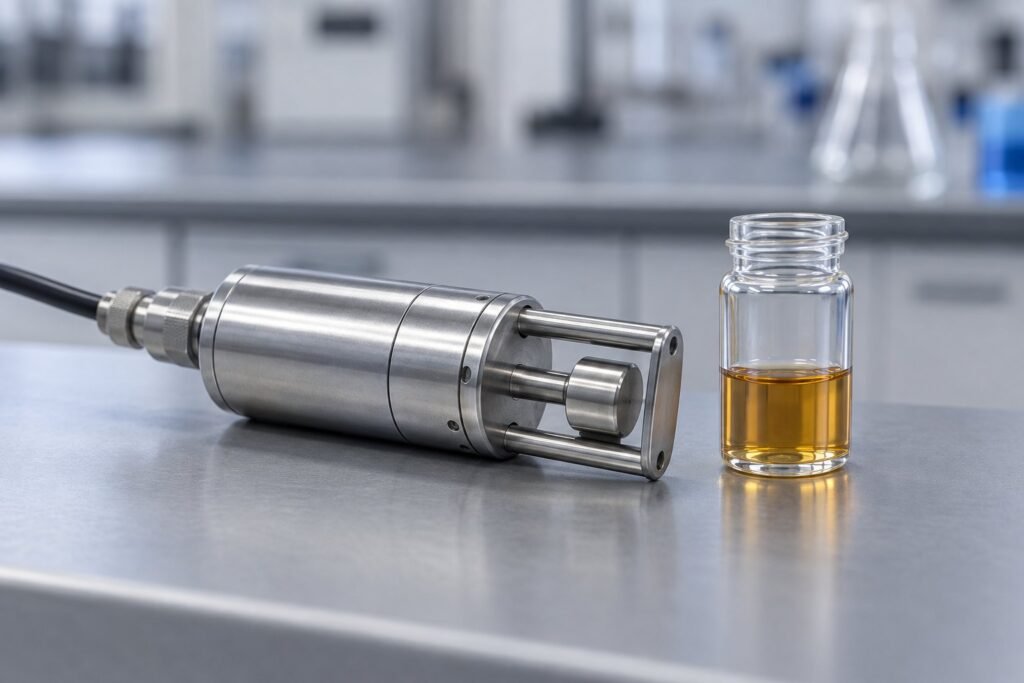
A small sample viscosity test can use less than 5 mL when you use the oscillating-piston method in ASTM D7483-26. That makes it suitable for scarce, high-value, or failed-batch liquids, but the standard’s broad scope does not mean every material has the same demonstrated precision at every temperature or viscosity.
Current small-sample buying pages mix unlike methods. Which Rotational Viscometer to Choose for Small Amounts of Samples? describes roughly 200–400 mL conventional rotational tests, 7–11 mL dedicated instruments, and 10–20 mL adapters. Kinematic Viscometer: Complete Buyer’s Guide 2026 reinforces that equipment-ranking view. The practical question is narrower: can your volume wet the sensor, and does the method’s precision evidence fit your sample?
How much sample does a small sample viscosity test need?
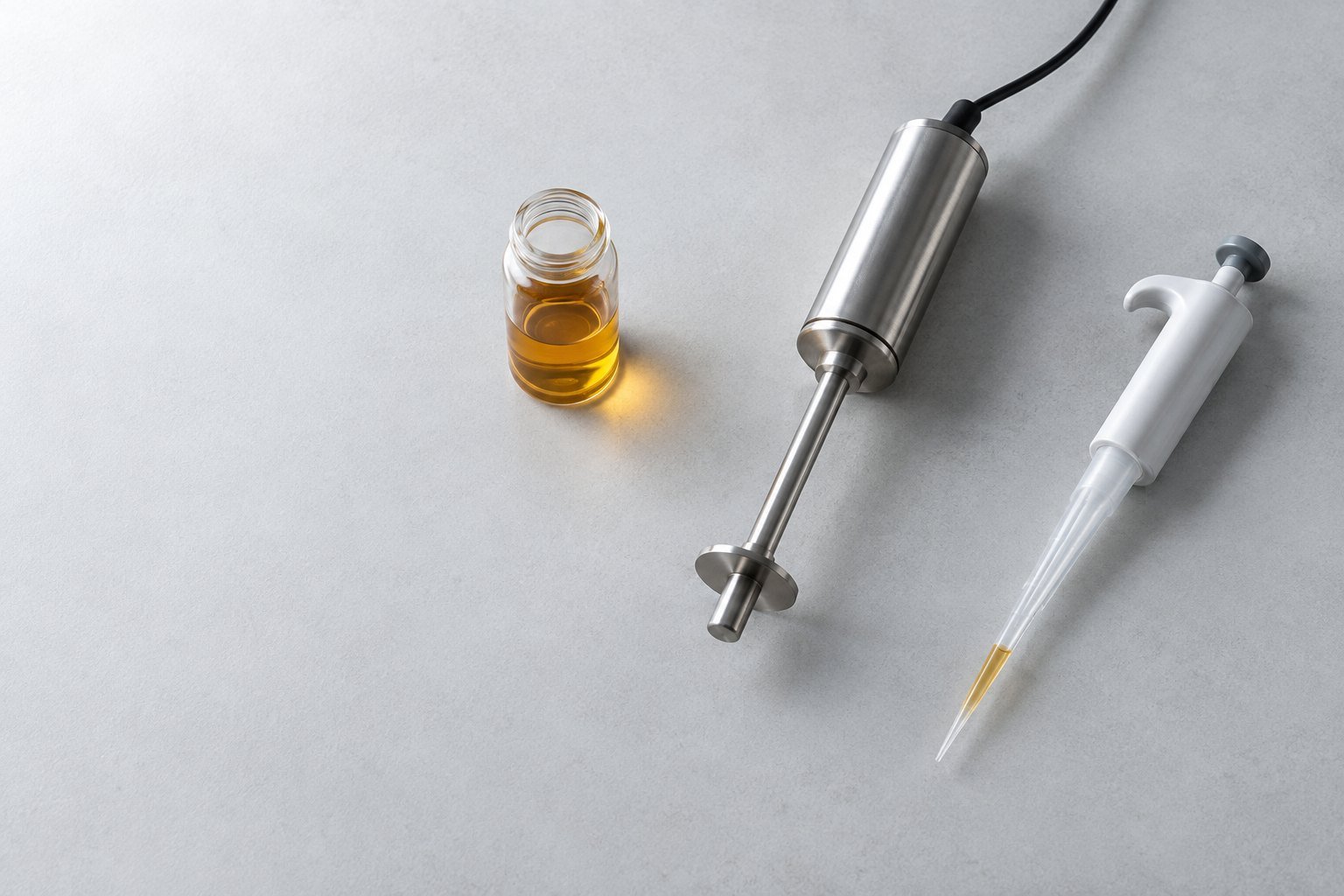
ASTM D7483-26 requires less than 5 mL of sample and typically less than 10 mL of solvent for its oscillating-piston method. That is materially smaller than the 7–11 mL and 10–20 mL figures commonly quoted for dedicated or adapter-based rotational instruments.
| Approach | Typical volume | Use when |
|---|---|---|
| Conventional rotational viscometer | Approximately 200–400 mL | You have ample batch volume and need conventional rotational geometry. |
| Dedicated low-volume rotational instrument | Approximately 7–11 mL | You have more than a few milliliters and need rotational behavior. |
| Rotational adapter | Approximately 10–20 mL | You can reserve adapter volume and meet its geometry. |
| Oscillating-piston method under ASTM D7483-26 | Less than 5 mL sample; typically less than 10 mL solvent | You have scarce liquid and the material fits the method scope. |
Treat the published volume as a method requirement, not as your shipping target. Your viscosity test sample volume should cover transfer losses, sensor wetting, dead volume, and planned replicates. TestDSC reviews the matrix, container, and available volume before committing a scarce sample to a run.
See also: viscosity experiment
What does ASTM D7483-26 actually cover?
ASTM D7483-26 covers dynamic viscosity from 0.2 mPa·s to 20,000 mPa·s at temperatures from −40 °C to 190 °C. Those figures define the method scope. They do not establish the same precision for every liquid, viscosity, or temperature.
| Evidence type | Range stated by ASTM D7483-26 | How to use it |
|---|---|---|
| Dynamic-viscosity scope | 0.2–20,000 mPa·s | Check whether the expected result falls within the method’s stated measurement range. |
| Precision evidence at 40 °C | 34–1,150 mPa·s for new and used oils | Use only when your material and condition resemble the stated precision study. |
| Precision evidence at 100 °C | 5.7–131 mPa·s for new and used oils | Do not extend this narrower evidence across the full scope. |
| Derived kinematic precision at 40 °C | 46.5–436 mm²/s | Treat this as a separate reported range, not as the dynamic-viscosity scope. |
ASTM D7483-26 applies to Newtonian and non-Newtonian liquids, but its precision statement was developed using Newtonian liquids. For a shear-dependent formulation, ask how replicates and temperature points will be interpreted. A result can be within the method scope without carrying the published Newtonian precision claim.
See also: Viscosity in synthesis and mixing: monitoring blends and reactions
Which viscosity method fits a scarce sample?
Choose oscillating-piston micro-volume viscosity testing when your available liquid is below the practical charge for rotational equipment and the sample fits ASTM D7483-26. Choose a rotational method when geometry, shear behavior, or a larger sample volume matters more than minimizing consumption.
| Question | Decision |
|---|---|
| Do you have less than 5 mL? | Screen ASTM D7483-26 first, then confirm wetting and the laboratory’s sensor minimum. |
| Do you have 7–20 mL? | Compare dedicated rotational instruments, adapters, and oscillating-piston testing against your data objective. |
| Do you have more than 20 mL? | A conventional rotational method may be practical if its geometry matches the product. |
| Is the liquid non-Newtonian and precision-critical? | Request a replicate plan and method limitation statement. Do not apply Newtonian precision as a blanket claim. |
The best method is not determined by volume alone. A failed batch may need a comparison at one controlled temperature, while a formulation study may need several setpoints and replicate data. Define the decision before you reserve the sample.
How does TestDSC run a small sample viscosity test?
From DSC admin: TestDSC plans on 4.0 mL as the routine minimum for an oscillating-piston service run. ASTM D7483-26 states that the instrument requires less than 5 mL, but the 4.0 mL planning floor leaves working margin for transfer, wetting, and repeat measurements.
What does the temperature-scanning workflow include?
- We inspect the container and sample condition, then mix without adding foam. A visibly stratified or foaming sample can create a non-representative charge before measurement begins.
- We transfer the planned charge and verify complete sensor wetting. Insufficient wetting produces unstable readings and can make the run non-reportable.
- We equilibrate at selected temperature points and collect replicate readings after stabilization. For one anonymized failed-batch resin, the sequence included 25 °C, 40 °C, 60 °C, and 80 °C.
- We report the replicate count, mean, and standard deviation. At 40 °C, three replicates measured 836, 842, and 848 mPa·s, giving a mean of 842 mPa·s and a standard deviation of 6.0 mPa·s.
What causes a low-volume run to fail?
- Insufficient wetting: the liquid does not cover the active sensor area, so the oscillation response is incomplete.
- Trapped bubbles: gas around the sensor interrupts liquid contact and increases replicate spread or causes erratic values.
- Sample volume below the sensor requirement: the piston cannot complete a valid response, so the instrument may stop or produce no reportable result.
What else should you know about a small sample viscosity test?
Is less than 5 mL always enough?
No. Less than 5 mL is the ASTM D7483-26 instrument requirement, not a universal shipping recommendation. Container shape, transfer loss, wetting, bubbles, and replicate needs can raise the practical minimum.
Can ASTM D7483-26 be used for non-Newtonian liquids?
Yes. The scope includes Newtonian and non-Newtonian liquids. The published precision statement, however, was developed with Newtonian liquids, so your report should identify that limitation.
What viscosity test sample volume should you send?
For a routine TestDSC oscillating-piston run, plan on 4.0 mL. If you have less, confirm feasibility before shipping because the actual minimum depends on the sample and container.
How should you submit a scarce viscosity sample?
Your submission should include the matrix, available volume, required temperature range, and whether you need replicates. If you have less than 4.0 mL, confirm the container and wetting plan before shipping. Use our small-sample viscosity testing service →. For a volume check, contact TestDSC with your sample plan →.