Low-temperature viscosity testing: cold-flow behavior down to −30 °C
 testDSC.Admin
For oils, lubricants and many formulations, behavior at low temperature separates a working product from a failed one. As fluids cool, viscosity can climb by orders of magnitude — and the shape of that rise is exactly what cold-climate performance depends on.
A controlled sweep
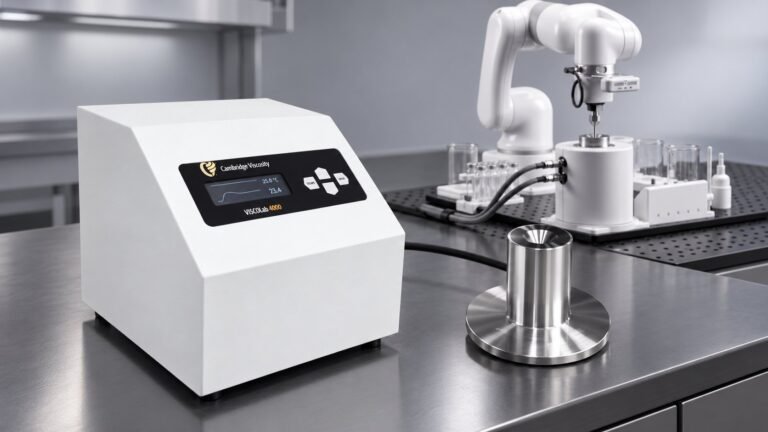
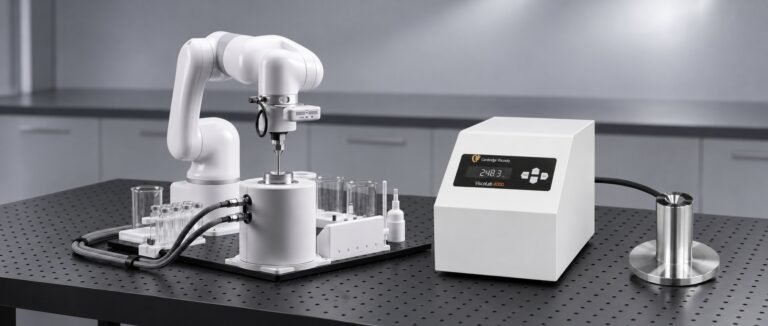
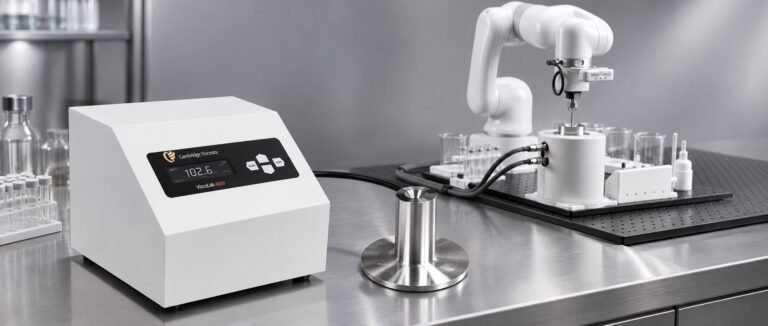
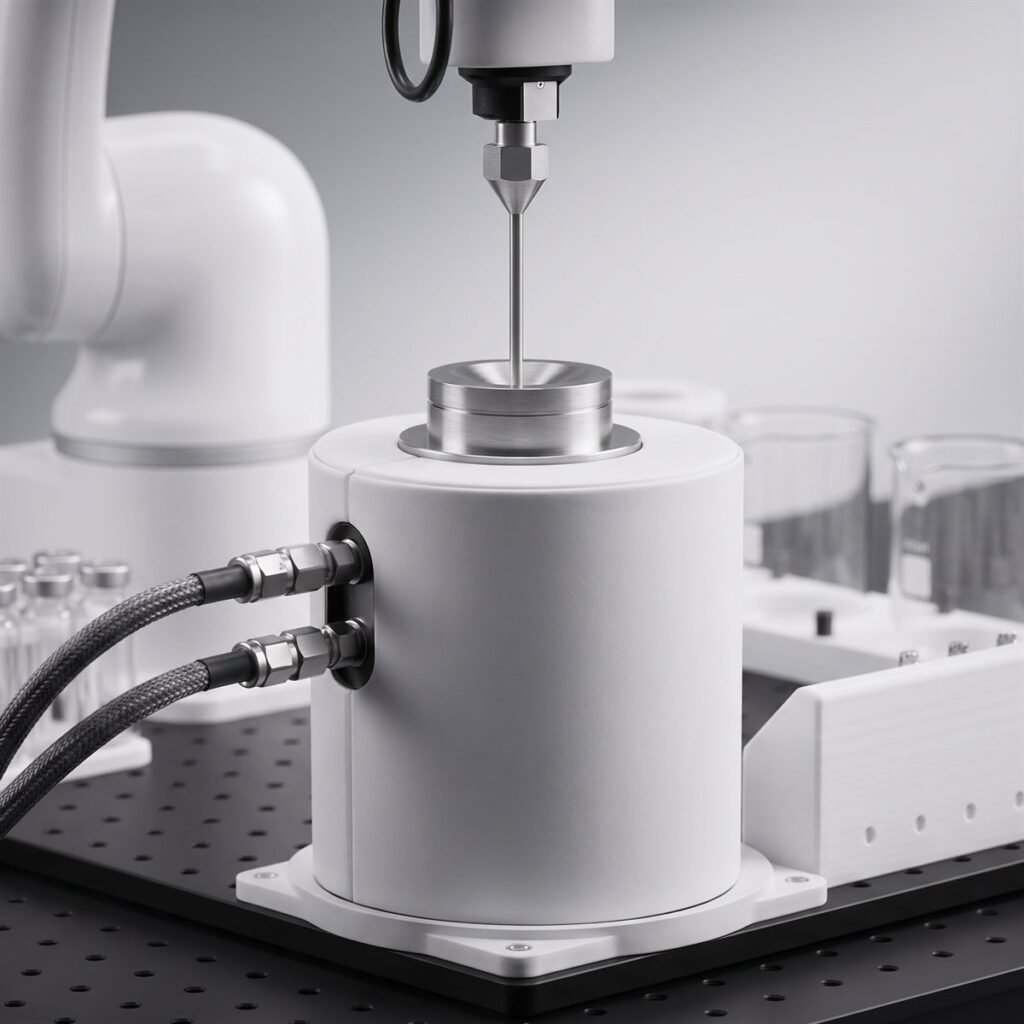
The viscometer sits in an engineered thermal jacket fed by a circulating bath. Temperature is driven smoothly down to −30 °C while the piston sensor reads continuously, so the entire cold-flow curve is captured — useful context alongside single-point ASTM D2983 Brookfield results.
Four ranges, one cell
Interchangeable pistons span 0.1 to 20,000 cP, so a fluid that thickens dramatically on cooling stays in range from start to finish.
Request low-temperature viscosity testing →
See also: Viscosity testing for paints and coatings
See also: Temperature-scanning viscometry: viscosity vs. temperature the ASTM D5133 way