Viscosity Testing Turnaround Time: What to Confirm
 testDSC.Admin
Viscosity testing turnaround time is the elapsed business time from an agreed sample-ready start to delivery of the data and report. It is not a fixed instrument speed. Sample validation, sample count, temperature points, repeats, cleaning, data review, and report scope determine the schedule. Confirm each variable before shipping so your quoted date means something.
Automated testing can collect thousands of readings, but automation does not remove sample preparation, temperature conditioning, purge cycles, or review. This guide connects those tasks to your viscosity testing lead time so you can request a schedule that matches the actual run.
What does viscosity testing turnaround time include?
At TestDSC, the normal service window for standard viscosity work is 5–7 business days. The clock starts on the first business day after your sample arrives and the test scope is confirmed. It ends when the agreed data package and report are released.
A quote should therefore state the sample receipt condition, requested temperature program, repeat count, and report format. If your sample is unsuitable, incomplete, outside the instrument range, or requires a revised method, the schedule can pause before measurement begins.
Which variables change the testing schedule?
The schedule expands when the job moves from one conditioned reading to a multi-sample temperature program. Sample validation, vial count, temperature points, repeats, cleaning between samples, data review, and report customization each add work or decision points.
| Scope item | Scheduling effect | Confirm before shipment |
|---|---|---|
| Sample suitability review | May pause the clock if the material is unstable, insufficient, or outside the requested range. | Expected viscosity, phase behavior, sample history, and available volume. |
| Number of samples | More vials increase loading, measurement, purge, and review time. | Sample count and whether up to eight vials can be grouped in one run. |
| Temperature points | A full scan takes longer to condition and review than one setpoint. | Setpoints, scan limits, increment, and required tolerance. |
| Repeat measurements | Replicates add measurement cycles and data checks. | Number of repeats and whether results require a mean, range, or individual values. |
| Cleaning between samples | Incompatible or high-residue samples can require additional purge or cleaning steps. | Sample order, residue risk, and any known settling or gelation. |
| Report customization | Graphs, calculations, method notes, and custom tables add review time. | Required units, plots, raw-data format, and acceptance criteria. |
If material is scarce, confirm whether the required replicates fit the available volume. The small sample size viscosity testing guide helps you decide whether a limited sample can support the requested program.
How does TestDSC scope an automated temperature scan?
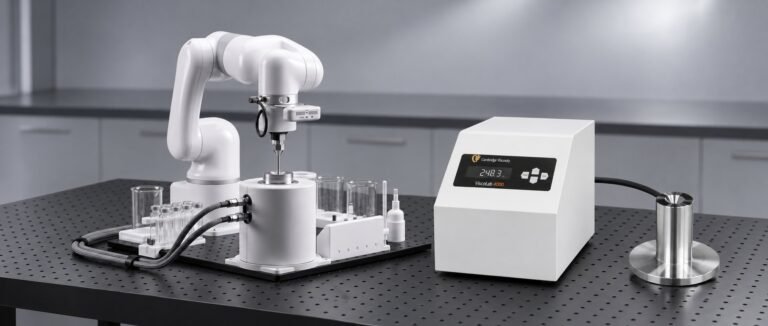
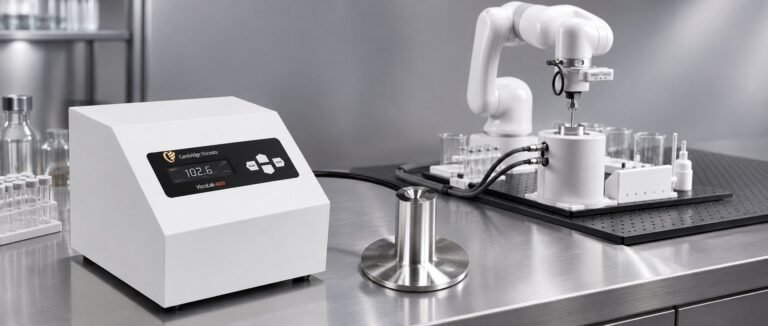
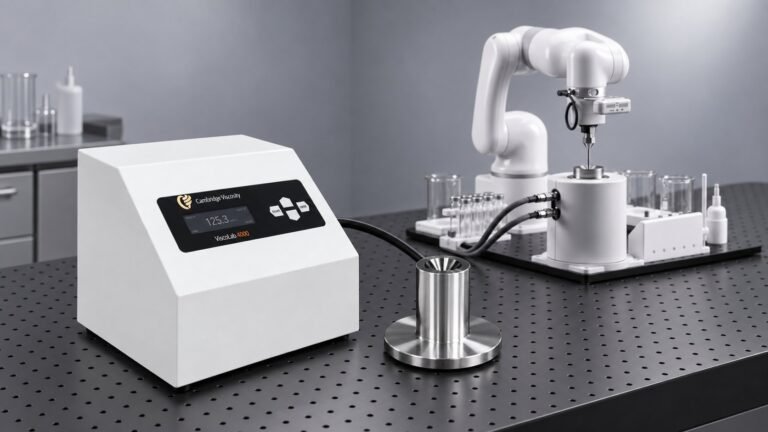
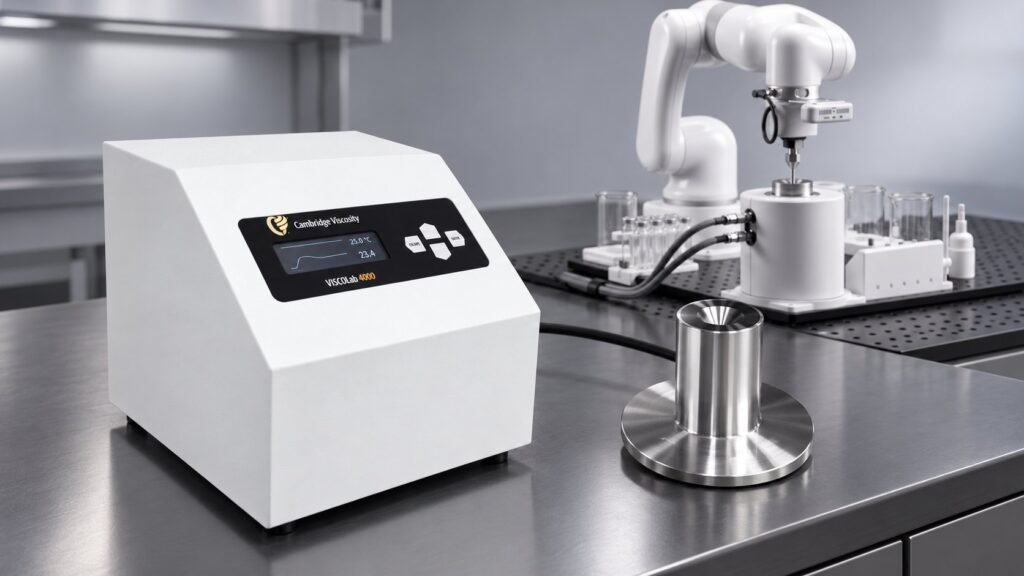
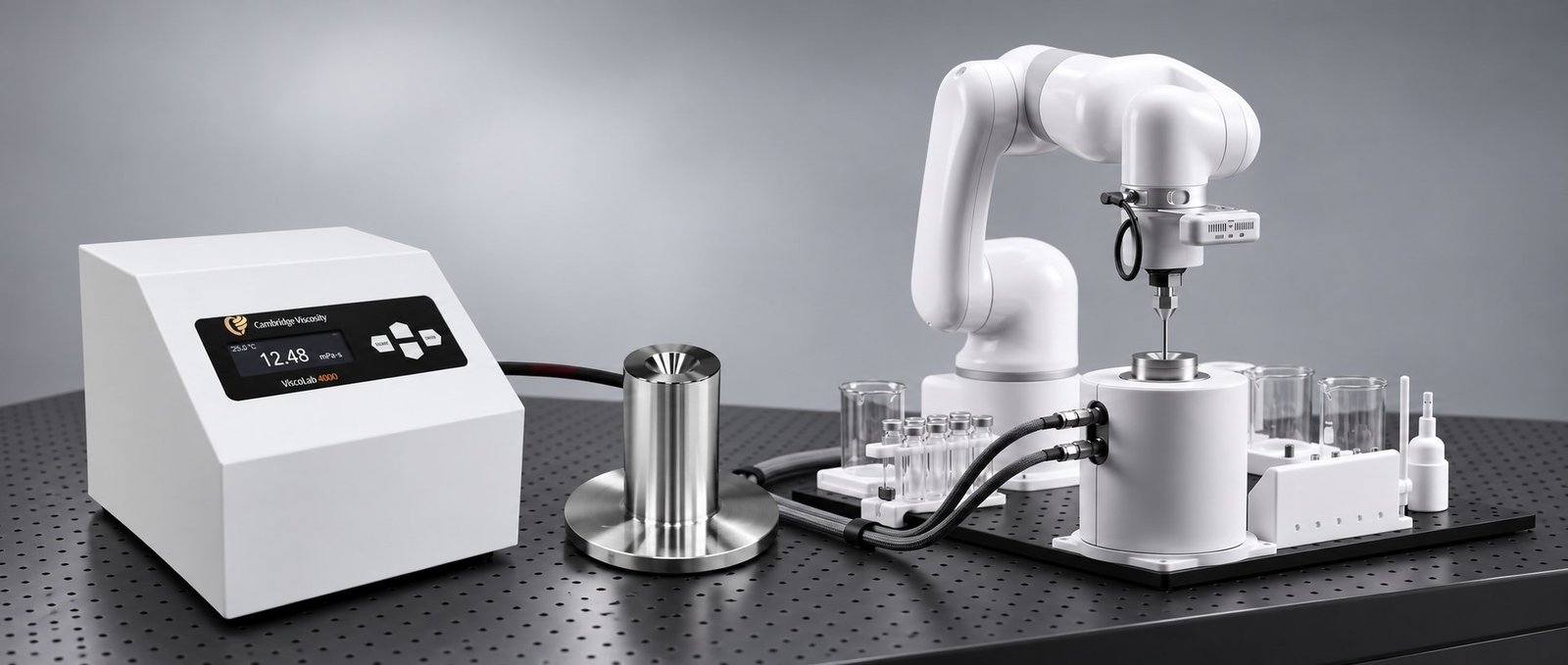
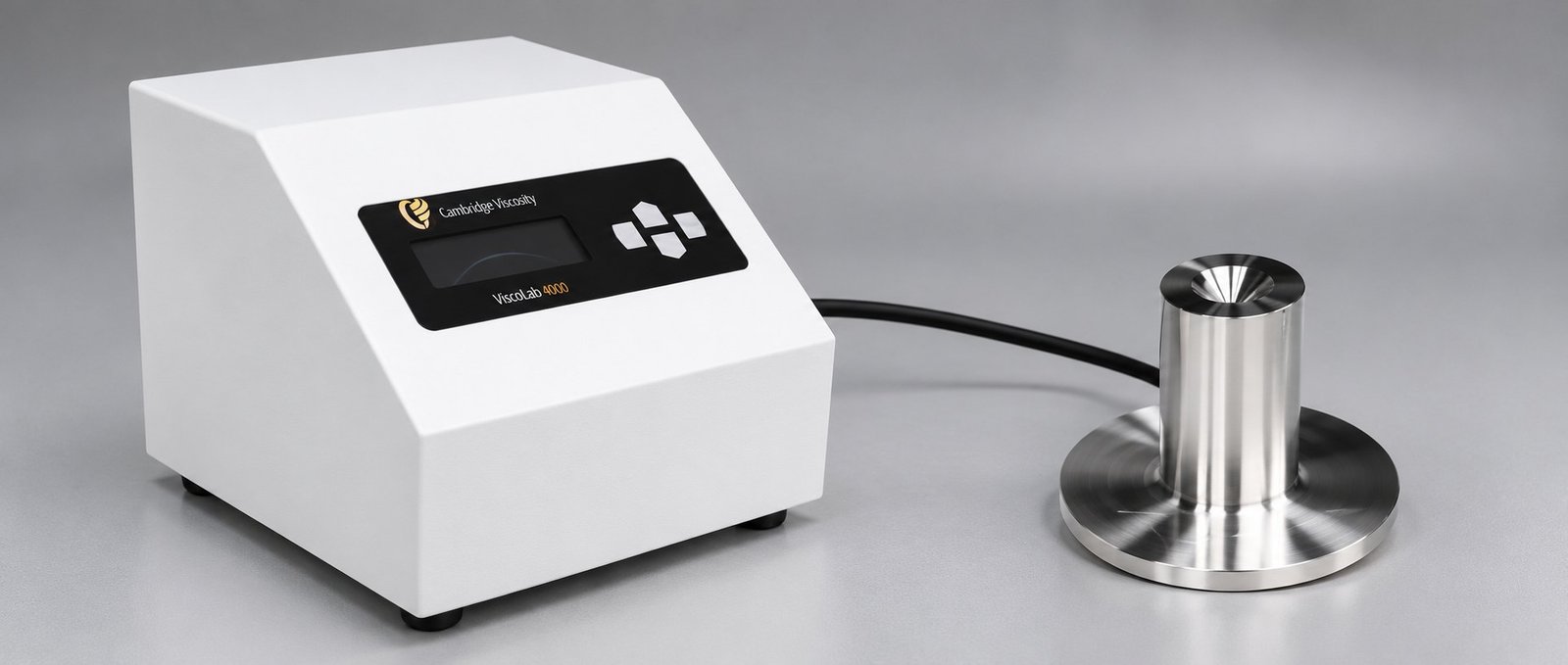
TestDSC uses a Cambridge VISCOlab 3000 piston-style viscometer for automated temperature-scanning service. The system covers −30 °C to +40 °C, records at 0.1 °C resolution, measures 0.1–20,000 cP, and can stage up to eight vials with robot-driven handling.
A full scan is not the same scheduling task as a single-point measurement. TestDSC selects the appropriate piston range, conditions the sample, collects the temperature-dependent data, checks the curve, and prepares the agreed output. If your purchase request names ASTM D7483-26, confirm fit first because that method’s broader operating envelope is not identical to −30 °C to +40 °C.
Extra samples and repeats can change the quoted schedule even when the robot runs unattended. The added time comes from vial handling, piston changes, purging, cleaning, repeat verification, and data review. TestDSC confirms the final date after reviewing the complete sample list and program.
What do published laboratory lead times actually tell you?
Published lead times are service-specific examples, not universal benchmarks. A useful viscosity laboratory turnaround statement must identify the test volume, complexity, validation requirement, and report scope behind the number.
| Service example | Published timing | How to interpret it |
|---|---|---|
| TestDSC standard viscosity work | 5–7 business days | Use for a standard scoped request from sample receipt and confirmed conditions. |
| Medallion Labs rheology characterization | 7–9 business days | Prior sample validation is required. Rush work may take half the standard time at double the charge, subject to eligibility. |
| Centre for Industrial Rheology Brookfield service | 36–72 hours | The stated rheology testing turnaround depends on testing volume and complexity. |
Medallion Labs requires prior sample validation because an unsuitable sample can produce invalid results or be rejected. The Centre for Industrial Rheology describes a 36–72-hour window for its Brookfield service, but ties that timing to volume and complexity. Neither figure should be treated as a universal promise for another laboratory or method.
What should you include in a quote request?
- Sample identity, formulation or grade, lot number, and available volume in mL.
- Expected viscosity range in cP or mPa·s, plus any density data needed for cSt conversion.
- Required temperature range, setpoints, increment, and tolerance in °C.
- Number of samples, repeats, and any reference or control sample.
- Known settling, gelation, phase separation, shear history, or cleaning concerns.
- Requested standard, clause, instrument condition, or viscosity test method.
- Required report content, raw-data format, graphs, calculations, and target delivery date.
FAQ: viscosity testing turnaround time
Does automation guarantee a shorter turnaround?
No. Automation increases repeatable handling and overnight capacity, but sample validation, temperature conditioning, cleaning, data review, and reporting still affect the schedule.
Do extra samples or repeats change the quoted date?
They can. More samples and replicates add cycles, purges, range changes, and review. Ask whether the additional work fits within the original 5–7-business-day window.
Can a rush policy be assumed for every viscosity test?
No. Medallion Labs states that some assays cannot be rushed, while its eligible rush work uses half the standard time at double the charge. Confirm rush eligibility and scope with the laboratory before shipping.
What should you confirm before you ship?
A defensible schedule names the sample receipt trigger, temperature program, repeat count, cleaning requirements, report contents, and delivery date. For a scoped request, review TestDSC’s viscosity test price and service range, then send the sample details needed to confirm the actual run window →