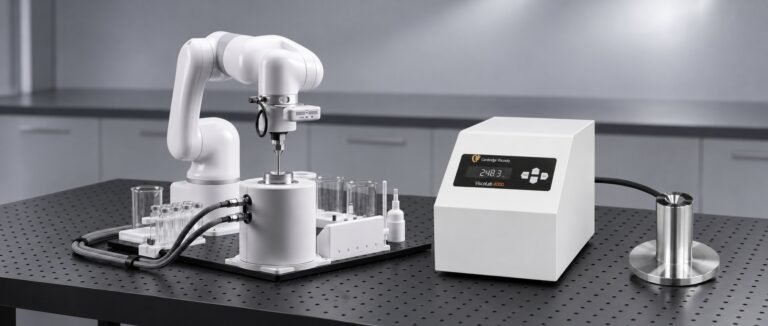
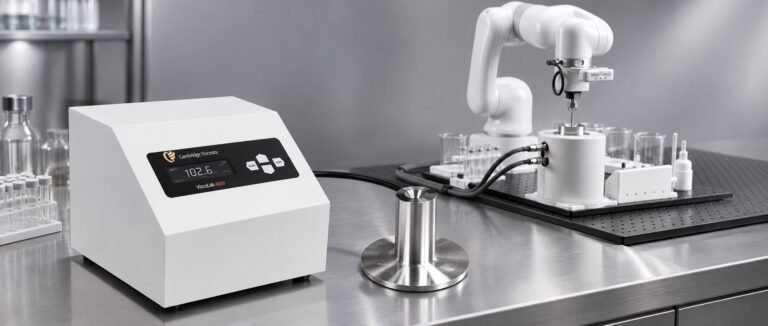
A measurement service for temperature-dependent fluids
Send us your samples. We deliver a complete, traceable map of viscosity versus temperature — the kind of dataset that normally takes weeks of manual benchwork.
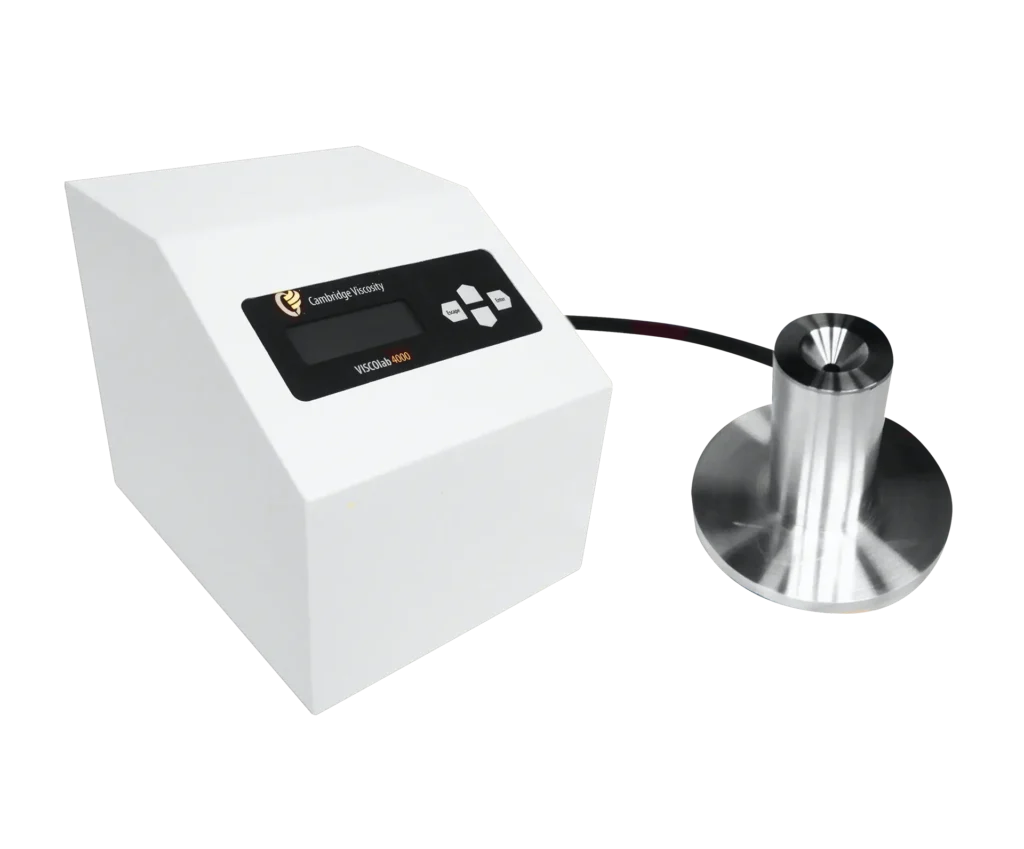
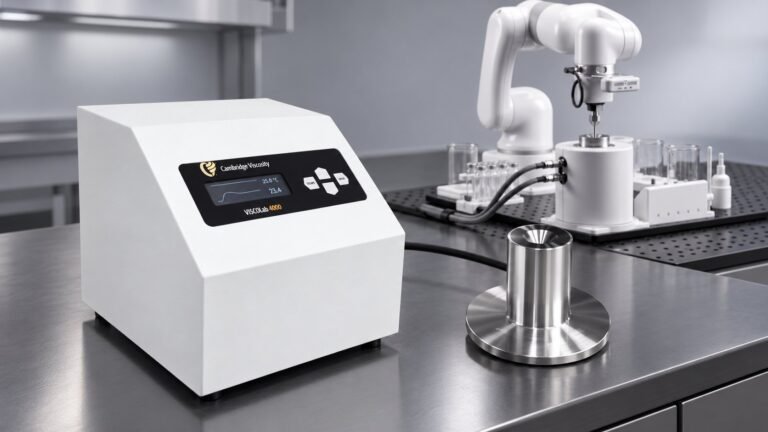
Cambridge VISCOlab 3000
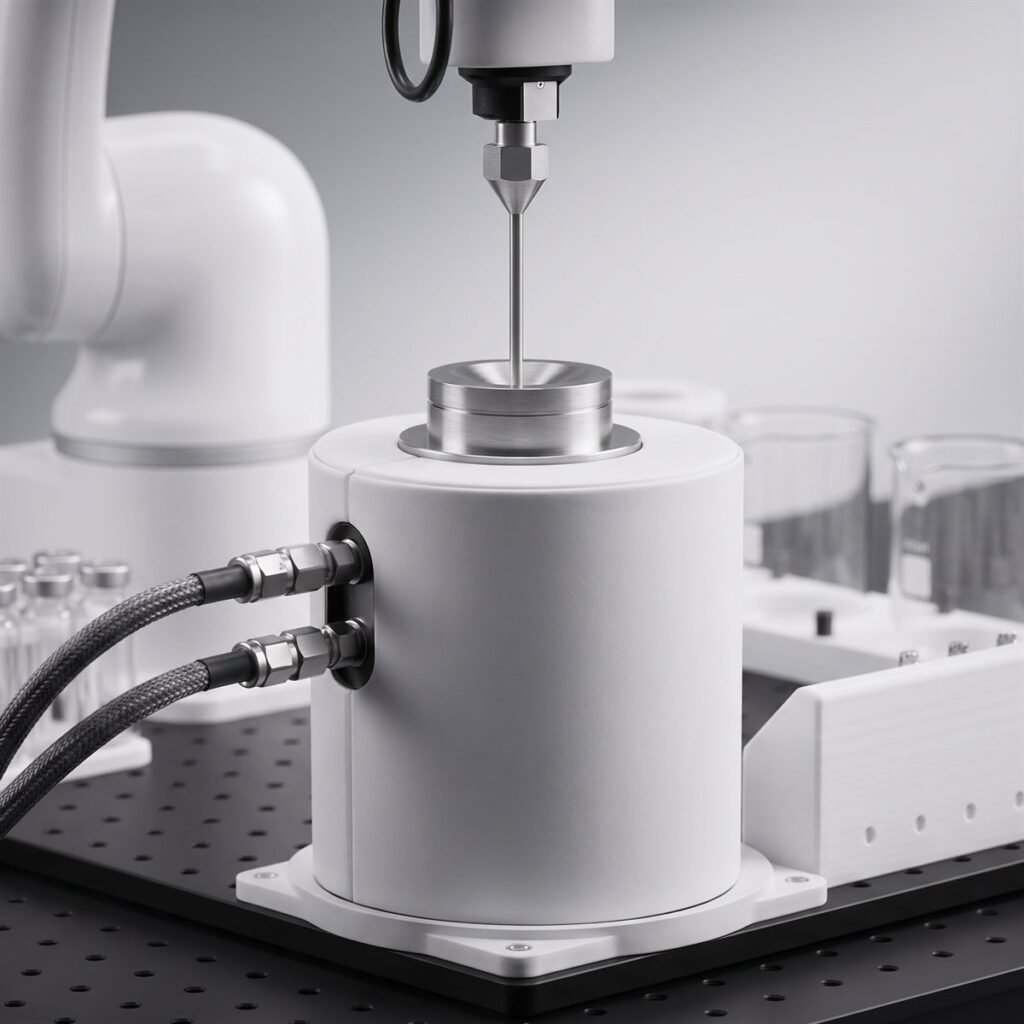
A piston-style viscometer coupled to a heat-pump cooling/heating bath, with four interchangeable pistons that span the full viscosity range.
| Viscometer | Cambridge VISCOlab 3000 (piston-style) |
|---|---|
| Viscosity range | 0.1 – 20,000 cP |
| Pistons | 4 interchangeable, different cP ranges |
| Temperature | −30 °C to +40 °C via heat-pump cooling/heating bath |
| Resolution | One reading per 0.1 °C |
| Output | Dynamic viscosity (cP), live plot + Excel log |
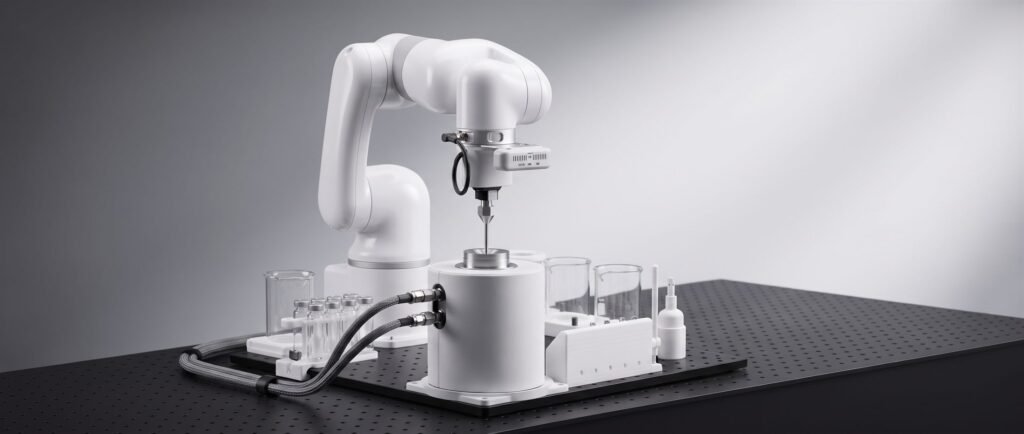
Stage the samples
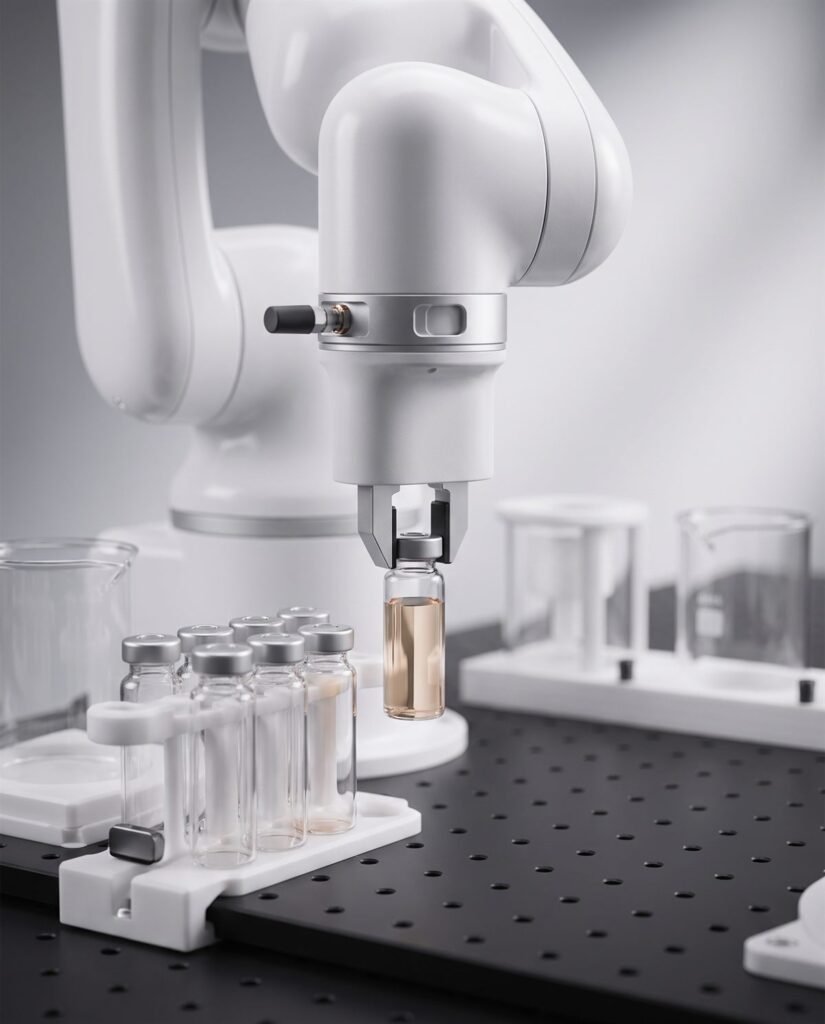
Up to eight solutions load into the in-line vial rack — the robot takes it from there.
Pick & fill
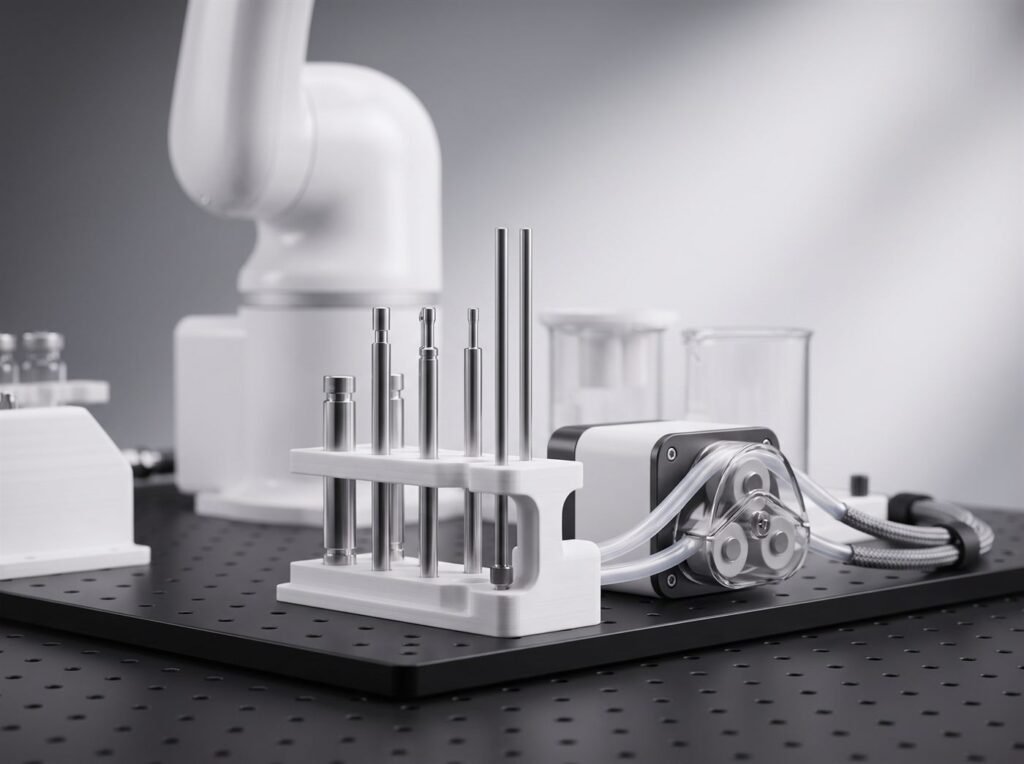
The arm selects a vial; the pump fills the viscometer and sets the matching piston for the range.
Sweep temperature
The circulating bath drives the viscometer from −30 °C to +40 °C while the sensor reads continuously.
Log every 0.1 °C
MATLAB live-plots viscosity vs. temperature and logs to Excel — thousands of points per sample.
A real measurement, start to finish
uFactory Lite 6 arm
Six-axis robot that handles vials, pistons and lids through the full cycle.
Piston viscometer
Cambridge VISCOlab 3000 sensor in an engineered thermal jacket — 0.1 to 20,000 cP.
Pump & piston station
Peristaltic pump and multi-piston station fill, empty and re-range the cell.
Latest on viscosity testing
Viscosity Testing Turnaround Time: What to Confirm
Viscosity testing turnaround time is the elapsed business time from an agreed sample-ready start to delivery of the data and report. It…
Read more →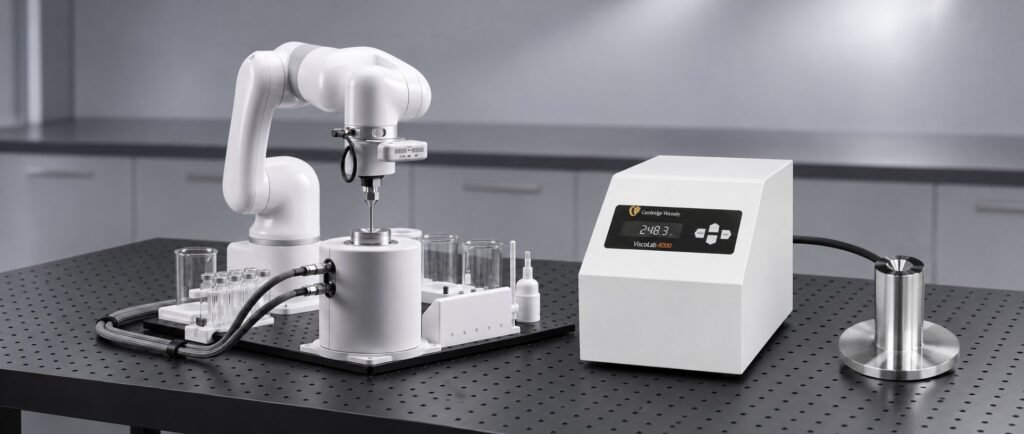
Polymer Viscosity Analysis for Comparable Reports
Polymer viscosity analysis is comparable only when laboratories match the result type, polymer concentration, solvent, temperature, shear condition and reporting units. A…
Read more →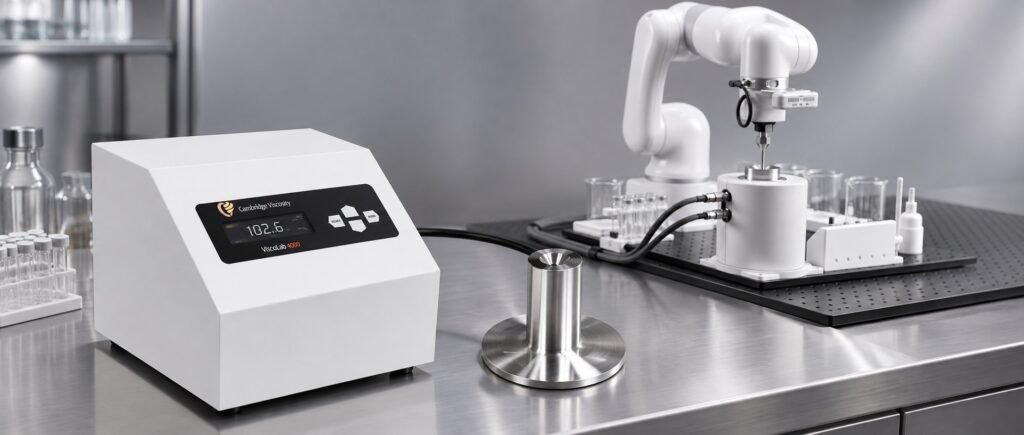
High Viscosity Meaning: How to Classify It
High viscosity meaning is strong resistance to flow, not a universal numeric classification. A liquid is “high” only relative to its temperature,…
Read more →Put your fluid on the curve
Tell us what you want to measure and we will scope the run, turnaround and quote.