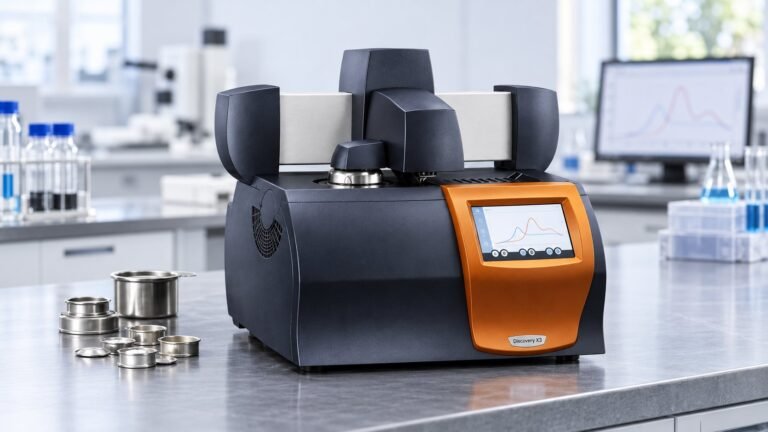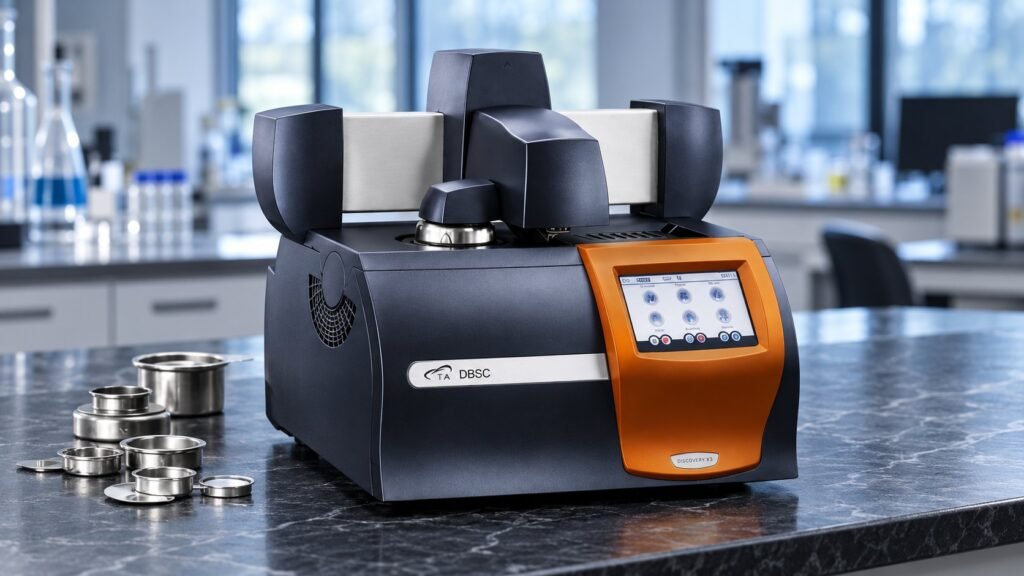
Coin Cell DSC: When Whole-Cell Data Matters
 testDSC.Admin
Coin cell DSC tells you how an assembled CR2032 responds to a controlled temperature program, including coupled electrode, electrolyte, separator, and electrical effects. Conventional DSC on harvested parts can locate component exotherms, but it cannot prove whole-cell thermal stability. Choose whole-cell data when configuration, state of charge, or internal failure behavior controls your safety decision.
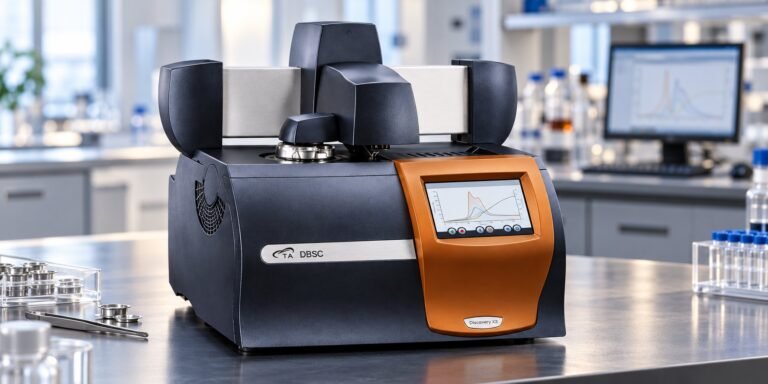
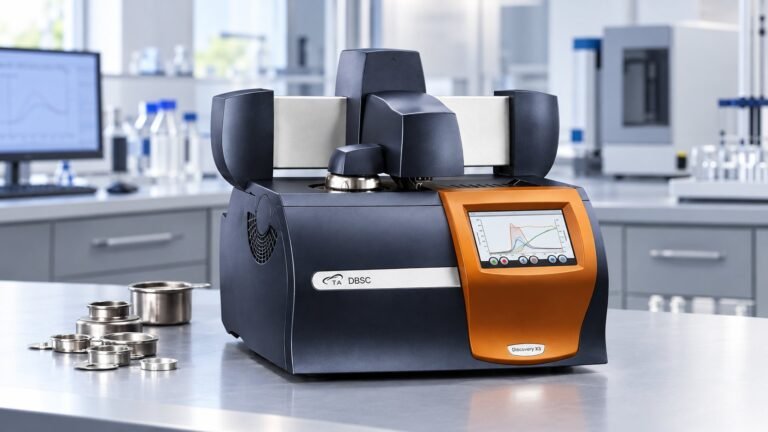
A June 2026 launch made direct intact-cell measurement more practical, but the decision boundary remains analytical. TestDSC runs DSC as a service on customer-supplied samples. Specify whether you need material behavior, a component interaction, or the response of an assembled CR2032 or 20 mm coin cell.
What does coin cell DSC measure that component DSC cannot?
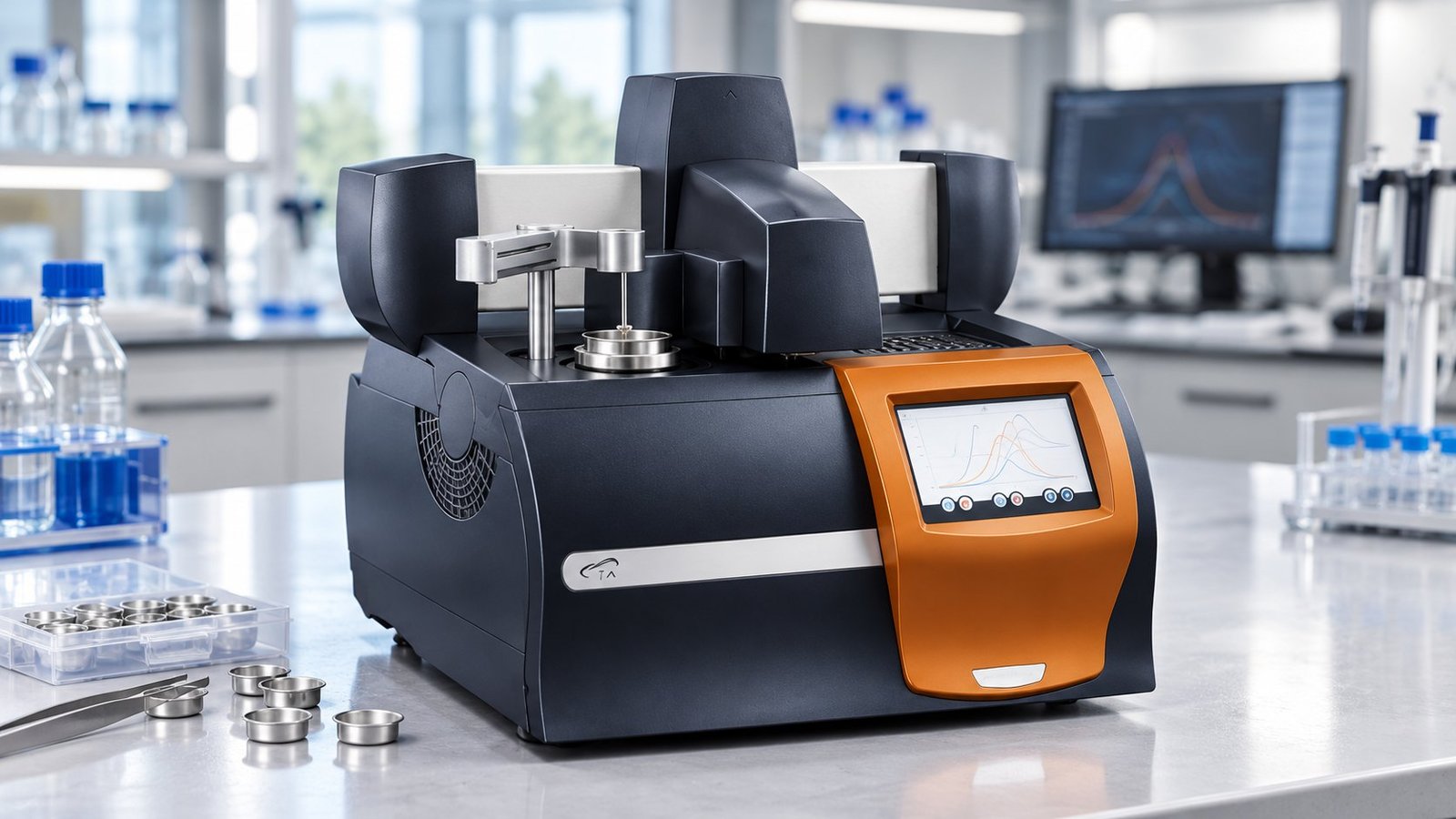
Coin cell DSC measures the thermal response of the assembled cell, while conventional DSC measures the response of the material placed in the pan. Whole-cell data can connect heat flow with voltage behavior, state of charge, internal short circuit behavior, and the timing of coupled reactions.
A harvested cathode, anode, electrolyte, or separator can show an onset temperature or heat release. That result does not prove the same event occurs at the same temperature or intensity inside a sealed CR2032. For the basic measurement principle, the site’s What is Differential Scanning Calorimetry (DSC)? explanation is the useful starting point.
| Method | Sample | Use when | Does not prove |
|---|---|---|---|
| Conventional DSC | Harvested cathode, anode, electrolyte, or separator | You need a material onset, transition, or reaction screen | Complete-cell heat release or internal electrical failure |
| Whole-cell DSC | Intact CR2032 or 20 mm coin cell | Cell geometry, state of charge, or voltage behavior controls the decision | That a component-level result is interchangeable with the cell result |
| Component-stack DSC | Cathode, anode, electrolyte, and separator assembled in a capsule | You need controlled interaction data without testing an operating full cell | The electrical response of an intact cell |
When do you need whole-cell DSC for coin cell thermal stability?
You need whole-cell DSC when the safety question concerns the assembled architecture rather than one ingredient. It is the stronger choice for comparing charged and discharged cells, separator designs, electrolyte changes, or failure triggers that depend on electrical connection.
- Choose component-level DSC for formulation screening, electrode comparison, or identifying which material contributes an exotherm.
- Choose whole-cell DSC for coin cell thermal stability at a stated state of charge, including a charged CR2032 at 100% SOC.
- Choose whole-cell data when you need voltage monitoring alongside heat flow.
- Choose a component stack when you need separator and electrolyte interactions but cannot submit an intact cell.
For DSC battery safety, define the failure trigger before the run. Examples include an internal short circuit or an exotherm at a stated state of charge. A result without the trigger, cell construction, and SOC is difficult to compare across builds.
How does cell configuration change heat release?
Cell configuration changes both the magnitude and timing of an exotherm. A 2026 NMC811–graphite study reported 618 J/g for a cathode–anode–electrolyte–separator micro-cell, versus 1,139 J/g without the separator.
The study attributed the difference to transport and reaction timing. The separator restricted oxygen movement between cathode and anode, changing how cathode-derived oxygen reached anode lithium. The micro-cell also showed a broader response, with an onset around 110 °C. This is why a separator-free component result cannot stand in for whole-cell behavior.
The paper’s micro-cell was a controlled component assembly, not an electrochemically operating full cell. That distinction matters. It can approximate coupled chemistry, while whole-cell DSC preserves the assembled electrical and mechanical context.
What does the Coin Cell DSC method actually specify?
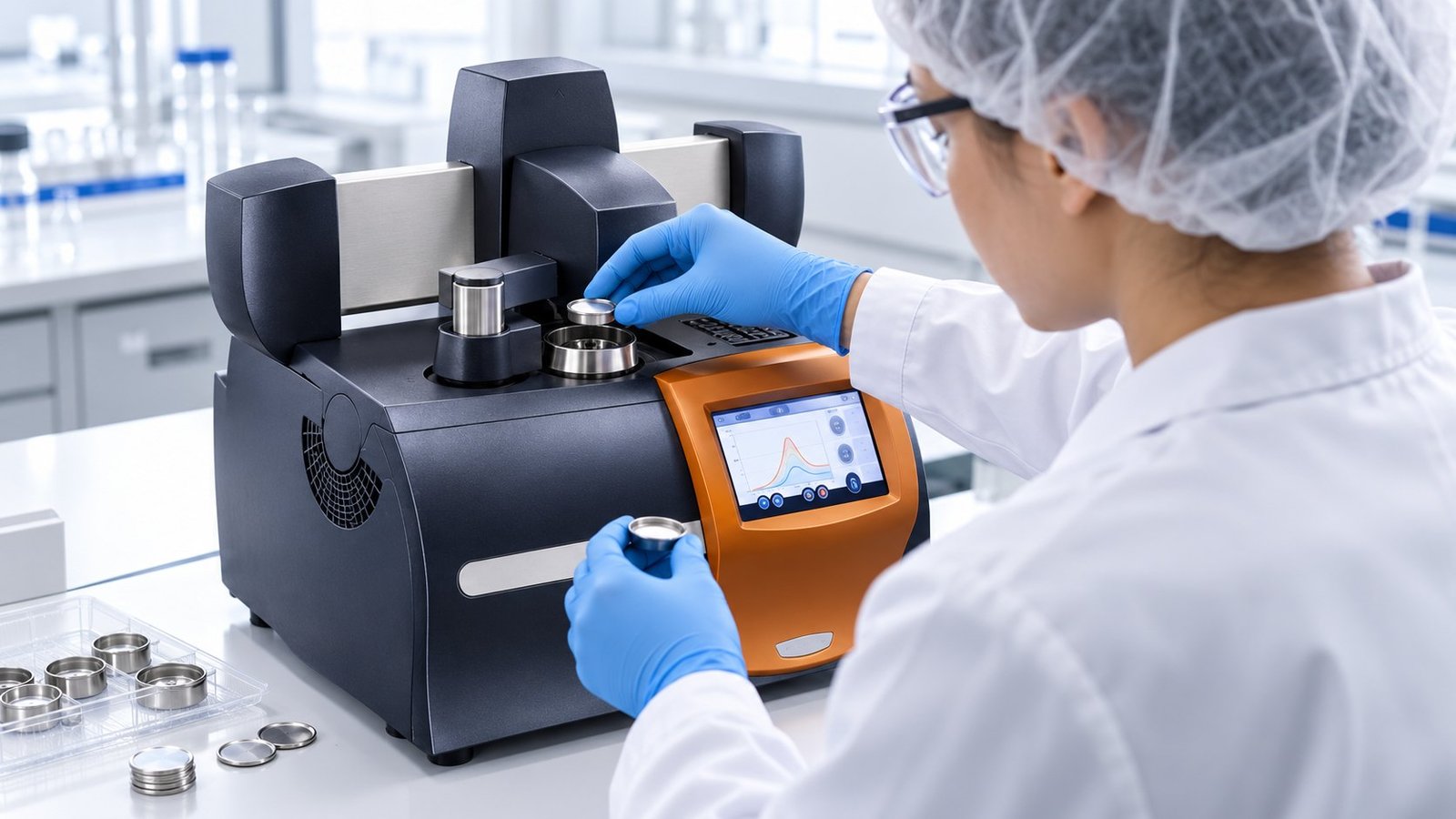
The Waters launch describes direct testing of fully constructed 2032 coin cells without teardown. Waters claims a sample-preparation reduction above 90%. The system includes voltage monitoring and supports correlation between heat flow and electrochemical behavior.
The TA Instruments Coin Cell DSC product page lists a temperature range of -80 °C to 600 °C and heating rates from 0.01 °C/min to 20 °C/min. It also lists baseline flatness of ≤500 µW, baseline repeatability of ≤100 µW, and a standard coin-cell capsule rated to 600 °C.
Use ISO 11357-1:2023 Clauses 3.1 and 4.1 as the method anchor. DSC compares sample and reference heat flow under the same temperature program and specified atmosphere. The standard gives general principles, sampling, calibration, procedure, and reporting requirements. It does not make a component result equivalent to an intact-cell result.
If your team needs a scan-mode refresher, the site’s dsc article covers the difference between conventional and fast scanning. For interpreting reported transitions and heat flow, use the guide to differential scanning calorimetry dsc analysis.
How should you specify a TestDSC battery DSC sample?
Confirm with TestDSC whether intact cells are accepted before shipment. Acceptance depends on the cell condition, state of charge, construction, and current safety-handling boundary. If intact cells are not accepted, request an anonymized component-level report with the actual mass, capsule, atmosphere, scan rate, onset temperature, and heat release.
What should an anonymized component-level run show?
A useful reference is the 2026 NMC811–graphite run. The reported micro-cell contained 5.0 mg cathode, 4.50 mg anode, 4.88 mg electrolyte, and 1.0 mg separator—15.38 mg total. It used a 40 µL aluminum pan, nitrogen at 150 mL/min, and a 10 °C/min scan from 25 °C to 600 °C. The reported micro-cell onset was approximately 110 °C, with 618 J/g heat release.
| Field | Specification to request |
|---|---|
| Sample identity | Cathode, anode, electrolyte, separator, or assembled CR2032 |
| Actual sample mass | Mass in mg, including the basis used for J/g |
| Pan or capsule | Pan material, volume, capsule designation, and sealing or piercing condition |
| Atmosphere | Gas identity, flow rate in mL/min, and whether the system is sealed or vented |
| Scan program | Start and end temperatures in °C and rate in °C/min |
| Thermal result | Onset temperature in °C, peak temperature in °C, and heat release in J/g |
| Failure trigger | Internal short circuit, exotherm, or other trigger with stated SOC |
What should you define before shipment?
- Identify the cell chemistry, model class, separator, electrolyte, and construction. Missing configuration can hide the transport barrier that changes an exotherm.
- State the SOC and charge history. For example, the cited CR2032 work defined 100% SOC after charging to 4.2 V using a CC–CV protocol. An unstated SOC weakens failure comparison.
- Name the trigger: internal short circuit, thermal exotherm, or another defined event. A general request for battery safety does not define the failure mode.
- Require the report to show actual mg, pan or capsule designation, atmosphere, scan rate, onset in °C, and heat release in J/g. Without these fields, the result is hard to reproduce.
Coin Cell DSC FAQ: What should you ask?
Can component-level DSC prove whole-cell safety?
No. Component-level DSC can identify reactive materials and useful onset temperatures. It cannot prove the heat release, oxygen transport, voltage response, or internal short-circuit behavior of an assembled cell.
Is a component stack the same as whole-cell DSC?
No. A component stack preserves selected chemical and transport interactions inside a capsule. Whole-cell DSC tests the assembled CR2032 or 20 mm coin cell and can include voltage monitoring.
What should you confirm with the testing service?
Confirm intact-cell acceptance, safe shipping requirements, allowed SOC, capsule type, atmosphere, scan rate, temperature range, and the reporting basis for J/g. Ask for an anonymized component-level example if intact cells are outside scope.
How do you choose the right DSC service?
Choose conventional DSC when you need to screen a harvested material. Choose a component stack when separator and electrolyte interactions matter. Choose whole-cell DSC when the decision depends on an assembled CR2032, its state of charge, voltage behavior, or an internal failure trigger. Start with TestDSC’s DSC thermal analysis service and specify the configuration that matches your safety question →