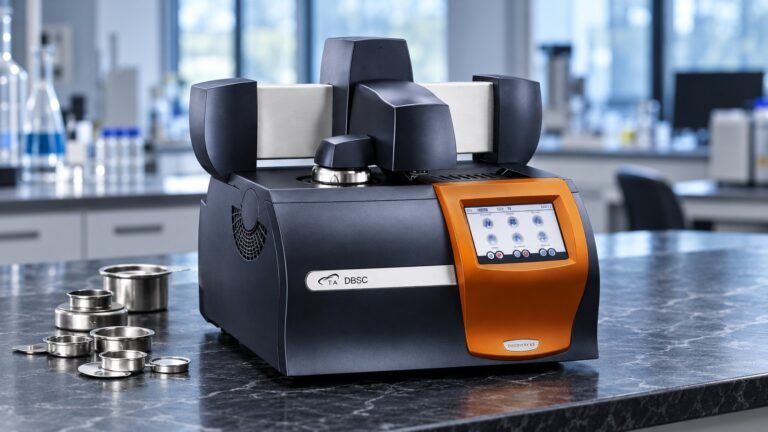
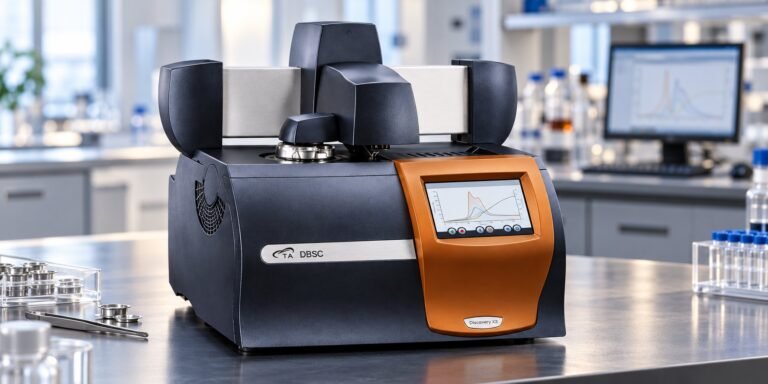
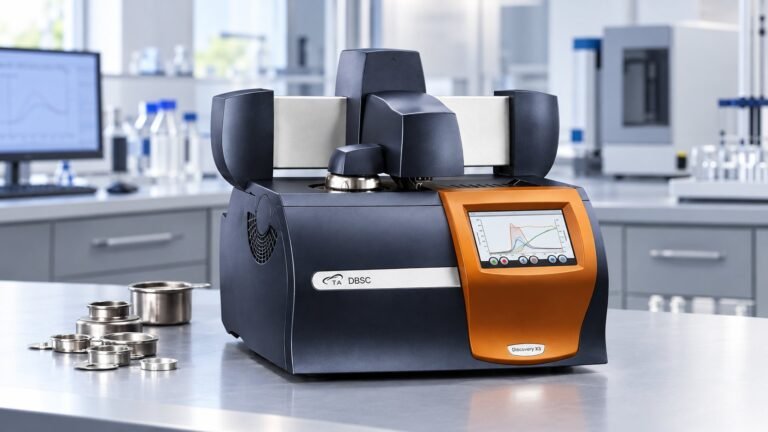
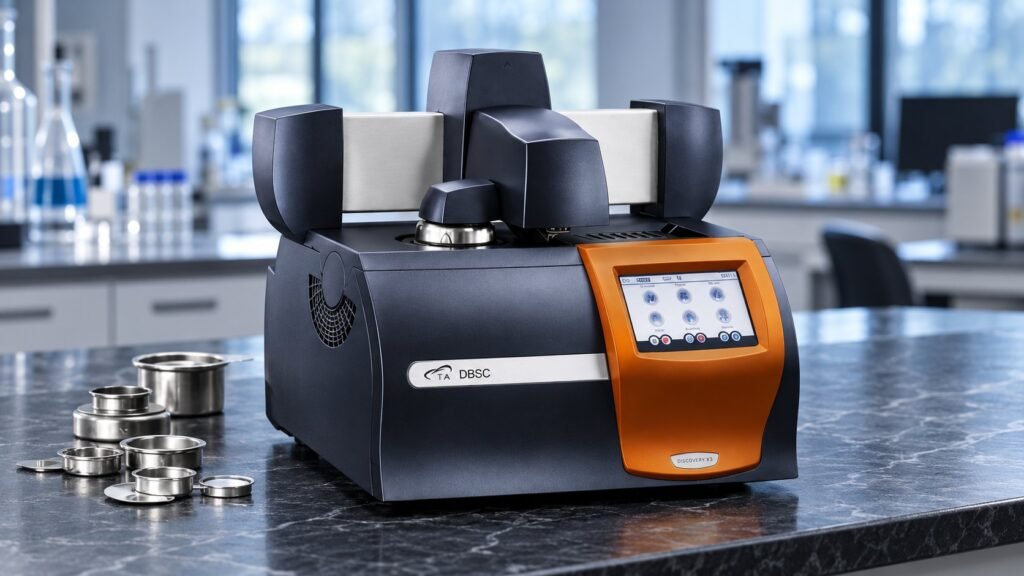
Coin cell DSC tells you how an assembled CR2032 responds to a controlled temperature program, including coupled electrode, electrolyte, separator, and electrical effects. Conventional […]
DSC sample pan pressure is a procurement decision, not a late-stage troubleshooting detail. A sealed pan can leak, deform, or hide mass loss, making […]
ISO 11357-5 2025 changes the buyer question from a peak temperature to a calculated conversion result. A defensible report states α as a dimensionless […]
DSC Tg midpoint is the temperature halfway through the measured heat-capacity step, but it is not interchangeable with extrapolated onset, inflection, or endpoint. For […]
The DSC heating rate effect is the change in a reported transition temperature as the programmed ramp changes. Because β equals dT/dt, increasing β […]
DSC testing oxidation induction now needs a method choice. ISO/TC 61/SC 5 lists ISO 11357-6:2025 as current and ISO 11357-6:2018 as withdrawn. ASTM D3895-19 […]
Yes. A DSC test short chain branching result can estimate the distribution in semicrystalline ethylene/1-olefin copolymers when you use successive self-nucleation and annealing (SSA). […]
A DSC test food packaging screen helps you compare thermal behavior before you commit to a broader packaging investigation. The European Commission’s 23 February […]
DSC testing asphalt binder gives you a direct look at glass transition, crystallization, and melting behavior — the thermal fingerprints that govern how a […]
A DSC test phase change materials study should answer a purchasing question: how much energy does your sample store, over which temperature interval, and […]
We use cookies to ensure that we give you the best experience on our website. If you continue to use this site we will assume that you are happy with it.

 testDSC.Admin