DSC Testing Asphalt Binder: What the Scan Shows
 testDSC.Admin
DSC testing asphalt binder gives you a direct look at glass transition, crystallization, and melting behavior — the thermal fingerprints that govern how a binder cracks in cold weather. Most binder labs stop at PG grading and rheometer sweeps. Those tests measure stiffness and relaxation under load, not the phase transitions driving brittle failure. A 2026 ScienceDirect review calls differential scanning calorimetry an advanced asphalt testing technology for exactly this reason: it quantifies heat-flow responses that rheology alone doesn’t capture.
At TestDSC, we run binder as customer-supplied material, on request from formulators, DOT labs, and pavement researchers who want data a rheometer report doesn’t provide. This post covers what a DSC scan adds to asphalt binder characterization, what the bitumen glass transition temperature tells you about low-temperature performance, and how we structure the run — pan sealing, scan range, and the report you get back.
What DSC Testing Asphalt Binder Adds to Characterization
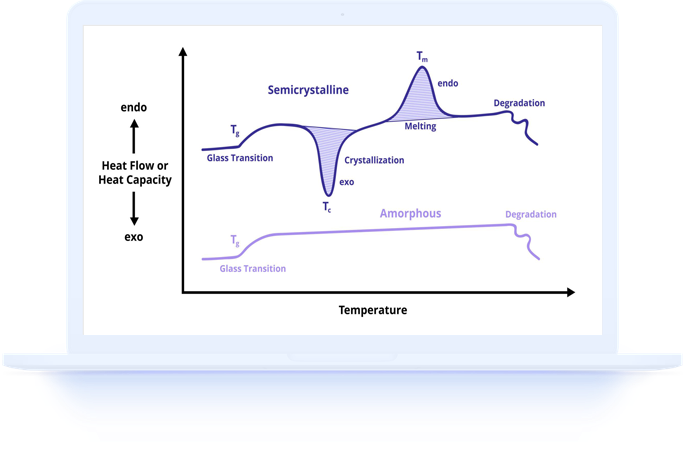
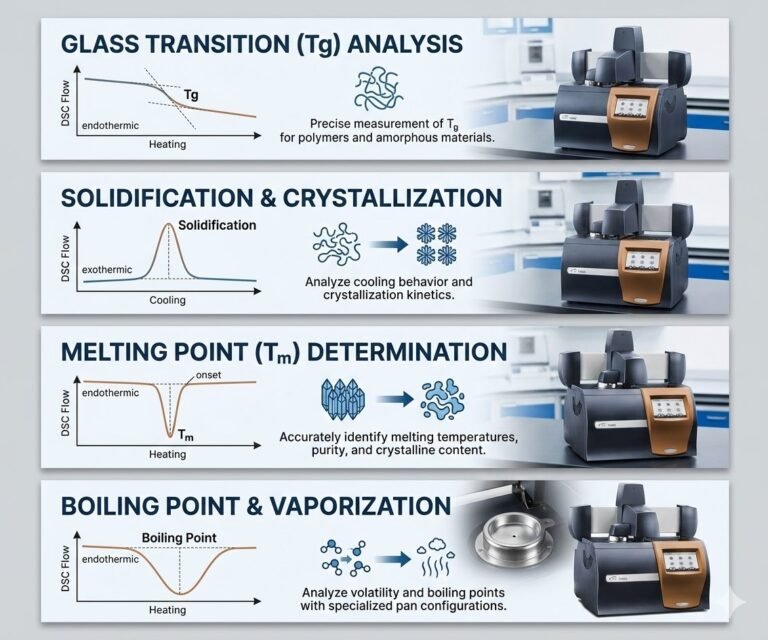
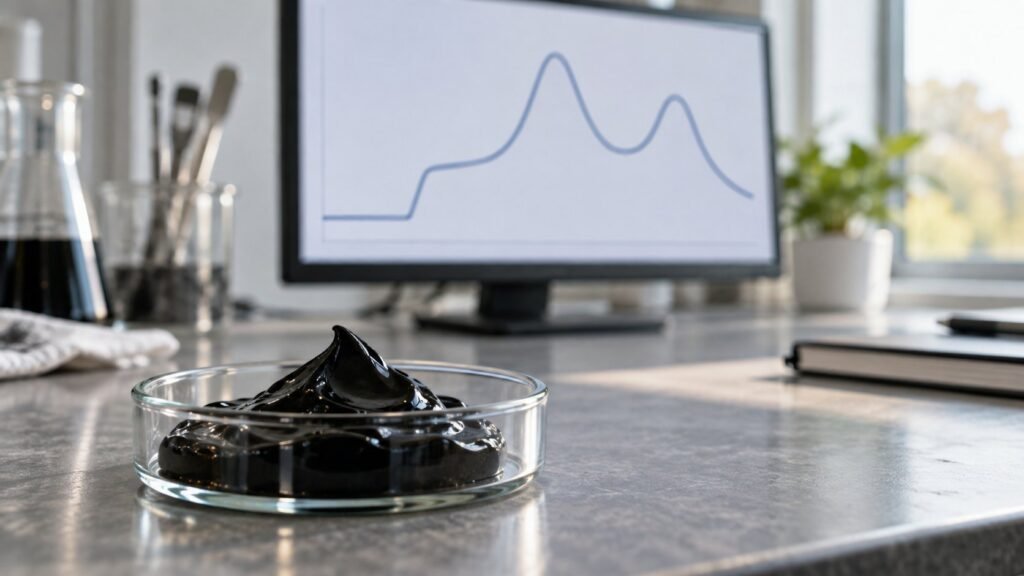
Differential scanning calorimetry asphalt testing measures heat flow into or out of a sample as you ramp temperature at a controlled rate — typically 10 °C/min under nitrogen purge. The 2026 ScienceDirect review on DSC as an advanced asphalt testing technology frames the technique around four quantitative outputs: glass transition temperature (Tg), crystallization and melting behavior, enthalpy relaxation, and heat capacity. Each shows up as a distinct feature on the thermogram — a step change at Tg, an exotherm for crystallization, one or more endotherms for melting.
None of these appear on a PG grading report. A dynamic shear rheometer tells you how stiff or elastic a binder is at a given temperature and frequency. It doesn’t tell you where the amorphous fraction vitrifies, or how much wax crystallizes on cooling. That’s the gap DSC closes. Heat capacity, measured per ASTM E1269 or ISO 11357-4, also lets you calculate enthalpy changes across the transition region — useful when comparing binder sources or aging conditions side by side.
See also: DSC Testing for Aerospace Materials: Ensuring Safety and Performance
Bitumen Glass Transition Temperature and Low-Temperature Performance
The bitumen glass transition temperature marks where the binder’s amorphous matrix shifts from a viscous, energy-dissipating state to a rigid, brittle one. Below Tg, asphalt binder low-temperature performance drops fast — thermal stresses that would relax above Tg instead build up and crack the binder. A Springer study, Glass transitions in bituminous binders, calls Tg determination an established but underused DSC application in this field. Most labs default to conventional DSC; some also run temperature-modulated DSC, which separates the reversing heat-capacity step from overlapping kinetic events like enthalpy relaxation or physical aging.
Typical bitumen Tg values fall between -30 °C and -15 °C, depending on source crude and aging state. Oxidized or RTFO/PAV-aged binders often show a Tg shifted a few degrees higher, plus a sharper enthalpy relaxation peak from physical aging during storage. That relaxation peak — an endothermic overshoot right at Tg — is itself diagnostic: a pronounced peak indicates a binder that has sat below Tg long enough to densify, which correlates with reduced ductility in the field.
Conventional vs. Temperature-Modulated DSC
Conventional DSC gives you Tg, crystallization exotherms, and melting endotherms in a single heating ramp — fast and sufficient for routine screening. Temperature-modulated DSC adds a sinusoidal modulation on top of the linear ramp, splitting the signal into reversing and non-reversing heat flow. That separation isolates the true heat-capacity step at Tg from the enthalpy relaxation peak sitting on top of it — useful when a binder’s aging history matters more than a single Tg number.
How TestDSC Runs a DSC Asphalt Binder Testing Workflow
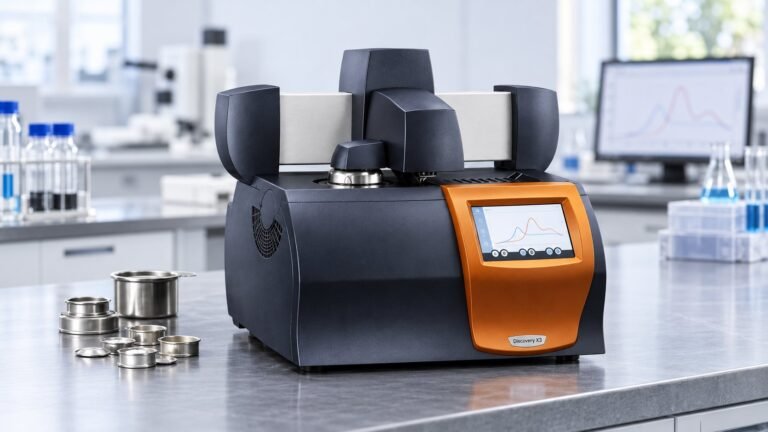
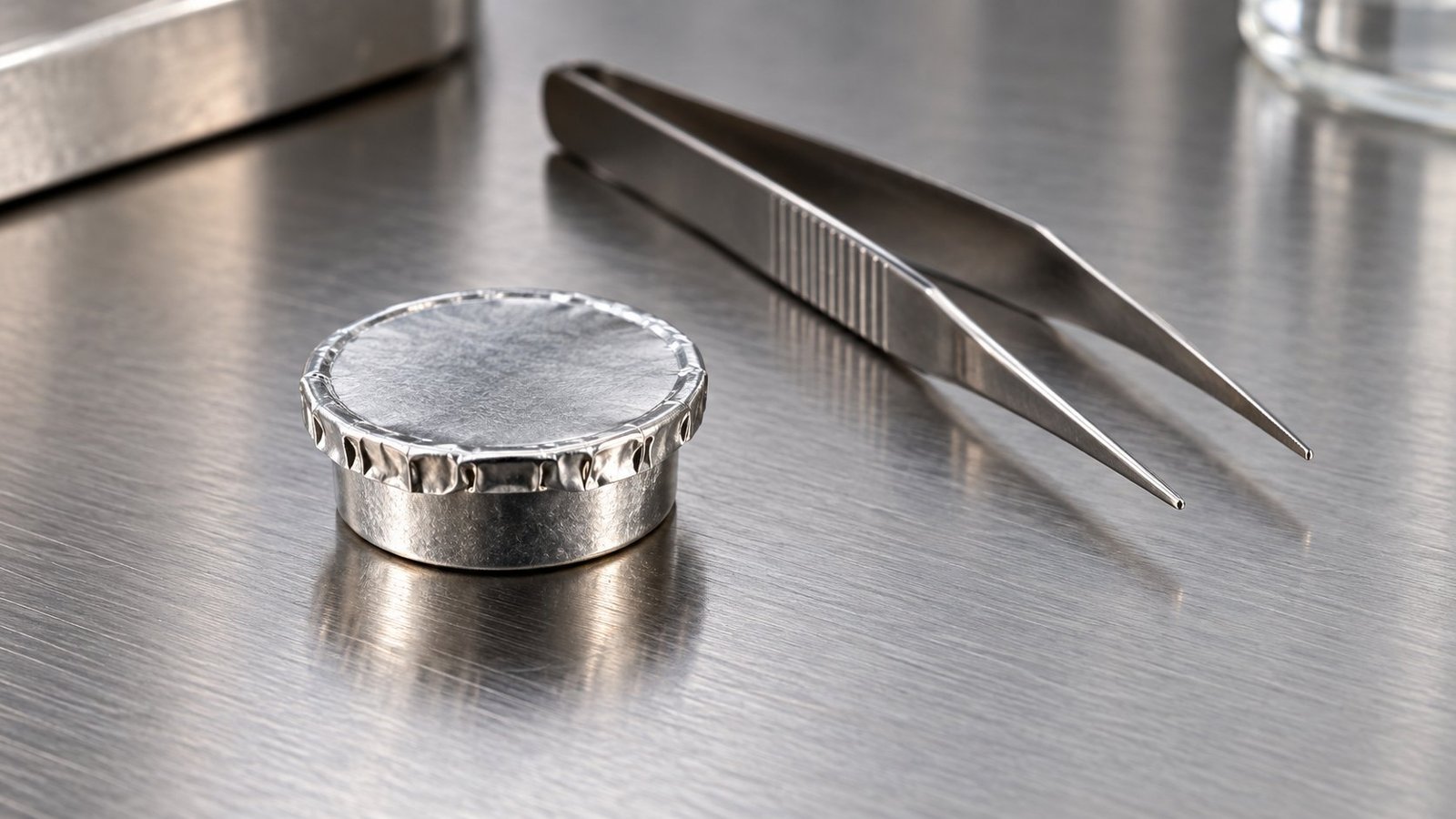
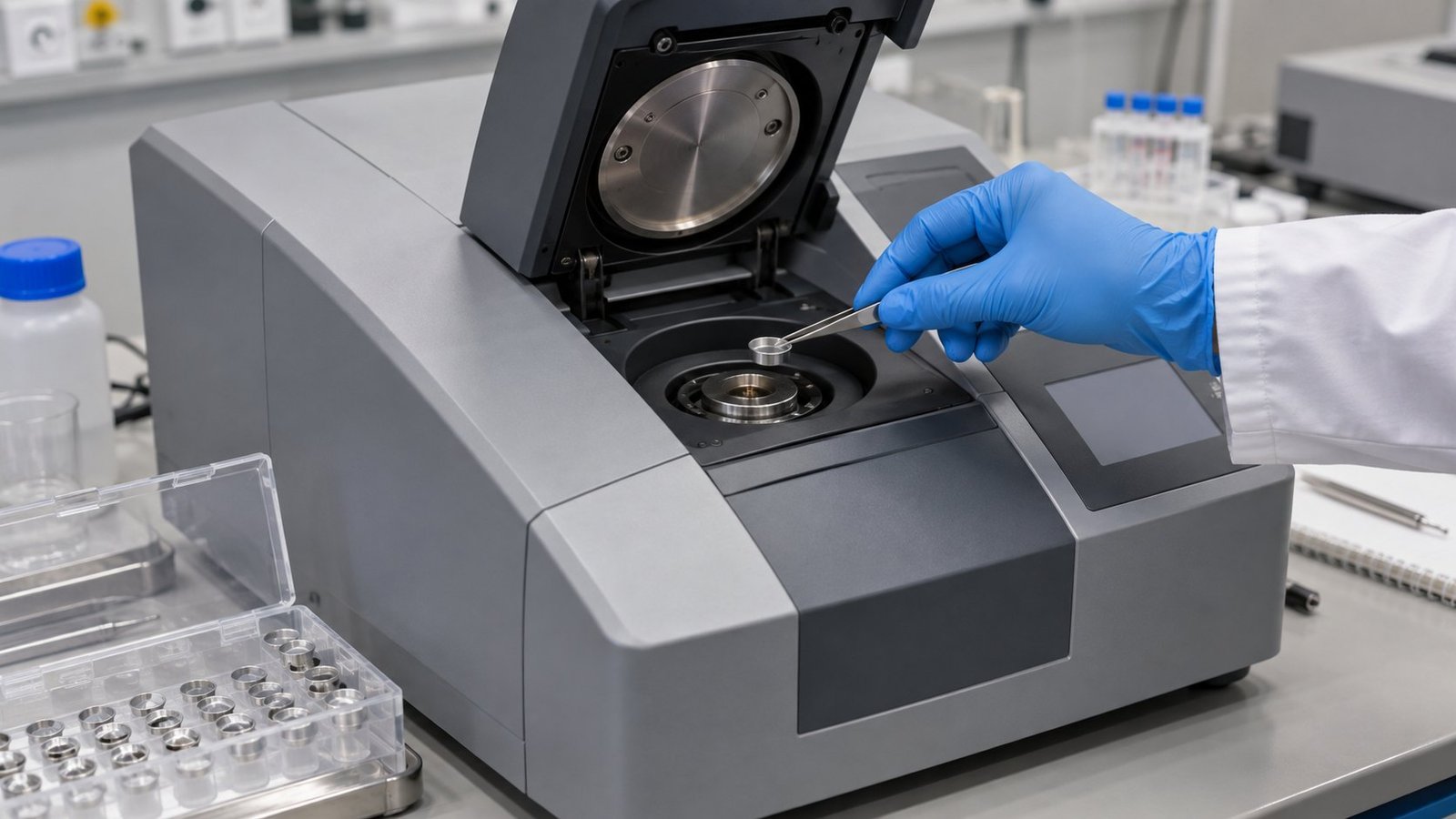
You send us binder as customer-supplied material — no extraction, no solvent recovery on your end. We weigh 8 mg to 15 mg directly into a sealed aluminum pan; sealing matters because asphalt volatilizes lighter fractions above roughly 100 °C, and an open pan skews the melting region. For most jobs we run a subambient program from -80 °C to 150 °C at 10 °C/min under nitrogen purge, covering the full Tg-to-melt window in one scan.
Thermal history is the variable most labs get wrong. The Linseis application note on asphalt DSC testing flags this directly: whether you erase or preserve thermal history changes what the scan shows. We run a first heat to capture the binder’s as-received state — including any physical-aging relaxation peak — then a controlled cool and a second heat to erase that history and get a reproducible baseline Tg. Both runs go into your report, so you see the as-received signal and the history-independent one side by side.
- Sample received, logged, and stored per your handling instructions.
- 8 mg to 15 mg cut and sealed into an aluminum pan.
- First heat: -80 °C to 150 °C at 10 °C/min under nitrogen purge, capturing as-received thermal history.
- Controlled cool at 10 °C/min back to -80 °C.
- Second heat over the same range to erase thermal history and establish a reproducible baseline Tg.
- Onset, midpoint and endpoint Tg, plus crystallization/melting peaks and enthalpy values, reported against the thermogram.
See also: DSC Testing for Battery Materials: A Screening Guide
What Your Report Shows
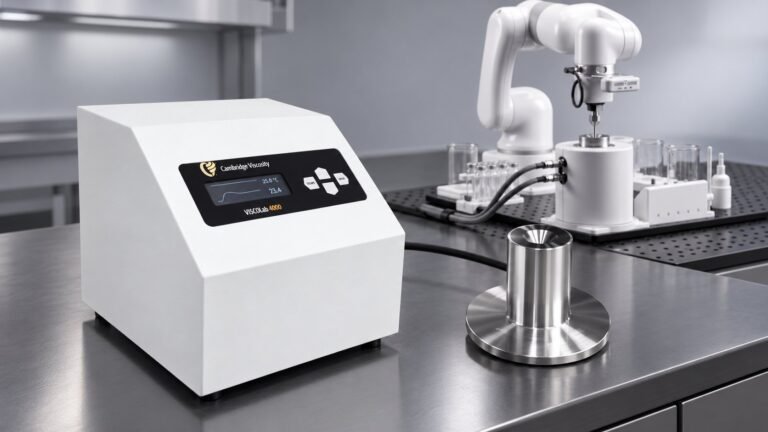
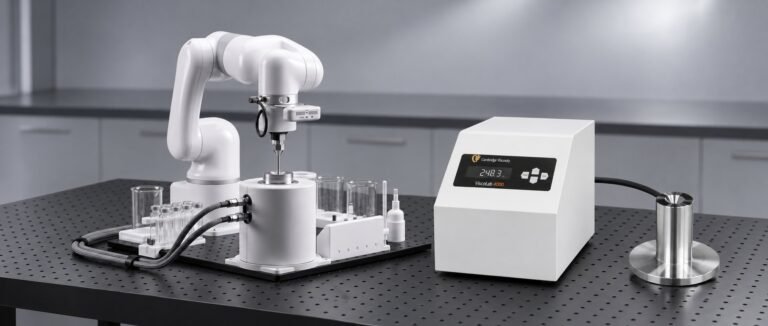
Your report includes the full thermogram — heat flow in mW or W/g plotted against temperature — with onset, midpoint, and endpoint Tg values marked directly on the curve. We flag crystallization exotherms and melting endotherms with peak temperatures and integrated enthalpy in J/g, and note any enthalpy relaxation peak separately from the underlying heat-capacity step. If you’ve also asked for viscosity data on the same binder, we cross-reference it: automated temperature-scanning viscometry pairs well with DSC output, though the two measure different things.
Frequently Asked Questions
Does DSC replace PG grading for asphalt binders?
No. PG grading and DSC measure different things. DSC testing asphalt binder gives you Tg, crystallization, and melting data — the phase-transition side. A rheometer measures stiffness and relaxation under load. Run both if you need the full picture; DSC won’t substitute for a rheometer report.
How much sample do you need?
8 mg to 15 mg is typical for a sealed-pan run. We ask for at least 200 mg of customer-supplied binder so we can repeat a run if the first thermogram shows an artifact — a bubble in the pan, for example.
What temperature range do you scan?
Most binders run -80 °C to 150 °C at 10 °C/min, covering Tg, any wax crystallization exotherm, and the melting region in one program. We adjust the low end if you expect an unusually low Tg, or the high end if you want to see softening behavior above typical melt peaks.
Can you run temperature-modulated DSC on binders?
Yes. TMDSC separates the reversing heat-capacity step at Tg from non-reversing events like enthalpy relaxation. It runs slower than conventional DSC — plan on a longer scan — but it gives you a cleaner Tg when physical aging or crystallization overlaps the transition.
Ready to Scan Your Binder?
If your binder’s low-temperature cracking risk is a question rheology alone can’t answer, a DSC scan fills in the phase-transition data — Tg, crystallization, melting, enthalpy relaxation — in a single run on a sample you already have. Send us your binder and handling notes, and we’ll confirm scan range and turnaround before we start. Contact our lab to schedule DSC testing asphalt binder analysis →