DSC Test Food Packaging: What Thermal Data Tells You
 testDSC.Admin
A DSC test food packaging screen helps you compare thermal behavior before you commit to a broader packaging investigation. The European Commission’s 23 February 2026 factsheet states that food-contact packaging must follow strict EU safety rules. Packaging must not release substances that endanger health, change food composition, or affect taste and smell.
That requirement makes thermal screening useful as an evidence-building step, not as a compliance shortcut. The June 2026 Acta IMEKO study provides a practical example. Its authors tested 14 polyethylene films, measured thermal behavior and crystallinity by DSC, and found crystallinity values from approximately 10% to 50%. Lower-crystallinity films showed broader variation during migration screening, but crystallinity alone did not explain the results.

What a DSC test food packaging screen can show
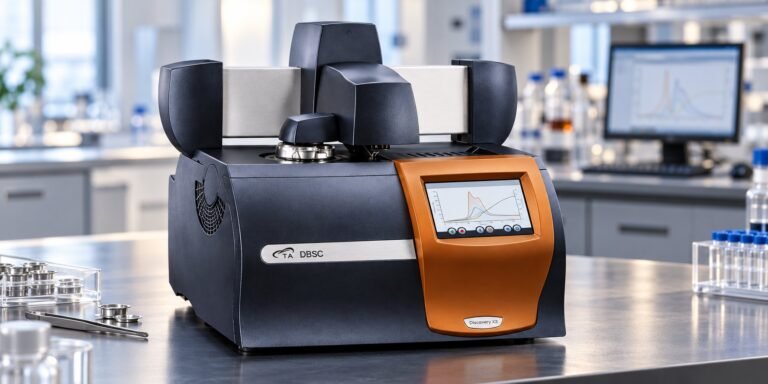
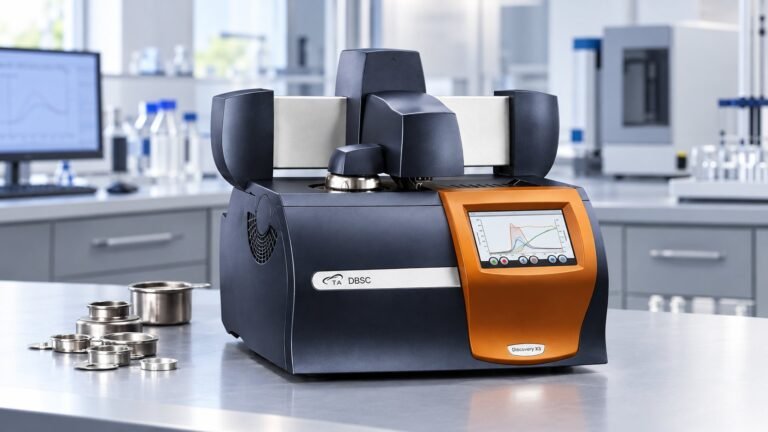
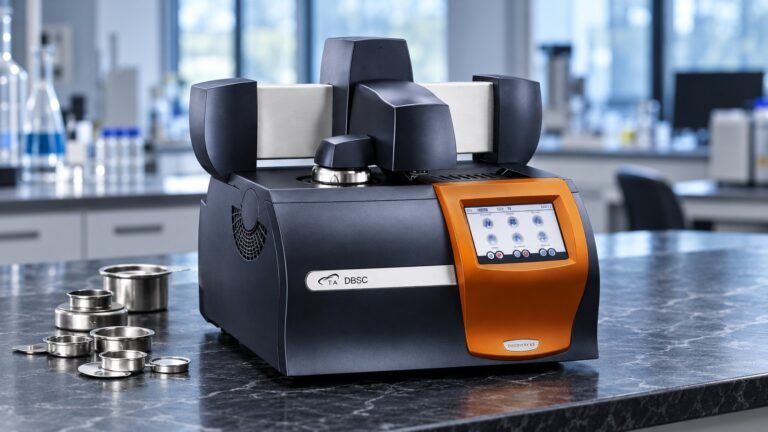
DSC measures heat flow as your sample is heated, cooled, or held at a selected temperature. For a polymer film, the curve can show melting events, crystallization events, glass transitions, and changes between material lots. The result is a thermal fingerprint. It is useful when two films look similar but behave differently during sealing, forming, storage, or processing.
ISO 11357 provides the main DSC framework for plastics and polymers. Your test plan still needs a defined sample history and heating rate. A common comparison begins at 10 °C/min, with the temperature range selected for the polymer and the question being asked. A first heating cycle can reflect the supplied processing history. A second heating cycle can make material-to-material comparisons easier.
Read the curve as a comparison tool
A melting peak near a similar temperature does not prove that two films are equivalent. Peak shape, event width, enthalpy, baseline movement, and repeatability also matter. A broad event can indicate a distribution of thermal populations. Multiple events can indicate more than one polymer fraction or a mixed thermal history. These observations guide your next test. They do not identify every constituent.
This is the practical role of DSC crystallinity packaging film work. A calculated crystallinity value can help rank samples, especially when the polymer family and reference enthalpy are defined. It should not be used as a stand-alone prediction of migration. The Acta IMEKO study found that lower-crystallinity films had broader migration-screening variation, while also showing that crystallinity did not fully account for the observed behavior.
See also: DSC Test Phase Change Materials: Buyer Guide
Why polyethylene films need more than one signal
The Acta IMEKO study used an integrated structure-property-migration approach. The 14 commercial polyethylene films were classified as LDPE-like or HDPE-like using FTIR features associated with chain structure. DSC then measured thermal behavior and degree of crystallinity. Separate screening used ethanol-based food simulants, including 20% ethanol as a more aggressive condition than the earlier 8% ethanol screening.
The study matters for your packaging decisions because commercial films can vary substantially even when they share a broad material description. The reported crystallinity range was approximately 10% to 50%. Some lower-crystallinity films showed wider migration-screening responses. The relationship was not linear or sufficient for prediction. Processing history, polymer structure, contaminants, additives, and test conditions can all affect the result.
Use thermal testing food packaging as a screening layer
A sensible workflow uses DSC to narrow questions before you commission targeted chemical or migration work. You can compare a control film with a production film, compare suppliers, or examine a film before and after a defined thermal exposure. The comparison becomes stronger when you keep sample orientation, conditioning, mass, heating rate, and temperature range consistent.
- Compare melting peak temperature and event shape between film lots.
- Review crystallization temperature and enthalpy after controlled cooling.
- Estimate crystallinity only when the polymer basis and reference value are defined.
- Flag broad, split, or shifting transitions for follow-up analysis.
- Pair thermal observations with FTIR, migration, or compositional testing when the decision requires it.
This approach supports better sample selection. It does not turn a thermal curve into a food-contact approval. The European Commission’s Food Contact Materials – Food Safety page describes the broader safety obligations for materials placed on the EU market. DSC can inform that investigation, but it cannot replace the required evidence.
See also: DSC Test Solar Encapsulant for PV Films
How TestDSC reports packaging thermal data
You can submit customer-supplied films, sheets, or pellets for DSC thermal analysis. A film may be supplied as a representative cut from a roll or pouch structure. A sheet can be sampled from a defined location. Pellets can support resin-to-film comparisons when you need to separate formulation behavior from processing history. Tell us the material description, sample history, and comparison question before testing.
Typical reported outputs
Your report can include the DSC curve, test temperature range, heating or cooling rate in °C/min, observed transition temperatures in °C, peak temperatures, event enthalpy in J/g, and notes on baseline or repeatability. Where the material basis supports it, we can report a crystallinity estimate. We also record visible sample conditions and any limitations that affect interpretation.
In practice, we specify the comparison before selecting the method. If you are comparing sealing films, the useful output may be the melting range and event shape. If you are comparing pellets with finished film, the useful question may be whether processing changed the thermal profile. If you are checking a suspected lot difference, repeat measurements and matched heating rates may matter more than a single peak temperature.
What DSC cannot certify
DSC is not a migration test, compositional analysis, or food-safety certification test. It does not establish that a substance will or will not transfer into food. It does not identify every additive, contaminant, or degradation product. It does not confirm compliance with Regulation (EC) No 1935/2004, GMP requirements, or a national food-contact rule.
The correct interpretation is narrower: DSC shows how the supplied sample responds to the agreed thermal program. That response can support material comparison, lot investigation, process review, and selection of follow-up methods. For background on our customer-supplied testing approach, visit the TestDSC laboratory service overview.

FAQ about DSC analysis food contact materials
Can DSC prove that a packaging film is safe for food contact?
No. DSC is a thermal measurement. It can support comparison and investigation, but it is not migration, compositional, or food-safety certification.
Can you test packaging film supplied by my team?
Yes. Customer-supplied films, sheets, and pellets can be considered for testing. Provide the material history and the decision you need the data to support.
Does higher crystallinity mean lower migration?
Not by itself. The June 2026 Acta IMEKO study found broader variation in some lower-crystallinity films, but crystallinity alone did not explain migration behavior.
What should I provide with a sample?
Include the polymer description, film or sheet location, production or conditioning history, comparison samples, and the target temperature range. The frequently asked testing questions page can help you prepare the request.
Use DSC to define the next packaging test
A DSC test food packaging workflow gives you a controlled way to compare thermal behavior across films, sheets, pellets, lots, and processing histories. It can reveal meaningful differences in melting, crystallization, transition shape, and enthalpy. It cannot answer the full food-contact safety question. Use the thermal result to select focused follow-up work, then request a DSC test for your food packaging sample →