ASTM D7279 viscosity: Is Your Sample In Range?
 testDSC.Admin
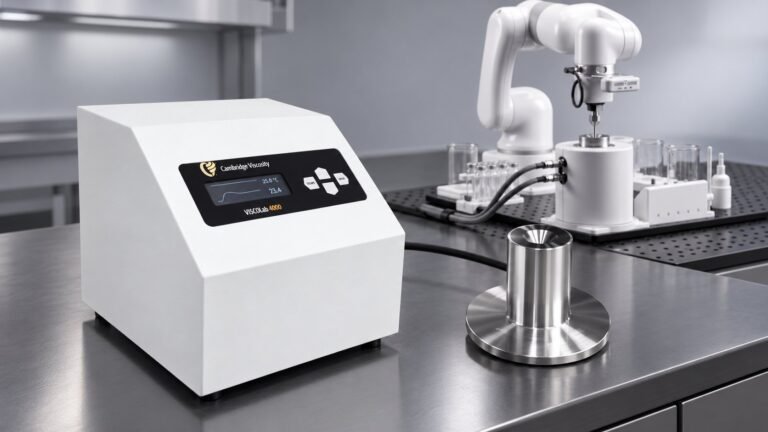
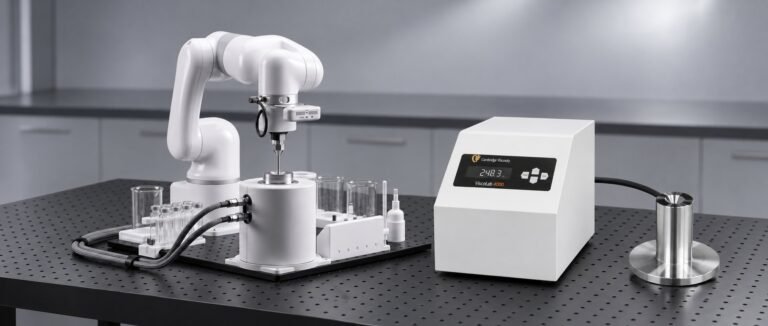
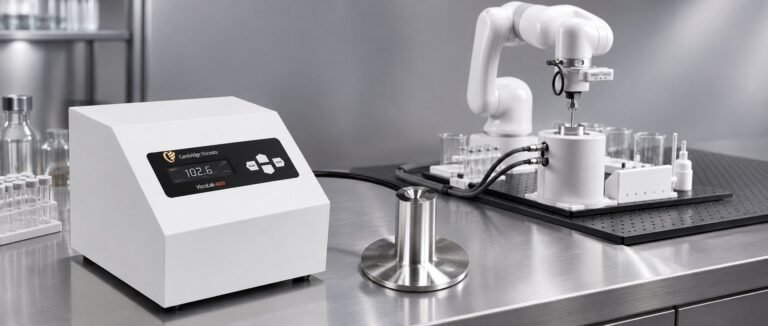
ASTM D7279 viscosity is the right request when you need automated kinematic viscosity for a transparent or opaque liquid within the method’s temperature and viscosity limits. D7279-26a covers about 2–2,500 mm²/s, with apparatus capability from 20 °C to 150 °C and typical sample volume below 1 mL.
The buyer’s decision is narrower than choosing a viscometer. You must confirm the test temperature, expected mm²/s range, precision sub-range, and whether your requirement is dynamic cP instead. TestDSC runs automated temperature-scanning viscometry from −30 °C to +40 °C at approximately 0.1–20,000 cP, so the two services are not interchangeable.
What does ASTM D7279-26a actually cover?
ASTM D7279-26a covers automated kinematic viscosity measurement for transparent and opaque liquids, including base oils, formulated oils, diesel, biodiesel blends, residual fuels, marine fuels, and used lubricating oils. The ASTM catalogue lists the method as active. ASTM WK95519 records the 2025 review cycle, including its June 30, 2025 initiation, D02.07 ballot 25-04, and D02 ballot 25-06 history.
The licensed 2026 text places the core scope in Sections 1.1–1.3. Sections 5.1–5.3 explain why the result supports lubricant, fuel, used-oil, and product-specification decisions. The method uses an automated Houillon viscometer and normally needs less than 1 mL.
| Method limit | D7279-26a detail | Buyer decision |
|---|---|---|
| Kinematic viscosity range | Approximately 2–2,500 mm²/s, depending on tube constant | Use D7279 when your expected result fits the selected tube |
| Apparatus temperature | 20 °C to 150 °C, inclusive | Do not request D7279 below 20 °C |
| Typical sample volume | Below 1 mL | Useful when sample availability is limited |
| Precision at 40 °C | 2–478 mm²/s for base oils, formulated oils, diesel, biodiesel, and biodiesel blends; 25–150 mm²/s for used lubricating oils | Identify both product class and target temperature |
| Precision at 100 °C | 3–106 mm²/s for base oils and formulated oils; 5–16 mm²/s for used lubricating oils; 6–110 mm²/s for residual fuels | Do not treat the full instrument range as the precision range |
The phrase kinematic viscosity range describes capability, not a universal precision claim. The precision evidence is split by material class and by viscosity at 40 °C and 100 °C. Specify both before you request a quotation.
Is ASTM D7279 viscosity the right test for your sample?
ASTM D7279 viscosity fits a customer requirement for kinematic mm²/s at a defined temperature from 20 °C to 150 °C. It does not fit a requirement for sub-20 °C behavior, or a specification written only in dynamic cP without density.
- Choose D7279-26a when your report must state kinematic viscosity in mm²/s.
- Choose D7279-26a when your target temperature is 20 °C, 40 °C, 50 °C, 100 °C, or another point within the apparatus range.
- Confirm the product-specific precision window before comparing results between laboratories.
- Ask for a different service when the decision depends on a scan below 20 °C or on dynamic viscosity in cP.
See also: DSC Test False Peaks: Artifact or Real Transition?
How does TestDSC’s service compare with D7279?
TestDSC’s automated temperature-scanning service measures approximately 0.1–20,000 cP from −30 °C to +40 °C. That range is dynamic viscosity, while ASTM D7279 reports kinematic viscosity in mm²/s. You cannot compare cP directly with mm²/s. Density at the same temperature is required for conversion.
| Requirement | ASTM D7279-26a | TestDSC temperature scanning | Use when |
|---|---|---|---|
| Reported quantity | Kinematic viscosity, mm²/s | Dynamic viscosity, cP | Select the unit named in your specification |
| Temperature capability | 20 °C to 150 °C | −30 °C to +40 °C | Use the service whose temperature window contains the decision point |
| Approximate working range | 2–2,500 mm²/s | 0.1–20,000 cP | Do not treat these as equivalent numeric ranges |
| Conversion requirement | Not applicable for the reported result | Density at the matching temperature is needed to estimate mm²/s | Provide density if you need cross-unit comparison |
If a low-temperature result points to crystallization or a phase change, pair the viscosity question with dsc analyse so the temperature event and flow response are evaluated on compatible samples.
See also: differential scanning calorimetry dsc analysis
What should you send with a D7279 request?
Send the material class, target temperature, expected kinematic range, required units, and available sample volume. Those details let TestDSC confirm method fit before the sample arrives.
- State the target temperature and unit. Failure mode: a request below 20 °C is outside the D7279 apparatus capability.
- State whether the result must be kinematic mm²/s or dynamic cP. Failure mode: comparing cP directly with mm²/s produces a unit error unless density is supplied.
- Give the expected range and product class. Failure mode: a value inside 2–2,500 mm²/s may still fall outside the method’s demonstrated precision sub-range.
- Confirm sample volume and condition. Failure mode: insufficient or nonrepresentative material can prevent a valid result even when the nominal range fits.
- Ask whether your report needs a standard-specific result or a temperature scan. Failure mode: requesting D7279 for a trend across −30 °C to +40 °C answers a different measurement question.
What does an anonymized TestDSC run look like?
An anonymized TestDSC measured run below illustrates the level of detail useful for a service review. It is a dynamic-viscosity record, not an ASTM D7279 kinematic result.
| Field | Measured record |
|---|---|
| Temperature | +25 °C |
| Units | cP |
| Sample volume | 0.78 mL |
| Replicates | 1,248 cP; 1,263 cP; 1,255 cP |
| Spread | 15 cP range; 1.2% of the mean |
ASTM D7279 viscosity questions buyers still ask
Can D7279 replace a DSC measurement?
No. D7279 measures flow at selected temperatures. DSC measures thermal events. For peak interpretation, see Exothermic and Endothermic Reactions in DSC: What the Peaks Tell You.
Should I request DSC or DMA with viscosity testing?
Request DMA when mechanical response under oscillation or temperature is the decision. The practical distinction is outlined in DSC vs DMA: Comparing Thermal and Mechanical Analysis.
Does D7279 measure oxidation induction?
No. Oxidation induction is a separate thermal-analysis question. Use DSC Testing Oxidation Induction: ISO vs ASTM when that is the specification.
How should you request the right viscosity service?
Start with the temperature, quantity, units, expected range, and product class. Request ASTM D7279-26a when you need automated kinematic viscosity within its 20 °C to 150 °C capability. Request temperature-scanning viscometry when your decision requires −30 °C to +40 °C dynamic cP data. For coordinated testing, contact the DSC analysis laboratory → — DSC admin.