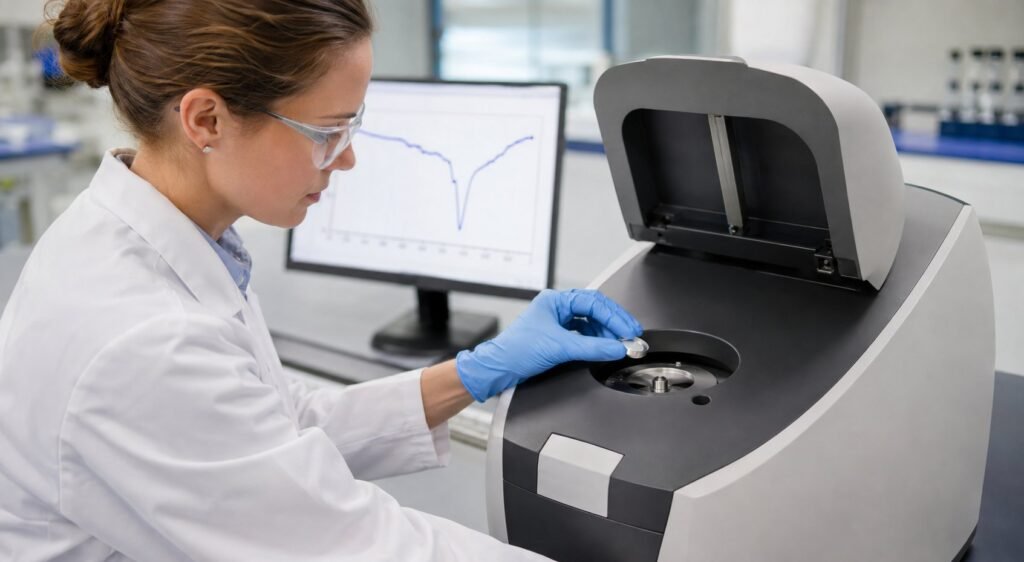
What a DSC Laboratory Analyzes and Measures
 testDSC.Admin
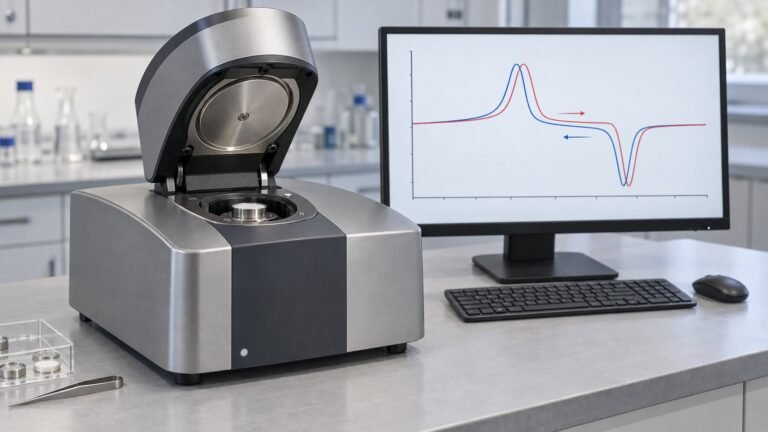
When you send a sample to a dsc laboratory, you get more than a single chart. Differential scanning calorimetry measures how your material absorbs or releases heat as it heats or cools. That heat flow signal reveals properties a data sheet never shows. Melting point, glass transition, crystallinity, and thermal stability are among them.
This matters whether you’re qualifying an incoming polymer resin, screening a pharmaceutical excipient for polymorphs, or tracking down why a batch of wax failed a spec. A dsc laboratory running to ASTM E1269 or ISO 11357 gives you traceable, repeatable numbers. You get a report, not just a curve on a screen.
How a DSC Laboratory Generates Your Data
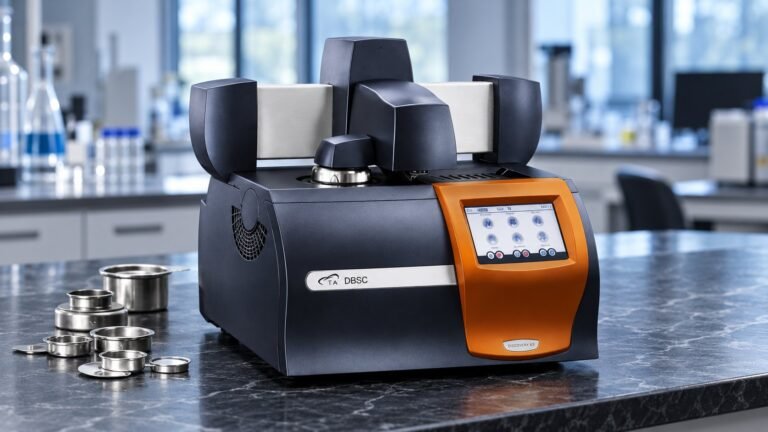
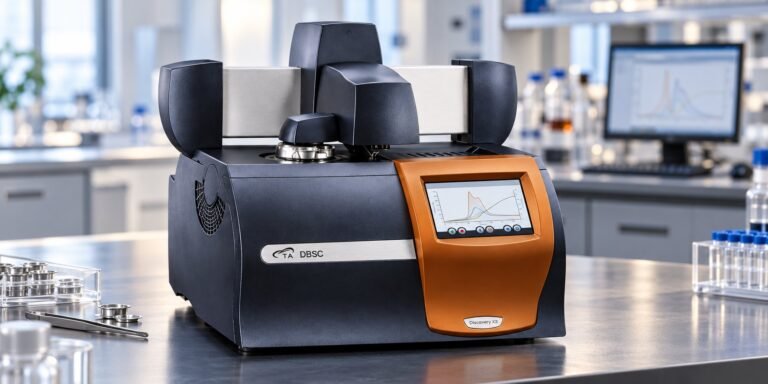
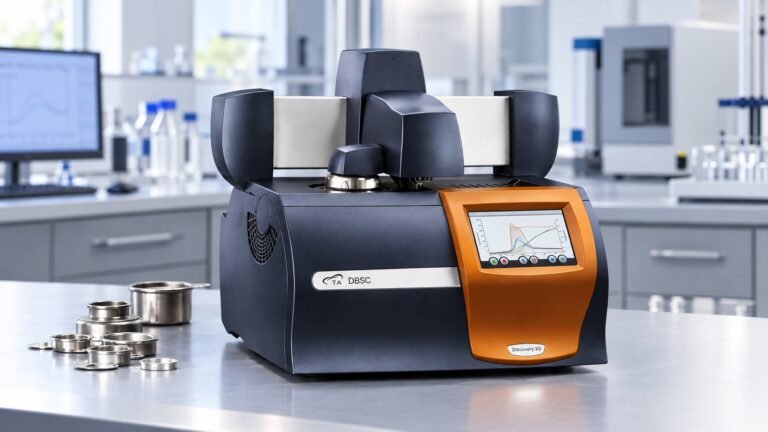
A DSC instrument holds your sample and an empty reference pan in identical furnaces. Both heat at the same controlled rate — typically 5 °C/min to 20 °C/min. The scan runs across a range you specify, commonly -30 °C to +150 °C for polymers or as wide as -90 °C to +400 °C for specialty materials. As your sample undergoes a transition — melting, crystallizing, curing, decomposing — it absorbs or releases heat relative to the reference.
The instrument records that difference in milliwatts (mW) and plots it against temperature. Sample size is small, usually 5 mg to 15 mg. It’s sealed in an aluminum or aluminum-alloy pan. The method works even when you only have a limited quantity of material.
What Materials a DSC Laboratory Can Analyze
DSC is not limited to one material class. Any solid or liquid that undergoes a measurable thermal transition is a candidate — melting, freezing, glass transition, cross-linking, or oxidation. In practice, most samples we run fall into a handful of categories.
Polymers and Plastics
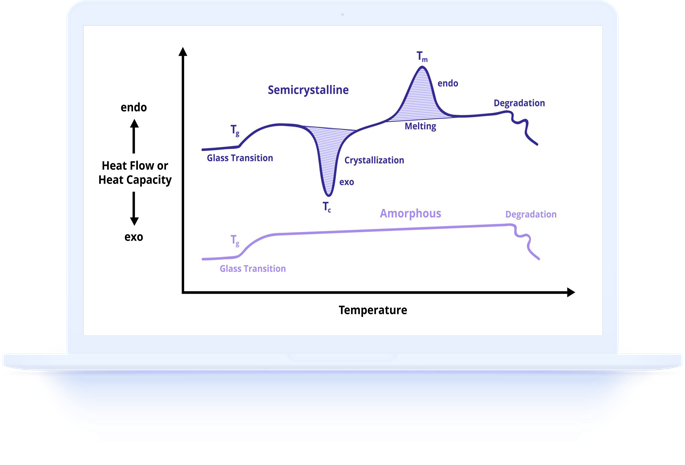
Thermoplastics, thermosets, and elastomers are the most common submissions. DSC gives you glass transition temperature (Tg), melting temperature (Tm), degree of crystallinity, and cure state for epoxies and rubber compounds. You use this data to confirm resin grade. It also flags contamination or blending, and verifies that a molded part reached full cure.
Pharmaceuticals and Excipients
For active pharmaceutical ingredients and excipients, DSC detects polymorphic forms, hydrate or solvate content, and purity. A shift of even 1 °C to 2 °C in a melting endotherm can flag a different crystal form. It can also flag a stability problem worth investigating before it reaches formulation.
Waxes, Oils, and Lubricants
Waxes and greases show sharp melting endotherms that shift with blend ratio or contamination. DSC also measures oxidation induction time (OIT) — how long a lubricant resists oxidative breakdown at a fixed test temperature, typically 180 °C to 210 °C under oxygen. A shortened OIT often means the antioxidant package is depleted.
Food, Cosmetic, and Specialty Materials
Fats, chocolate, and personal-care formulations rely on melting profile for texture and shelf stability. DSC also supports composites, adhesives, and metals — anywhere a phase change or reaction has a measurable heat signature.
The Properties and Data You Receive
Every DSC run in our lab produces a heat flow curve plus a set of extracted values you can drop straight into a spec sheet or a batch record. Depending on your material and test method, your report can include:
- Glass transition temperature (Tg) — the point where an amorphous polymer shifts from rigid to rubbery
- Melting temperature (Tm) and melting range — onset, peak, and endset in °C
- Heat of fusion (ΔH) in J/g — used to calculate percent crystallinity
- Crystallization temperature (Tc) on cooling
- Cure onset, peak, and residual cure exotherm for thermosets
- Oxidation induction time (OIT) in minutes, per ASTM D3895 or ASTM E1858
- Specific heat capacity (Cp) at a given temperature
We report each value against your reference standard so you can compare batches directly. If a result falls outside your historical range, we flag it before you receive the final report.
See also: dsc analysis lab
Choosing DSC vs. Other Thermal Methods
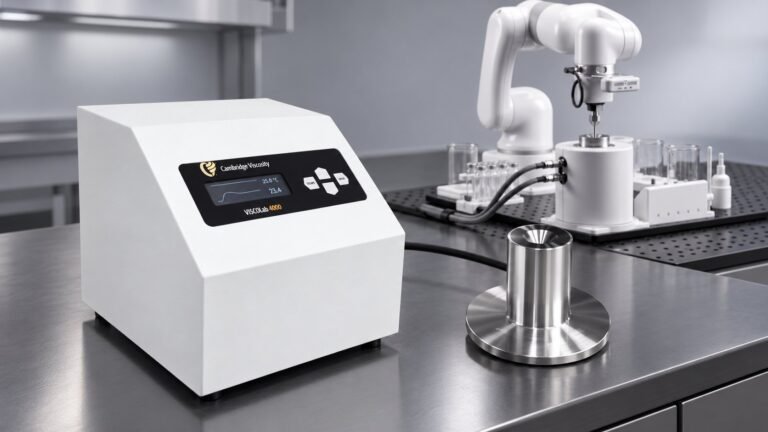
DSC measures heat flow, not viscosity, so it answers a different question than a rotational or capillary viscometer. If your issue is flow behavior at temperature — pour point, viscosity index, or shear response — you want viscosity testing alongside or instead of DSC. Many formulators submit both on the same sample. That way, you correlate a melting or crystallization event against a viscosity change at the same temperature.
See also: simultaneous thermal analysis (tga/dsc)
Frequently Asked Questions
How much sample do I need to send?
5 mg to 15 mg is typical for the DSC pan itself. We recommend sending at least 500 mg to 1 g total. This covers repeat runs and any complementary testing.
How long does a DSC laboratory report take?
Standard turnaround is 5 to 7 business days from sample receipt. Rush service is available for time-sensitive investigations — ask when you submit your sample.
Can DSC tell me why a material failed in the field?
Often, yes. Comparing a failed part’s Tg, Tm, or cure exotherm against a known-good reference sample points to contamination, degradation, or an incomplete cure.
Get Your Sample Tested
A dsc laboratory turns a small sample into concrete numbers you can act on — melting point, glass transition, crystallinity, and oxidative stability, all tied to a recognized standard. Visit TestDSC to see the full range of thermal and viscosity testing services and submit your sample →