TGA DSC Analysis: When You Need Combined Testing
 testDSC.Admin
TGA DSC analysis runs thermogravimetric analysis (TGA) and differential scanning calorimetry (DSC) on one sample, in one instrument, at the same time. It’s also called simultaneous thermal analysis (TGA/DSC), or STA. You get a mass-loss curve and a heat-flow curve on the same temperature axis. That matters when a mass change and a thermal event need to line up in time.
Most inquiries that mention TGA DSC ask for the combined setup by default. It sounds like the more complete option. In practice, a large share of those orders only need the heat-flow half. A standalone DSC run — scoped for melting point, glass transition, crystallinity, or a cure exotherm — answers the question just as well. This post covers what combined data measures, when it earns its cost, and how we help you scope the right DSC testing order before you commit.
What TGA DSC Analysis Actually Measures
TA Instruments builds a simultaneous TGA/DSC platform that pairs a thermobalance with a heat-flow sensor inside one furnace. Mass and heat flow are recorded against the same time and temperature scale, on the same specimen — per TA Instruments’ product description for its Simultaneous TGA/DSC line. NETZSCH describes its STA (simultaneous thermal analyzer, TGA-DSC) family the same way. One sample, one furnace, two channels reporting at once. The output is two curves on a shared plot. Percent mass loss sits on one axis. Milliwatts of heat flow sit on the other. Both plot against °C.
That pairing matters when a mass change and a thermal event might be connected. A polymer might lose 4% mass to moisture between 80°C and 120°C. Right after, it shows a melting endotherm at 165°C. That combination tells a different story than the same melting point with no mass loss ahead of it. Simultaneous thermal analysis (TGA/DSC) ties the two together in one trace. You don’t have to overlay two separate runs and guess whether the features actually line up.

See also: dsc analysis
When Combined TGA/DSC Data Earns Its Cost
Combined data is worth ordering when your question depends on timing between a mass change and a thermal event. In practice, that’s a short list. Three cases come up most often in TGA DSC analysis requests we see:
- Filler content in a polymer: does mass loss above 400°C match a decomposition exotherm, or does the filler survive as ash?
- Moisture or solvent loss before a melt: does a 2-5% mass loss below 150°C explain a broad melting endotherm?
- Cure and decomposition overlap: for a thermoset curing above 200°C, does the exotherm coincide with mass loss?
Outside cases like these, a mass channel adds cost and turnaround without adding an answer. That’s the gap between what TGA DSC sounds like it should cover and what a given project actually needs.
Why Most ‘TGA DSC’ Inquiries Become Standalone DSC Testing
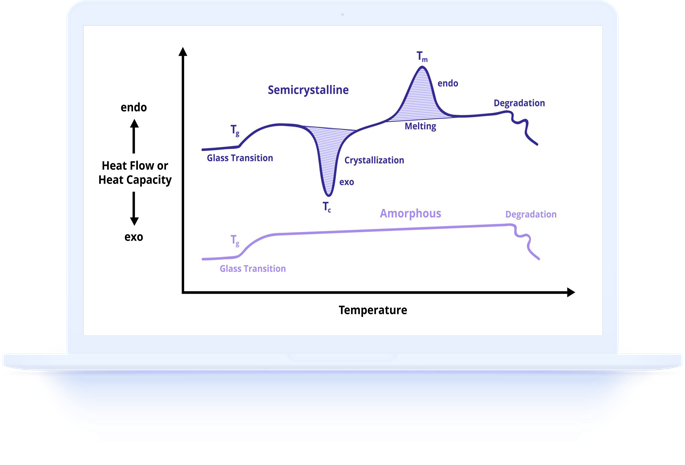
Many buyers who write in asking about DSC testing, or about TGA DSC specifically, don’t have a mass-loss question at all. They want a melting point, a glass transition temperature (Tg), a percent crystallinity, a cure exotherm, or an oxidative stability result. None of those need a mass channel. A standalone DSC thermal analysis run answers them directly, following ASTM E1269 or ISO 11357 depending on the property being measured. That’s the question behind most of the requests that reach us under the TGA DSC label.
When you contact us with a sample, we ask what decision the data needs to support before we recommend a test. If you’re qualifying an incoming polymer lot against a Tg spec, TGA DSC analysis adds a channel you won’t use. A standalone DSC run — typically two heating cycles from -30°C to +200°C at 10°C/min — answers that question faster and cheaper. In our intake conversations, a large share of ‘TGA DSC’ inquiries resolve into standalone DSC screening. Mass loss usually isn’t the actual question.
Questions We Ask Before Recommending Either Test
Three questions usually settle it, before you order anything:
- What decision does this data support — a spec pass/fail, an R&D comparison, or a failure investigation?
- Is there a known or suspected volatile, filler, or moisture content in the sample?
- Does the thermal event you care about fall in a range where mass loss is even plausible?

See also: DSC Test False Peaks: Artifact or Real Transition?
FAQ
Does TestDSC offer combined TGA/DSC testing?
No. We run DSC thermal analysis and automated temperature-scanning viscometry as services on customer-supplied samples. If your question genuinely needs a mass-loss channel alongside heat flow, you need a simultaneous TGA/DSC instrument sourced elsewhere. If it doesn’t, a standalone DSC run through us usually answers it faster.
How fast is standalone DSC testing compared to combined testing?
A standalone run needs one channel, one calibration, and no thermobalance setup. That means a shorter queue and a simpler report. Most requests come back with a melting point, Tg, or crystallinity result and nothing else to interpret.
What standard governs a DSC melting point or Tg result?
ISO 11357 covers DSC methodology for plastics, including melting behavior and glass transition. ASTM E1269 covers specific heat capacity by DSC. We cite the relevant standard on your report. See our Frequently Asked Questions page for more on testing scope.
Scoping Your Own TGA DSC Analysis Request
If you’re not sure whether your question needs a mass channel, tell us about the sample first. Describe the decision the test needs to support before you order. Tell us the result you need: a spec pass/fail, an R&D comparison, or a failure investigation. Also tell us whether you suspect moisture, filler, or a volatile in the sample. From there we can tell you if standalone DSC testing answers it, or if you need combined TGA/DSC data sourced elsewhere. Start with our DSC testing services to see what we run in-house →