Why a DSC Experiment Matters for Liquid Testing
 testDSC.Admin
A DSC experiment measures how much heat your liquid absorbs or releases as its temperature changes. That single measurement — a heat flow curve in mW against temperature in °C — tells you where a fluid crystallizes, melts, gels, or passes through a glass transition. For lubricants, coatings, fuels, and formulated liquids, this is often the fastest way to characterize behavior a viscometer or a simple pour-point check cannot see.
At TestDSC we run liquid thermal analysis and automated viscometry as a service on customer-supplied samples, typically from -30 °C to +150 °C. This post covers when a DSC experiment gives you information that other liquid test methods miss, and why that data matters once you move from bench formulation to production QC.
What a DSC Experiment Measures in Liquids
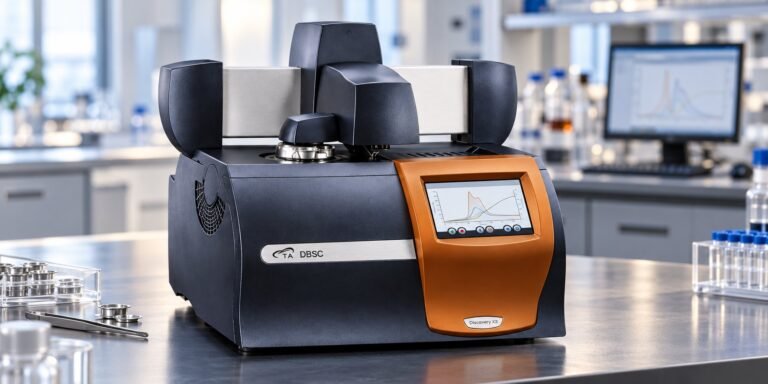
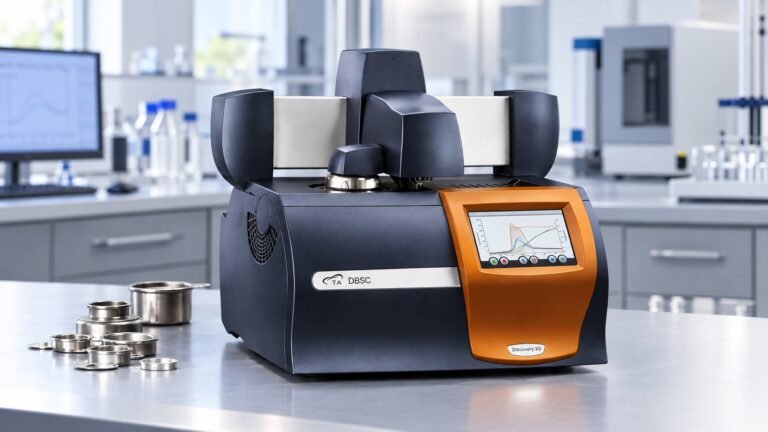
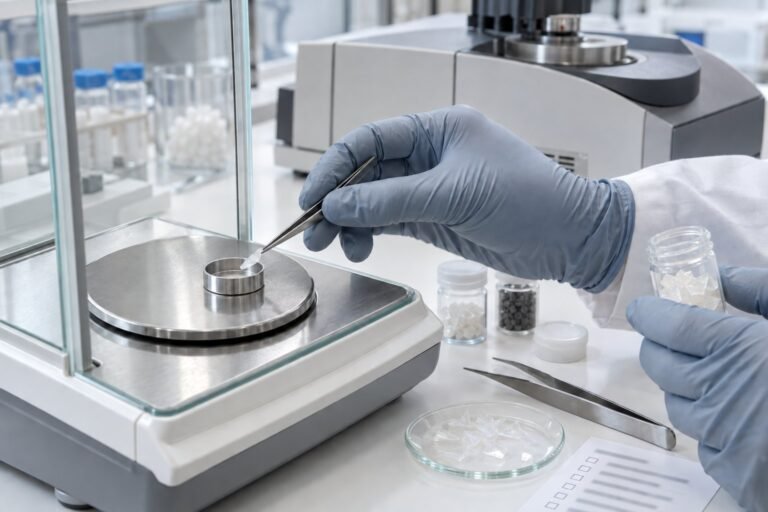
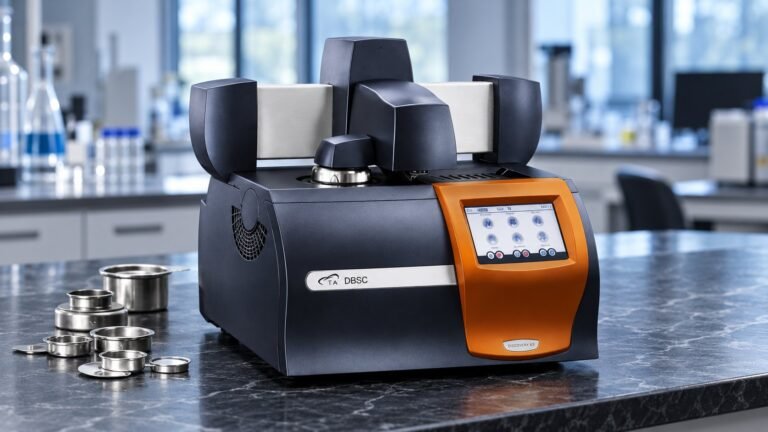
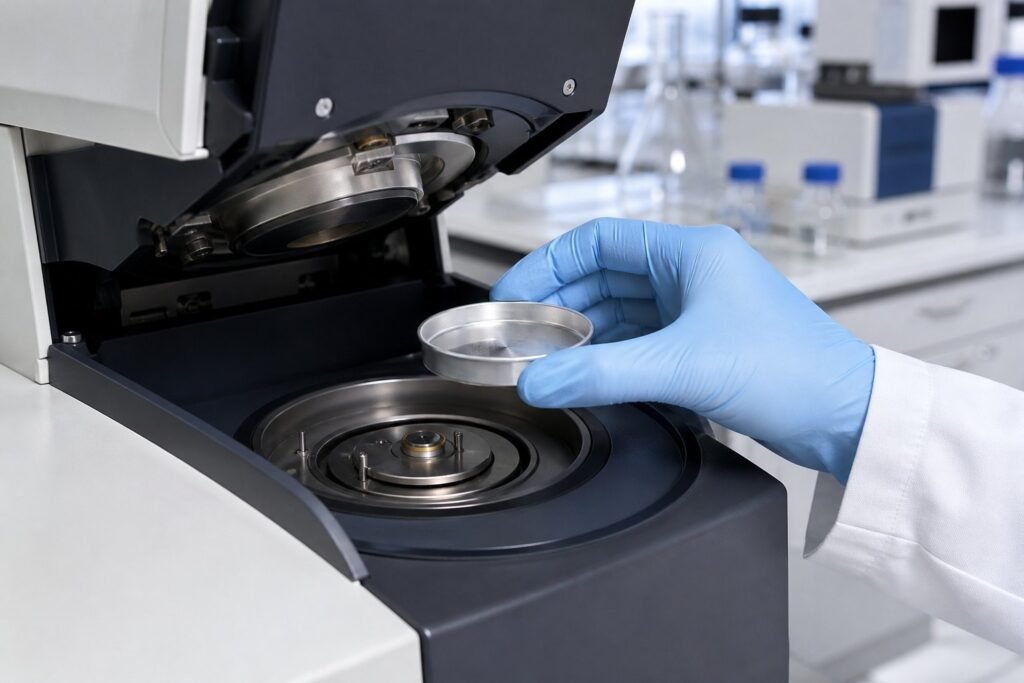
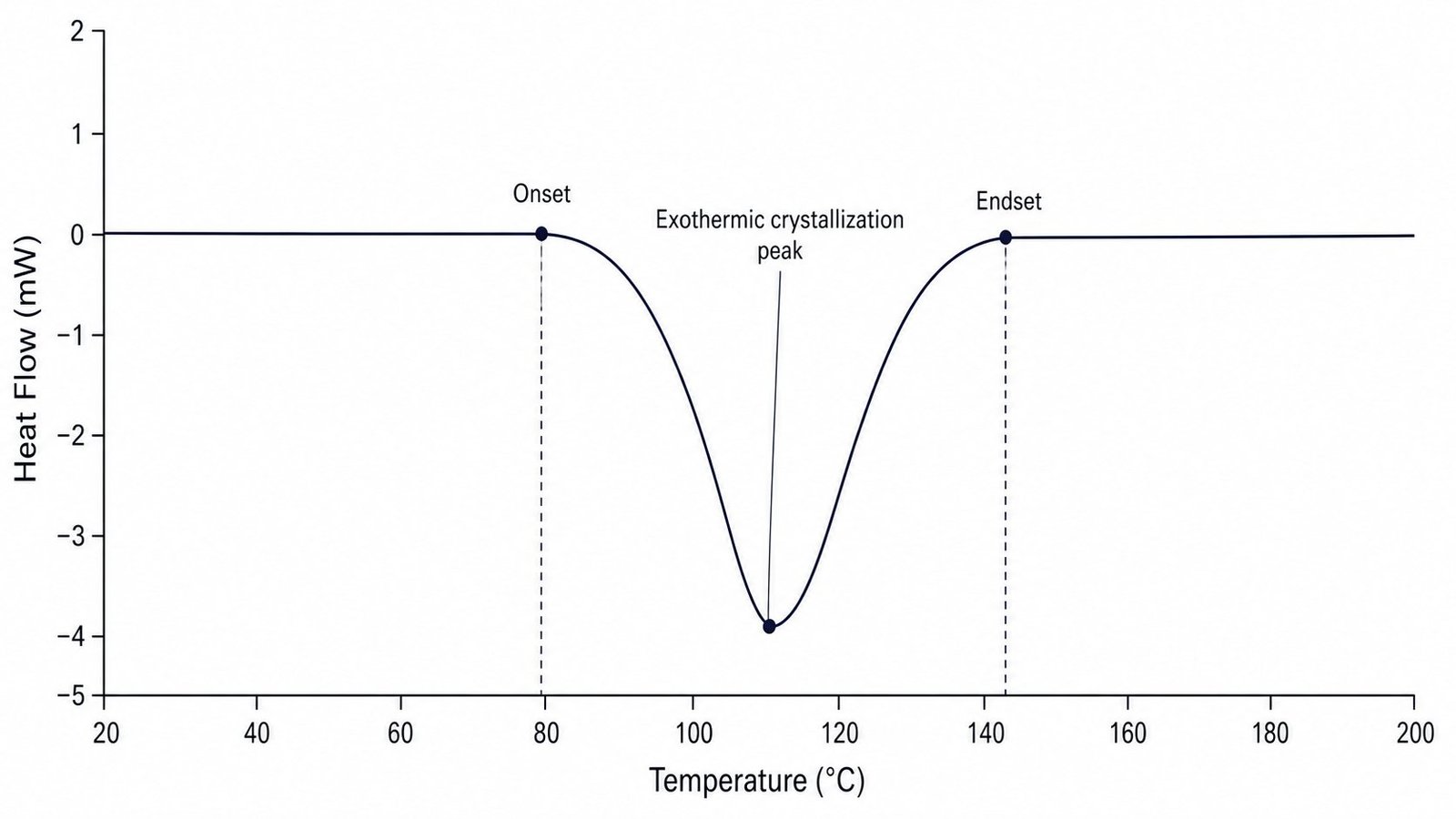
Differential scanning calorimetry works by loading a few milligrams of your sample — typically 5 mg to 20 mg — into a sealed pan next to an empty reference pan. Both pans heat or cool at a controlled rate, commonly 5 °C/min to 10 °C/min, across a range such as -30 °C to +150 °C. The instrument records the differential heat flow, in mW, needed to keep both pans at the same temperature. Any transition in your liquid — melting, crystallization, a glass transition, an oxidation onset — shows up as a peak or a step in that curve. The method follows ASTM E1269 for specific heat and ISO 11357 for general DSC procedure, so results are comparable between labs and over time.
DSC Experiment vs Other Liquid Test Methods
Viscosity testing, cloud point testing, and simple pour-point checks all tell you something about a liquid. None of them tell you everything a DSC experiment does. Each method answers a narrower question, and picking the right one — or combining them — depends on what you need to know about the fluid.
DSC vs Viscometry
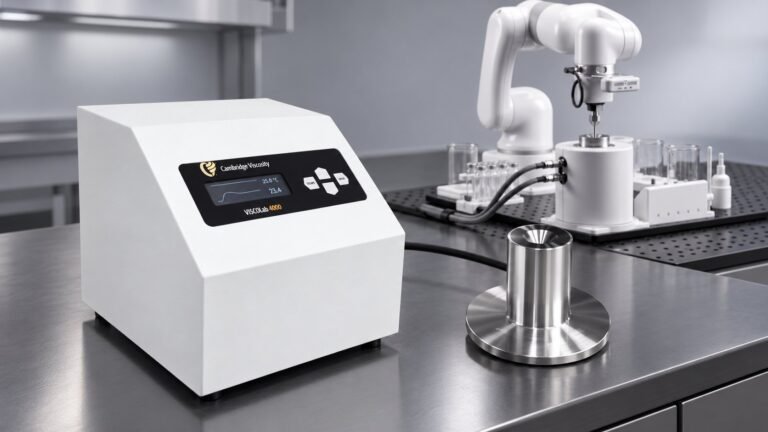
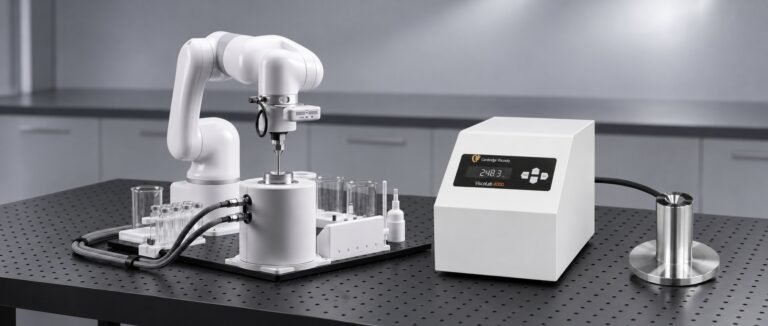
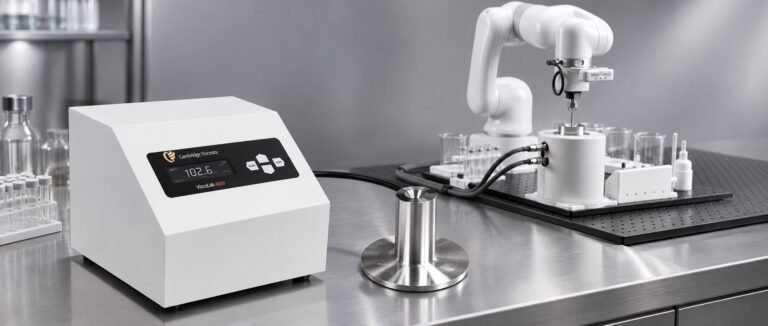
Automated temperature-scanning viscometry, run to ASTM D2270 or ASTM D5133, measures flow resistance in cP or cSt as temperature changes. It tells you how a fluid pumps, pours, or lubricates at a given temperature. It does not tell you why the viscosity shifts sharply at some point — DSC data does, because it catches the phase change, wax crystallization, or gelation driving that shift. We run both viscosity testing and DSC on the same sample when a customer needs the full picture.
DSC vs Cloud Point and Pour Point Methods
A cloud point test tells you the single temperature where wax crystals first become visible by eye. A DSC experiment gives you the same event with more resolution — onset, peak, and endset temperatures, plus the enthalpy of crystallization in J/g. That enthalpy value is data a visual cloud point check cannot produce, and it is often what separates one additive package from another in a formulation study.
- Small enthalpy changes, down to about 0.1 J/g, from minor crystalline fractions
- Glass transition temperatures in amorphous or additive-rich liquids
- Overlapping transitions separated by only a few °C
- Oxidation onset temperature under an air or oxygen purge
- Purity estimates from melting point depression, using only milligrams of sample
See also: DSC Experiment Setup: A Beginner’s Guide to Running Your First Test
Why DSC Data Matters for Formulators and QC
A DSC experiment matters most when a liquid’s performance depends on a transition, not just a bulk property. Lubricant blenders need to know the wax crystallization onset because it sets the pour point in the field, not just in a lab. Formulators adjusting a pour-point depressant need enthalpy data to see whether the additive delays crystal formation or just changes crystal shape. Viscosity alone will not distinguish those two outcomes.
For QC engineers, DSC gives a fast fingerprint. Two batches with the same viscosity at 40 °C can still show different crystallization onset temperatures or different melting enthalpies — a sign of raw material drift or a contaminated feedstock. Running DSC on incoming batches, alongside routine viscosity testing, catches that drift before it reaches a customer.
See also: DSC Testing Asphalt Binder: What the Scan Shows
Planning a DSC Experiment on Your Sample
Before you send a sample, a few decisions shape the test we run for you:
- Define the temperature range — most liquid studies run -30 °C to +150 °C, wider if you expect a high-temperature oxidation onset
- Set the heating and cooling rate — 5 °C/min to 10 °C/min is standard; 1 °C/min to 2 °C/min resolves overlapping transitions better
- Decide whether you need a cooling cycle as well as heating, since crystallization on cooling can differ from melting on heating
- Confirm sample volume — 10 mg to 20 mg of your liquid is usually enough, sealed in a hermetic pan
- Tell us if oxidative stability matters, so we can run under an air or oxygen purge instead of nitrogen
Our lab background and instrument list are on the About Us page, if you want the specifics before you ship a sample.
FAQ: DSC Experiment Basics
How much sample does a DSC experiment need?
Most liquid runs use 10 mg to 20 mg, sealed in a hermetic aluminum pan. We can work with smaller volumes for rare or expensive samples — ask us before shipping.
Can DSC replace viscosity testing?
No. A DSC experiment identifies transitions and their energy; viscosity testing measures flow resistance in cP or cSt. Most formulation and QC questions need both, run to ASTM D2270, D5133, or E1269 as applicable.
What temperature range do you cover?
Most instruments run -30 °C to +150 °C. Wider ranges are available on request — tell us the transition you expect and we will confirm coverage.
How long does a DSC experiment take?
A single heat-cool-heat cycle typically takes 60 to 90 minutes per sample, plus setup. Turnaround for a full report is usually 3 to 5 business days. More process questions are answered on our Frequently Asked Questions page.
Get Your Liquid Tested
If you need to know why your liquid behaves the way it does at a given temperature, a DSC experiment is often the fastest way to find out. Send us your sample specification and the temperature range you care about, and we will confirm rate, pan type, and turnaround before we start. Contact our lab to schedule a DSC experiment or a combined thermal and viscosity study on your sample →
How do you interpret a DSC experiment curve?
You interpret a DSC experiment curve by comparing the transition onset, peak, and endset with the integrated heat-flow area. The onset marks where the baseline first departs from the transition, the peak shows the maximum heat-flow rate in mW, and the area gives enthalpy in J/g.
For a liquid sample, a cooling peak indicates crystallization while a heating peak indicates melting; a step change rather than a peak is typically evaluated as a glass transition. Comparing these temperatures and enthalpy values across duplicate runs or batches shows whether the formulation has changed, with repeatability commonly assessed within about 1 °C for transition temperature.