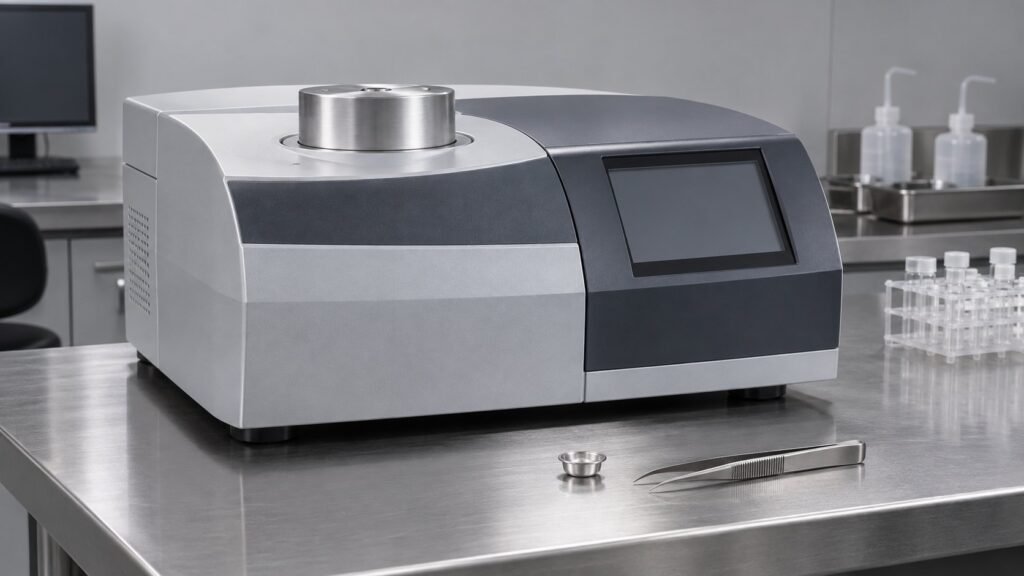
DSC Meaning: Conventional or Fast Scanning?
 testDSC.Admin
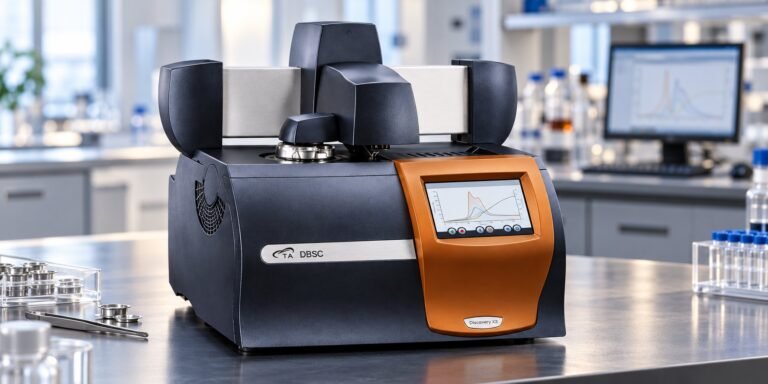
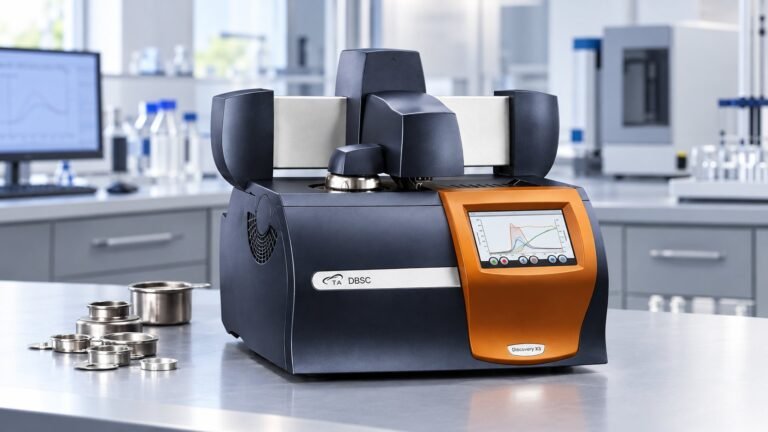
The dsc meaning is Differential Scanning Calorimetry—a thermal-analysis measurement of the heat-flow difference between a sample and a reference as temperature or time changes, helping you identify transition temperatures and enthalpies while leaving open whether the result came from conventional DSC or fast scanning calorimetry.
That missing boundary matters when you compare a supplier’s result with your own. Full Form of DSC in Calorimetry supplies the acronym, while Chemistry Dictionary explains the sample-versus-reference measurement. Neither definition establishes the instrument class, specimen scale, or scan rate that controls whether two curves are comparable.
What does the dsc meaning leave out?
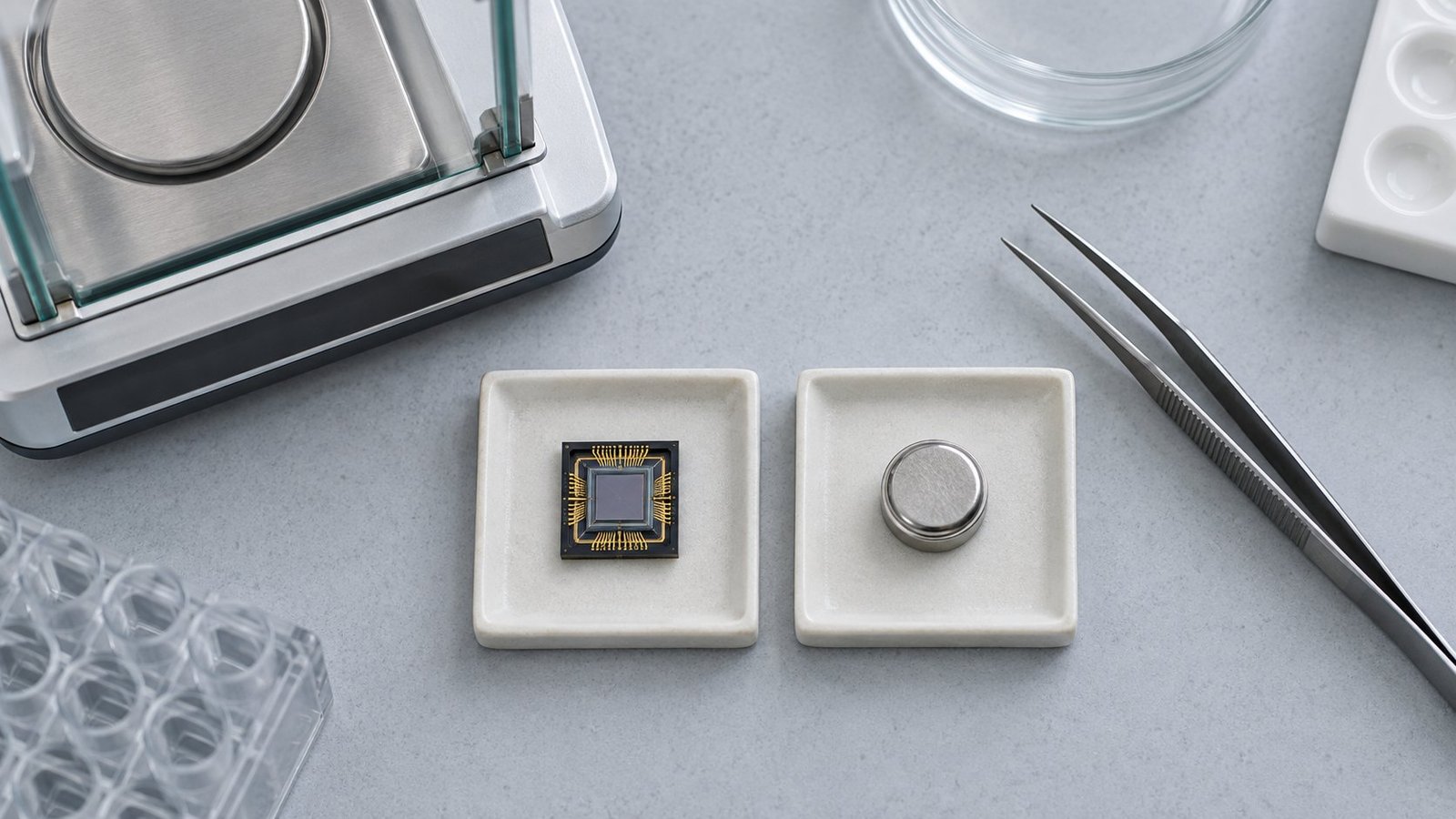
The dsc meaning leaves out the method boundary: conventional DSC and FSC are different instrument classes with different specimen sizes and scan-rate ranges. The practical failure mode is comparing conventional DSC with FSC as if they were interchangeable.
The trigger is an unspecified instrument class or scan rate. A report that says only DSC can conceal whether the sample was measured in a pan with a milligram-scale specimen or directly on a microfabricated chip with a sub-microgram specimen. Specify both before you compare melting or crystallization data.
What does ISO 11357-3:2025 cover?
ISO 11357-3:2025, Clause 1, is the fourth edition and covers melting and crystallization temperatures and enthalpies in crystalline or partially crystalline plastics using conventional DSC. It explicitly excludes fast DSC under ISO 23976.
The ISO 11357-3:2025 page identifies the standard as Edition 4, published in May 2025. That scope affects commissioning: a request for ISO 11357-3:2025 should identify conventional DSC, not simply any instrument that reports heat flow.
How does fast scanning calorimetry differ?
Fast scanning calorimetry uses MEMS chip calorimetry with open specimen geometry. ISO 23976:2021 describes specimens with masses not greater than 1 µg placed directly on active measurement areas, with scanning rates in the order of several thousand K/s.
The ISO 23976:2021 Fast Differential Scanning Calorimetry page records the standard as reviewed and confirmed in 2026, so it remains current. Its very small specimens and open sensor layout target fast kinetic effects that a conventional milligram-scale test may not resolve in the same way.
| Method | Instrument and specimen | Rate or scale | Use when |
|---|---|---|---|
| Conventional DSC | Pan or crucible geometry with a milligram-scale specimen | 10 °C/min is a common example; report the actual rate | You need melting or crystallization temperatures and enthalpies under ISO 11357-3:2025 |
| Fast scanning calorimetry | Open MEMS chip sensor with no closed crucible or oven geometry | Specimen mass not greater than 1 µg; rates can reach several thousand K/s | You need to study fast polymer kinetics, rapid crystallization, or overlapping thermal effects |
ISO 23976:2021 notes that lower FSC rates can overlap higher conventional DSC rates. That overlap does not make the methods identical. Geometry, specimen mass, thermal gradients, calibration, and the time available for a transition still affect the curve.
See also: What is Differential Scanning Calorimetry (DSC)?
Why is a 10 °C/min result not equivalent to an FSC result?
A conventional 10 °C/min result cannot be assumed equivalent to a fast-scan result because kinetics, thermal gradients, peak temperature, and peak area can all change with instrument class and scan rate.
- Kinetics change because the material has less time to reorganize, crystallize, cure, or decompose at a higher rate.
- Thermal gradients change because specimen thickness, mass, sensor geometry, and heat-transfer paths are different.
- Peak temperature can shift when the transition does not remain in thermal equilibrium with the programmed temperature.
- Peak area and calculated enthalpy can change when overlapping events separate, merge, or respond differently to the scan rate.
The result is method-dependent data, not a universal material constant. Compare results only after confirming the instrument class, specimen geometry, sample mass, purge conditions, scan rate, and reported transition definition.
What must an anonymized TestDSC result contain?
Require an anonymized TestDSC result that removes customer and sample identifiers but retains the actual measurement details. If a certificate omits one of these fields, use the Frequently Asked Questions page to clarify the reporting requirement before comparing data.
- Identify the instrument class and actual instrument model as recorded in the run file. Failure mode: a result labeled only DSC hides whether the test was conventional DSC or FSC.
- Record the pan or crucible designation and sample mass in mg. Failure mode: an unspecified container or mass prevents you from assessing heat transfer and normalization.
- Record the purge gas, flow in mL/min, and scan rate in °C/min. Failure mode: an unspecified gas, flow, or rate makes the thermal history incomplete.
- Report the measured melting or crystallization temperature in °C and enthalpy in J/g. Failure mode: a curve without defined peak values cannot support a controlled comparison.
Keep the instrument model even in an anonymized report. Keep the pan or crucible designation, sample mass in mg, purge gas and flow in mL/min, scan rate in °C/min, measured temperature in °C, and enthalpy in J/g. These fields let you identify whether two results belong to the same method class.
See also: DSC Experiment Setup: A Beginner’s Guide to Running Your First Test
What should you know about dsc meaning?
Is ISO 11357-3:2025 a fast DSC method?
No. ISO 11357-3:2025 covers conventional DSC for crystalline or partially crystalline plastics and excludes fast DSC under ISO 23976.
Does the same scan rate make DSC and FSC equivalent?
No. Matching rates does not remove differences in sensor geometry, specimen mass, thermal gradients, or the kinetics observed by each instrument.
What is the shortest useful dsc meaning?
DSC means Differential Scanning Calorimetry, a measurement of heat-flow difference between a sample and reference as temperature or time changes.
How should you commission a DSC test?
Specify conventional DSC or FSC before requesting a result, then require the instrument model, pan or crucible, sample mass, purge conditions, scan rate, transition temperature, and enthalpy. TestDSC provides DSC thermal analysis as a service on customer-supplied samples. To commission a documented method-matched test, request a documented DSC testing service →