DSC Test Recycled Content: What Data Proves
 testDSC.Admin
A purchasing team sends a bag of pellets and one question: the supplier claims 30% post-consumer recycled content — can you confirm it? A DSC test recycled content investigation measures the material you send us. It does not measure where that material came from. Those are two different kinds of evidence, and only one of them lives inside a calorimeter.
This post holds to that single distinction. You get what thermal data from your resin actually supports, what documentation has to carry instead, and how to word the request so the report you receive is useful rather than misleading.
Measurement and provenance are separate questions
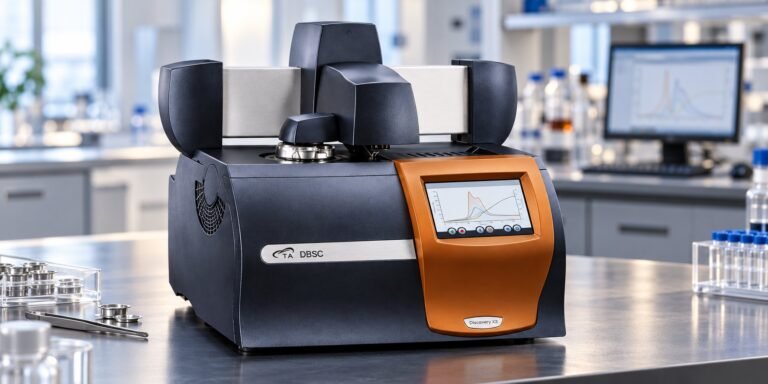
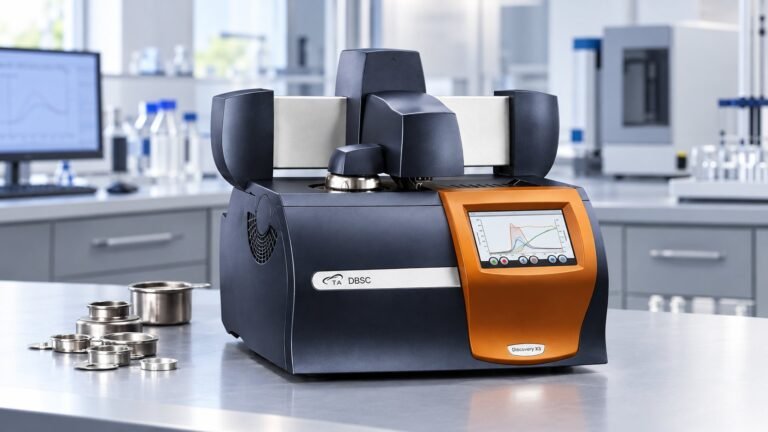
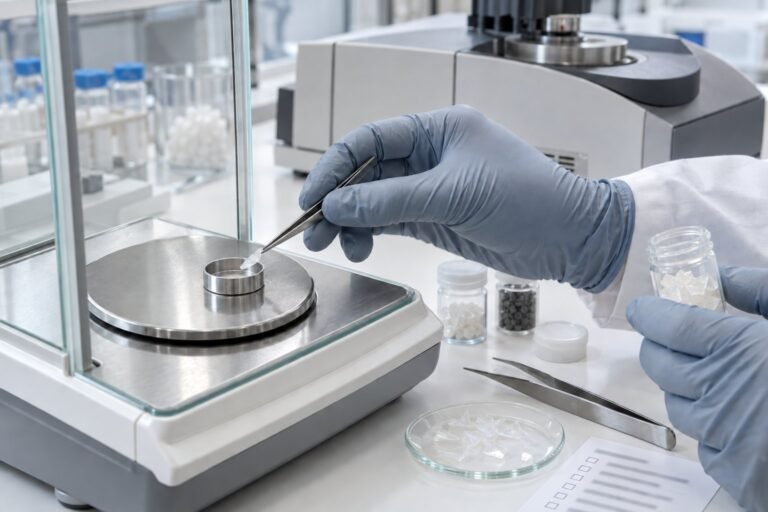
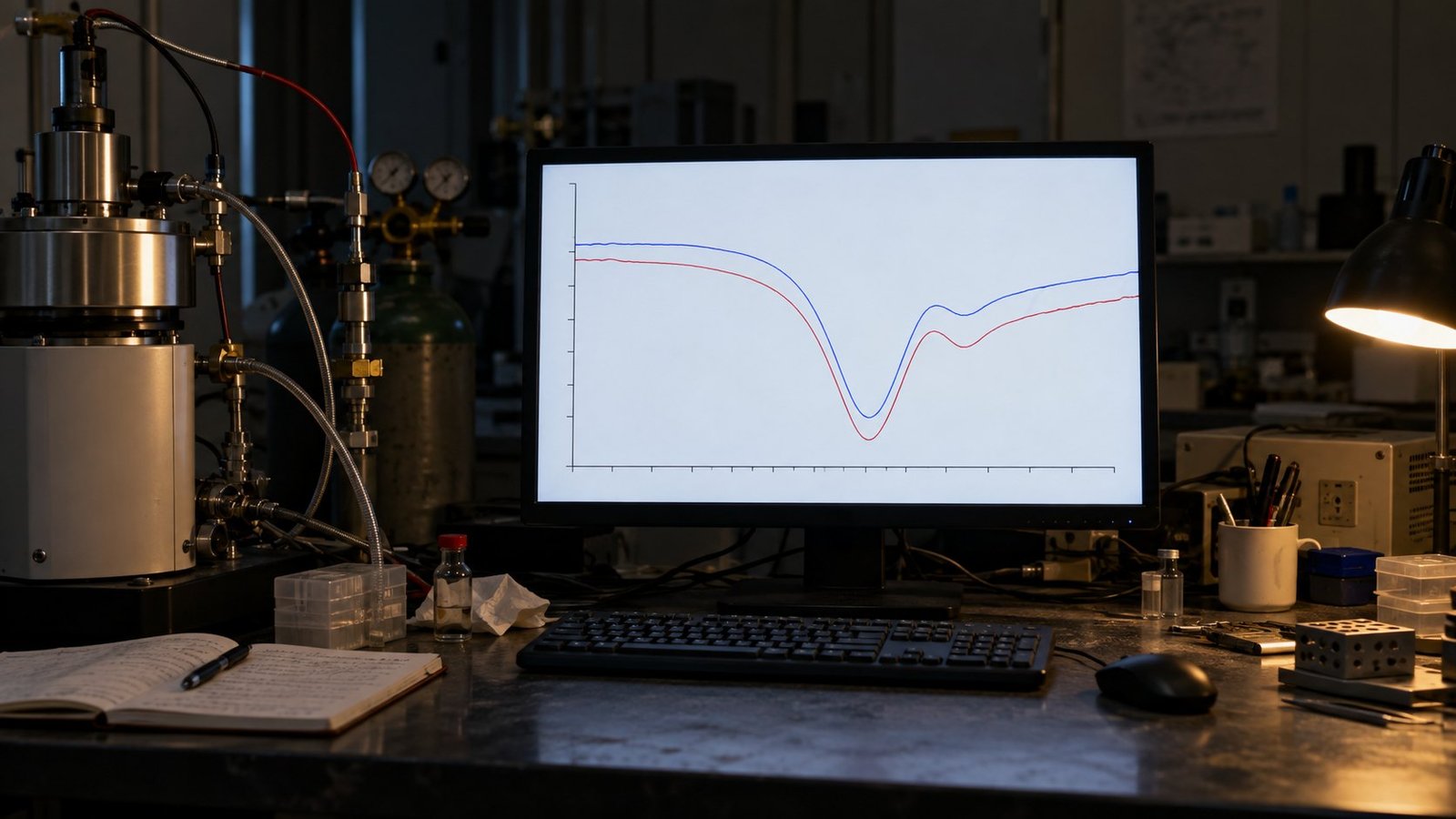
Differential scanning calorimetry reports heat flow in mW against temperature. From a 5 mg to 10 mg portion run at 10 °C/min under ISO 11357, with a 50 mL/min nitrogen purge and two heating scans, you get melting temperature, crystallization temperature, glass transition, and the shape of each transition. Those values describe the polymer’s present state — chain structure, additive load, thermal history.
Recycled content is a claim about history. A polyethylene chain that passed through a consumer bottle and a wash line is the same class of molecule as virgin polyethylene. Reprocessing leaves traces, but those traces record processing, not origin. Virgin resin extruded three times can look thermally similar to a gently handled recovered stream.
What ISO 14021:2026 says about substantiating the claim
ISO 14021:2026 — the third edition of the standard on self-declared environmental claims — adds guidance on chain of custody for claims including recycled content. It is voluntary. No regulator compels your supplier to follow it, and we do not present it as legislation. It describes how a claim should be substantiated, and the substantiation it points to is documentary.
One point in the ISO preview decides your case. It explains that attributed content under mass-balance models need not describe the content of each individual supplied product. A 30% figure can be a correct accounting statement across a plant’s inputs over a period while the specific bag you received holds more, less, or none. No instrument reconciles that, because nothing in the sample records it.
Can DSC verify recycled content, or only contamination?
The April 2026 OECD report Chemical content validation of recycled plastics lists DSC among the techniques for investigating cross-contamination with other polymers. That is a real role and a narrow one. A second endotherm near 160 °C in a nominal polyethylene stream points to polypropylene carried through sorting. We see that pattern often in post-consumer polyolefin lots, and it is the kind of finding a calorimeter reports cleanly.
So, can DSC verify recycled content? Not on thermal data alone. Label that conclusion for what it is — our inference from these two sources, not a sentence either document writes. The OECD report positions DSC as a contamination screen. ISO 14021:2026 places origin in chain-of-custody records. Read together, the measurement tests plausibility and cannot establish provenance.
A recycled plastic thermal fingerprint — the combined melt, crystallization and glass-transition pattern — is a comparison tool. It tells you whether two lots match each other. It does not date either one.
See also: DSC Test Food Packaging: What Thermal Data Tells You
How to scope a DSC test recycled content request
- Collect supplier traceability records first — batch identifiers, input sources, and whatever chain-of-custody or mass-balance documentation exists. This is the evidence that carries the percentage.
- Write one analytical question the instrument can answer. “Does lot B match lot A thermally?” works. “Is this 30% recycled?” does not.
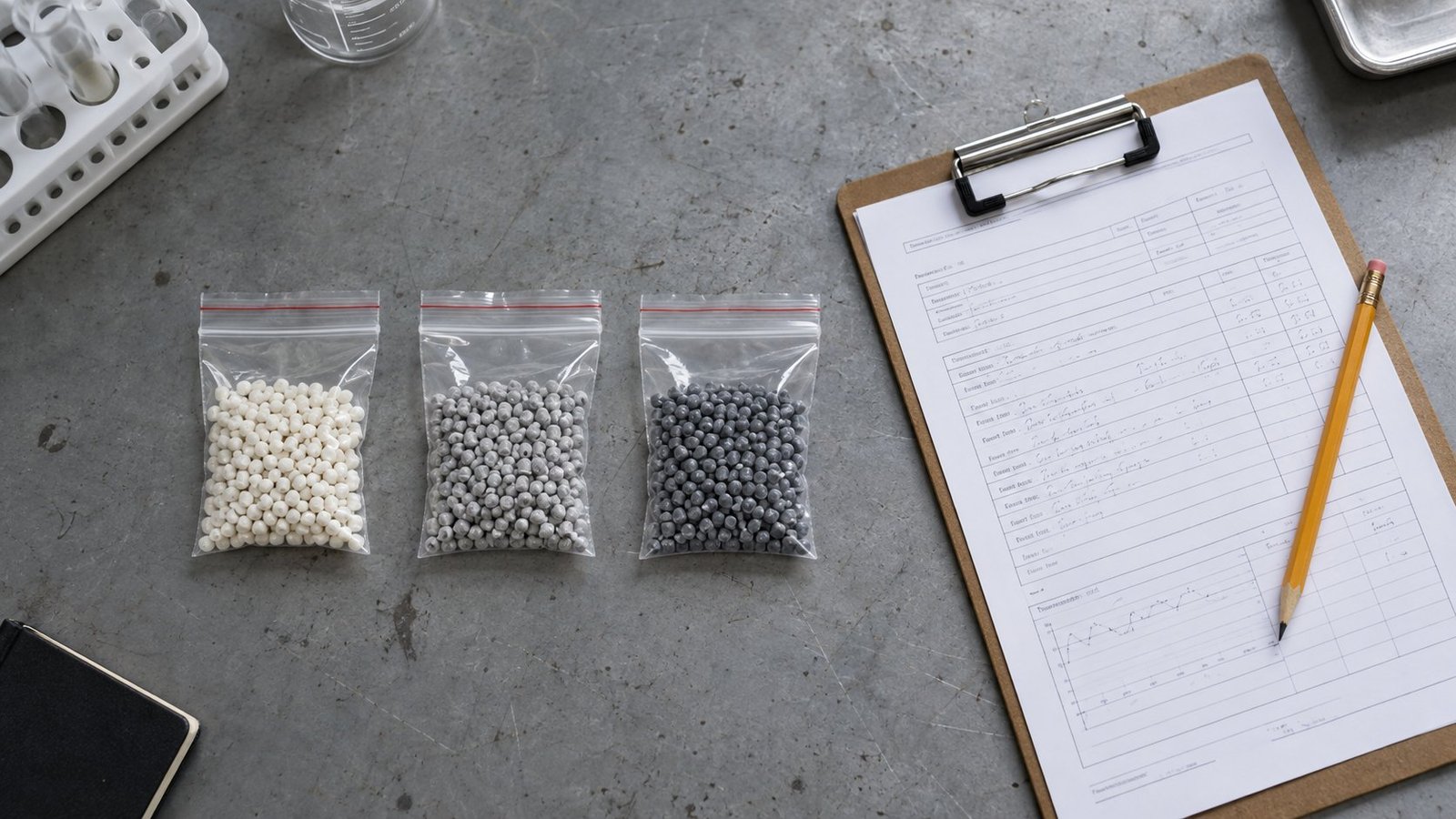
- Send comparison samples. Give a DSC laboratory recycled resin alongside a virgin control of the same grade, and a retained sample of the lot you already accepted.
- Ask for a report that separates observations from claims — measured transitions in one section, interpretation in another, with the limits stated.
Point 3 is the one buyers skip, and it costs them the whole job. A single unknown produces a curve with no reference frame. Two curves produce a difference you can act on.
Comparison samples do the heavy lifting
With a virgin control in hand, a 2 °C to 4 °C shift in peak melting temperature, or a broadened crystallization exotherm, becomes a real signal rather than a number floating on its own. Run both under identical conditions — same pan type, same mass window, same 10 °C/min ramp over −30 °C to +150 °C for polyolefins — or the comparison is worthless. If your concern is processing consistency rather than origin, temperature-scanning viscosity testing often separates lots more sharply than the melt peak does.
Where we stop, and what goes in the report instead
When a requested conclusion exceeds the measurement, we say so in the report rather than softening it. The observations stand on their own; the claim the customer wanted is addressed by naming what the technique cannot resolve. In practice that means a report which states:
- the measured transitions, with temperatures in °C and enthalpies in J/g, under the stated ISO 11357 conditions;
- any secondary transition consistent with a second polymer, described as consistent with — never as proof of a recycled route;
- a plain statement that thermal analysis does not determine the origin or the percentage of recycled material in the sample;
- what additional evidence would answer the original question — traceability records, or a technique better suited to it.
We do not offer recycled-content certification, and we do not quote a detection limit for recycled fraction. Neither exists as a DSC output.
See also: DSC for Composite Materials: Fiber-Reinforced Polymers and Beyond
FAQ
Can a DSC result contradict a supplier’s recycled content claim?
It can raise a flag. If a lot sold as a single-polymer recyclate shows a clear second melting peak, that is inconsistent with a clean stream and worth pursuing with the supplier. It is not a measurement of the claimed percentage.
What do you need from us to run the comparison?
Roughly 20 g of each lot, the grade designation, and the processing history if you know it. Pellets, flake or a molded part all work — we cut a 5 mg to 10 mg portion. General submission details sit in our service FAQ.
Does a thermal fingerprint prove two lots came from the same source?
No. It shows they behave the same thermally. Different sources can converge on the same behavior, and one source can drift across batches.
Discuss your specific sample with us
Bring the actual question, not the label on the bag. If you tell us the grade, the claim you were given, and what decision depends on the answer, we will tell you before any work starts whether DSC addresses it or whether your evidence has to come from traceability records. Contact the TestDSC laboratory to scope a sample-specific DSC test →