DSC Testing for Battery Materials: A Screening Guide
 testDSC.Admin
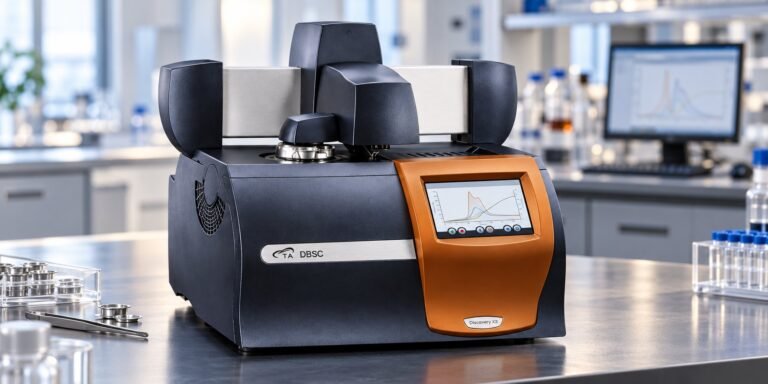
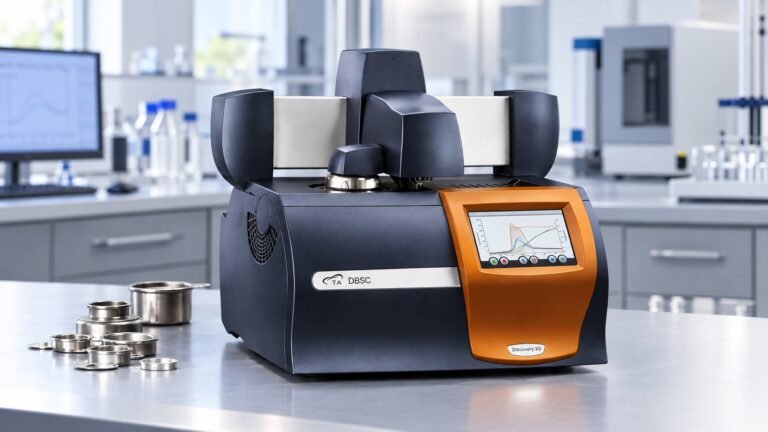
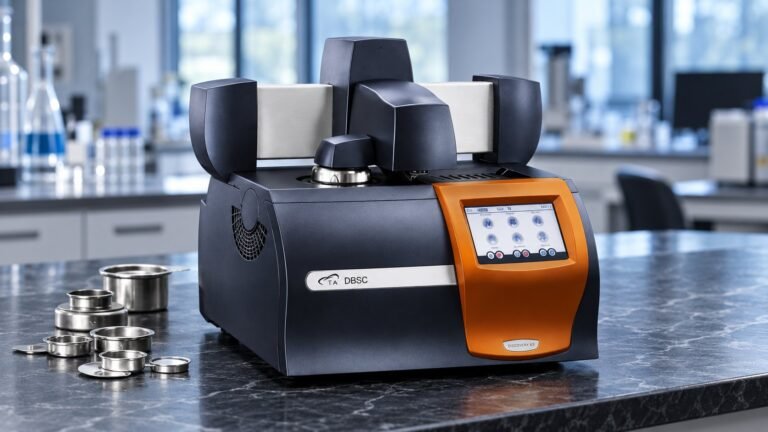
DSC testing for battery materials answers one question early: will this electrolyte or separator survive pack temperatures? Battery makers run differential scanning calorimetry on raw materials, not finished cells. It flags melting, decomposition, and shutdown transitions before you commit to a cell build. That catches problems before expensive cell-level abuse testing.
This is a materials-screening step, not a full pack test. You send us liquid electrolyte or separator film. We run a heating and cooling profile on it. You get onset temperatures, transition enthalpies, and crystallization data back. That tells you which formulation or separator grade is worth carrying forward.

DSC Testing for Battery Materials: Two Separator Melting Events
Separator film sits between the electrodes. Its only job is to block contact while still passing lithium ions. When a cell overheats, that film changes state in two separate steps. Shimadzu’s DSC work on separators pulled from real lithium-ion cells shows this clearly. A first transition appears between 120°C and 150°C. The polyethylene layer melts. The pore structure collapses. The separator shuts down ion flow. That shutdown itself causes a small internal short as the film thins.
A second, more damaging event follows later, typically between 220°C and 250°C. By then the shrunk or fully molten film can no longer keep the electrodes apart. That transition correlates with a serious internal short. From there, thermal runaway follows. Battery separator DSC testing puts exact onset and peak temperatures on both events. It does this for your specific separator grade — polyethylene, polypropylene, or a PE/PP laminate. That’s a measured result, not a supplier datasheet number.
- First transition, 120°C–150°C: polyethylene melts, pores collapse, ion flow shuts down.
- Second transition, 220°C–250°C: the film fully collapses and the electrodes can contact directly.
- Shimadzu’s DSC scans on separators pulled from production cells identified PE-only and PE/PP laminate constructions from melting temperature alone.
See also: DSC Testing Asphalt Binder: What the Scan Shows
Battery Electrolyte Thermal Analysis: Carbonate Mix and Operating Range
Liquid electrolyte is a mix of carbonate solvents and a lithium salt. Each carbonate has its own melting point. Ethylene carbonate, propylene carbonate, dimethyl carbonate, and diethyl carbonate each shift the blend’s low-temperature behavior differently. TA Instruments uses DSC to study that carbonate composition directly. A heating or cooling scan shows melting and crystallization events tied to each component’s ratio. Battery electrolyte thermal analysis run this way gives you a real onset temperature for freezing, not a formulation guess.
That crystallization onset sets a practical floor for the cell. Below it, part of the electrolyte solidifies and ion transport drops sharply. TA Instruments ties this directly to minimum charge and discharge temperature. The cooling curve shows where crystallization begins. The melting curve on reheating confirms it. We run this scan from -30°C to +60°C by default, at 5°C/min or 10°C/min, and widen the range on request. If you also need low-temperature viscosity data on the same electrolyte, our viscosity testing service runs on the same sample plan.
Quantitative DSC and Thermal-Runaway Risk
Melting and shutdown transitions are endothermic — they absorb heat. The events that drive thermal runaway are exothermic instead: they release heat, and that heat drives the next reaction. IOPscience describes quantitative DSC methods that model this exothermic heat release directly. These methods apply to both solid-state and conventional lithium-ion cells. The output is a heat-release curve with a measurable onset temperature and a total energy value in J/g.
That number matters for lithium-ion thermal runaway testing programs upstream of full pack testing. A material with a lower onset temperature and a higher total exotherm is a higher risk contributor. Screening electrolyte and separator samples this way happens before a full cell abuse test. It shows you which formulation change actually lowers the exotherm. It also flags a change that just moves the same energy release a few degrees higher.
See also: DSC Testing for Aerospace Materials: Ensuring Safety and Performance
Handling Volatile Battery Samples at TestDSC
EV and grid-storage programs are pushing more formulations through screening at once. That’s driving demand for EV battery materials testing on raw electrolyte and separator stock, not just finished cells. Handling these samples is different from a standard polymer pellet. Liquid electrolyte reacts with moisture in the air within seconds of exposure. Coated separator film can carry residual solvent that skews a scan if it isn’t sealed properly.
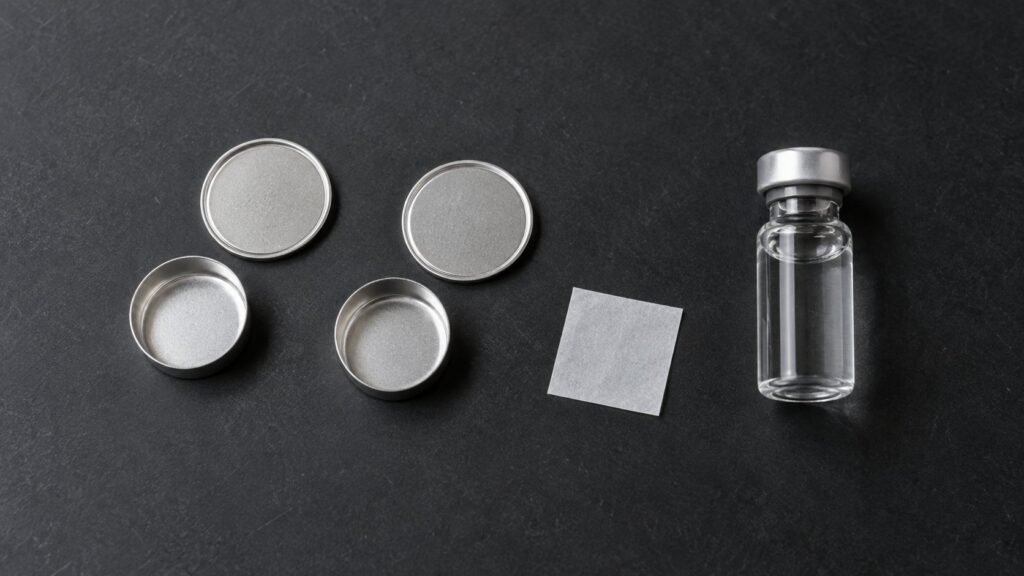
We load electrolyte samples into hermetic pans inside a controlled environment, then seal them before they see open air. Separator coupons get cut to a size that sits flat in the pan. That avoids folds that create a false shoulder on the melting peak. For side-by-side formulation comparisons, ship us small coupons — roughly 5mg to 10mg — or sealed glass vials of electrolyte. We run them on matched heating and cooling profiles, so the resulting DSC curves are directly comparable.

Frequently Asked Questions
Do you test full battery cells or packs?
No. We test raw materials — liquid electrolyte, separator film, and similar samples — supplied to our lab. Full pack and BMS-level thermal-runaway testing is a different service, outside our scope.
How much sample do you need for a separator or electrolyte scan?
A separator coupon of about 5mg to 10mg is enough. For electrolyte, a sealed vial with 1mL to 2mL gives us plenty for repeat runs. We size the pan to your material.
What heating rate do you use for battery materials?
We default to 5°C/min or 10°C/min per ISO 11357. Scans typically run from -30°C to +150°C, wider on request. That range covers separator shutdown near 120°C–150°C and the second collapse near 220°C–250°C in one run.
Can you compare two electrolyte formulations side by side?
Yes. Send both as sealed vials and we run them on matched profiles. Same pan type, same rate, same range — the resulting DSC curves overlay cleanly.
Get Your Battery Materials Screened
DSC testing for battery materials gives you onset temperatures, transition enthalpies, and exotherm data before you build a test cell. Maybe you need battery separator DSC testing on a new laminate. Maybe you need battery electrolyte thermal analysis on a carbonate blend. Either way, we run it as a service on your samples, with matched profiles for direct comparison. Contact our lab team to discuss your sample type, pan requirements, and turnaround →