
What is Differential Scanning Calorimetry (DSC)?
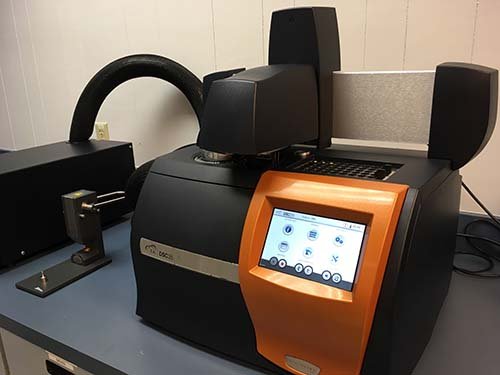
What is Differential Scanning Calorimetry (DSC)?
 testDSC.Admin
What is Differential Scanning Calorimetry (DSC)?
Differential Scanning Calorimetry (DSC) is a widely used thermal analysis technique that measures heat flow associated with phase transitions in materials. DSC analysis allows researchers and engineers to determine important thermodynamic properties such as glass transition temperature (Tg), melting temperature (Tm), crystallization temperature, and specific heat capacity (Cp).
DSC testing is commonly used in polymer science, pharmaceuticals, materials engineering, and cryogenic research to characterize how materials respond to temperature changes.
How DSC Works
In a Differential Scanning Calorimetry experiment, a sample and reference material are heated or cooled at a controlled rate. The DSC instrument measures the difference in heat flow between the sample and reference.
When a material undergoes a phase transition—such as melting or crystallization—additional heat is either absorbed or released. This heat flow difference produces a DSC thermogram, which shows thermal events as peaks or transitions in the heat flow curve.
What Does DSC Measure?
DSC analysis can measure several important material properties:
- Glass transition temperature (Tg)
- Melting temperature (Tm)
- Crystallization temperature (Tc)
- Specific heat capacity (Cp)
- Phase transitions
- Heat flow during thermal events
These measurements provide insight into the thermal stability and phase behavior of materials.
Applications of DSC Analysis
Differential Scanning Calorimetry is used in many scientific and industrial fields:
- Polymer characterization to determine glass transition temperature
- Pharmaceutical analysis to study drug polymorphism
- Cryopreservation research to analyze thermal properties of cryoprotectant solutions
- Energy materials to evaluate phase change materials
- Food science to analyze fat crystallization and melting behavior
DSC Testing Services
Professional DSC testing laboratories use advanced instruments to provide accurate thermal analysis of materials. DSC services typically include Tg measurement, melting point analysis, heat flow detection, and specific heat capacity measurements across a wide temperature range.
