
Understanding Differential Scanning Calorimetry (DSC): A Complete Guide
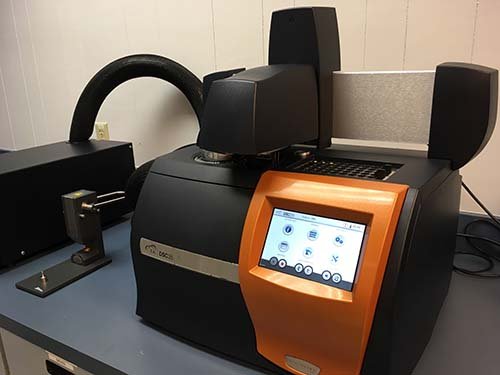
Understanding Differential Scanning Calorimetry (DSC): A Complete Guide
 DSC Test
What Is DSC Testing? A Complete Guide
This DSC testing guide covers Differential Scanning Calorimetry (DSC), one of the most widely used thermal analysis techniques in both research and industrial laboratories around the world. This powerful analytical method measures the difference in heat flow between a sample and a reference material as both are subjected to a controlled temperature program.
At its core, DSC provides valuable thermodynamic and kinetic information about physical and chemical changes that occur in materials when they are heated or cooled. The technique was first developed in the 1960s (learn more about DSC history) and has since become an indispensable tool for scientists and engineers working across numerous fields, from polymer science to pharmaceutical development.
The fundamental principle behind DSC involves placing a small amount of the test material in a specialized pan alongside an empty reference pan. Both pans are then heated at a constant rate, and the instrument precisely measures any differences in heat flow between them. When the sample undergoes a thermal event, such as melting, crystallization, or a chemical reaction, it either absorbs or releases heat differently than the reference, creating a measurable signal that appears as a peak or step in the resulting thermogram.
How Does DSC Testing Work?
The working principle of Differential Scanning Calorimetry relies on the precise measurement of heat flow differences between a sample and an inert reference material. Modern DSC instruments employ sophisticated sensors and electronics to detect even the smallest thermal events with remarkable accuracy.
During a typical DSC experiment, both the sample and reference are heated at a programmed rate, usually between 1 and 20 degrees Celsius per minute. The instrument continuously monitors the temperature of both the sample and reference, adjusting the heat input to maintain equal temperatures. When the sample undergoes a thermal transition, the instrument records the additional heat flow required to maintain temperature equilibrium.
As covered in this DSC testing guide, the resulting data is plotted as heat flow versus temperature, producing what is known as a DSC thermogram or DSC curve. Endothermic events, such as melting, appear as downward peaks on the thermogram, while exothermic events, like crystallization, produce upward peaks. The area under these peaks is directly proportional to the enthalpy change associated with the thermal event.
Heat Flow DSC vs Power Compensation DSC
Two primary types of DSC instruments are used in modern laboratories: heat flux DSC and power compensation DSC. Each operates on slightly different principles, though both produce equivalent results for most applications.
Heat flux DSC instruments use a single furnace that heats both the sample and reference simultaneously. A thermocouple measures the temperature difference between the two, and this signal is converted to heat flow using calibration constants. This design is simpler, more robust, and widely used in industrial quality control settings. This section of our DSC testing guide explains these critical concepts.
Power compensation DSC uses separate heaters for the sample and reference sides. The instrument actively adjusts the power supplied to each heater to maintain both at the same temperature. This approach offers faster response times and is often preferred for detecting subtle thermal events or when precise calorimetric data is needed.
Key Applications of DSC Analysis
The versatility of DSC makes it applicable across a remarkably wide range of industries and research fields. From quality control in manufacturing to cutting-edge materials research, DSC provides critical insights that inform decisions at every stage of product development and production.
Polymer Characterization
In polymer science and engineering, DSC serves as an essential characterization tool that provides a wealth of information about the thermal behavior of plastic and rubber materials. Quality control laboratories in polymer manufacturing facilities run DSC tests on a daily basis to ensure product consistency and compliance with specifications.
The glass transition temperature measurement is one of the most common DSC applications for polymers. This characteristic temperature marks the transition from a hard, glassy state to a softer, rubbery state and is critical for determining the service temperature range of polymer products.
Pharmaceutical Analysis
The pharmaceutical industry has embraced DSC as a critical analytical technique for drug development, formulation, and quality control. Regulatory agencies worldwide recognize DSC data as important supporting evidence for drug approval submissions.
Polymorphism screening represents one of the most significant pharmaceutical applications of DSC. Many drug substances can exist in multiple crystalline forms, each with different physical properties and potentially different therapeutic effects. DSC efficiently detects and distinguishes between different polymorphic forms through their unique melting points and thermal signatures.
Food Science Applications
DSC applications in food science have expanded significantly in recent years, providing valuable insights into the thermal behavior of various food components and finished products. Food scientists and quality control professionals use DSC to optimize processing conditions and ensure product quality.
Fat and oil analysis by DSC reveals melting profiles that are directly related to the texture, mouthfeel, and stability of food products. Chocolate manufacturers, for example, use DSC to monitor cocoa butter crystallization and ensure proper tempering for optimal product quality.
What Can DSC Measure?
DSC instruments are capable of measuring a comprehensive range of thermal properties and events, making the technique one of the most information-rich thermal analysis methods available. The specific measurements obtainable depend on the material being tested and the experimental conditions used.
Phase transitions, including melting, crystallization, and solid-solid transitions, are among the most commonly measured events. DSC provides both the temperature at which these transitions occur and the associated enthalpy change, expressed in joules per gram.
Glass transition temperature measurements reveal the temperature range over which amorphous materials transition from a rigid glassy state to a more mobile rubbery state. This measurement is particularly important for polymers, pharmaceuticals, and food ingredients.
Heat capacity measurements using DSC determine how much energy is required to raise the temperature of a material by one degree. This fundamental thermodynamic property is essential for thermal modeling, process design, and material selection.
Why Choose Professional DSC Testing Services?
Choosing a professional DSC testing laboratory offers numerous advantages over maintaining in-house testing capabilities. Expert service providers invest in state-of-the-art instrumentation, maintain rigorous calibration and quality management systems, and employ experienced analysts who can extract maximum value from every measurement.
Professional laboratories typically offer faster turnaround times for routine measurements, as they have dedicated instruments and trained personnel available to process samples efficiently. This is particularly valuable when time-sensitive decisions depend on DSC results.
The expertise of professional analysts adds significant value beyond the raw data. Experienced DSC analysts can identify subtle thermal events, recognize artifacts, and provide detailed interpretations that help clients make informed decisions about their materials and products.
Cost-effectiveness is another compelling reason to use external DSC services. Purchasing, maintaining, and calibrating DSC equipment requires substantial capital investment, ongoing consumable costs, and regular maintenance. For organizations that need DSC testing but cannot justify dedicated in-house capabilities, outsourcing provides an economical alternative.
Conclusion
Differential Scanning Calorimetry continues to prove its value as an essential analytical technique across diverse industries and research fields. From fundamental materials characterization to quality control and regulatory compliance, DSC provides the thermal analysis data that professionals need to make informed decisions.
As materials become increasingly sophisticated and regulatory requirements continue to evolve, the demand for accurate, reliable DSC testing services will only grow. Whether you are developing new polymers, formulating pharmaceutical products, or ensuring the quality of food ingredients, professional DSC analysis provides the insights you need. We hope this DSC testing guide has provided valuable insights for your analytical needs.
Contact our laboratory today to discuss your DSC testing requirements. Our team of experienced analysts is ready to help you characterize your materials and solve your thermal analysis challenges.

Comment (1)
What Does DSC Measure? Thermal Properties Explained
[…] primary output of DSC is a heat flow vs temperature curve, known as a DSC […]
Comments are closed.