
Choosing a DSC Testing Lab: What to Look For
 DSC Test
Choosing a DSC Testing Lab: What to Look For
Key Factors When Selecting a DSC Testing Laboratory
Selecting the right DSC testing laboratory requires evaluating several key factors beyond just price. Technical capability, accreditation status, industry experience, turnaround time, and the quality of technical support all contribute to the value you receive from your testing investment.
The best testing laboratory for your needs will have instruments suitable for your temperature range and sensitivity requirements, analysts experienced with your specific material type, and quality systems appropriate for your industry’s regulatory environment. A laboratory that specializes in pharmaceutical DSC testing, for example, may not be the best choice for aerospace composite work.
Requesting references from customers in your industry and asking to see example reports before committing to a testing relationship helps ensure that the laboratory meets your expectations for data quality and communication.
Accreditation and Quality Standards
Laboratory accreditation provides independent verification that a testing facility maintains competent staff, calibrated equipment, validated methods, and an effective quality management system. For DSC testing, the most relevant accreditations are ISO 17025 for testing laboratories and ISO 9001 for quality management systems.
ISO 17025 accreditation specifically evaluates technical competence and requires demonstrated proficiency in each accredited test method. Laboratories must participate in proficiency testing programs, maintain measurement traceability, and undergo regular surveillance audits. When regulatory or contractual requirements demand accredited testing, only ISO 17025 accredited results are acceptable.
NADCAP accreditation is additionally required for many aerospace testing applications and imposes even more stringent requirements than ISO 17025 for testing performed on flight-critical materials and components.
ISO 17025 and ISO 9001 Certification
ISO 17025 accredited DSC testing laboratories have demonstrated their technical competence through a rigorous third-party assessment process. The accreditation covers specific test methods and temperature ranges, so verify that the laboratory’s scope of accreditation includes the specific measurements you need.
ISO 9001 certification addresses the overall quality management system but does not evaluate technical competence in specific test methods. While ISO 9001 is valuable, it should not be considered equivalent to ISO 17025 for technical testing services. Many laboratories hold both certifications to address different customer requirements.
Instrument Capabilities and Range
When evaluating a DSC testing laboratory, consider the range and capability of their instruments. Key specifications include temperature range (standard instruments cover minus 90 to 550 degrees Celsius, while specialized instruments extend to minus 180 or plus 700 degrees Celsius), sensitivity, baseline stability, and available cooling options.
Laboratories with multiple DSC instruments can offer faster turnaround and accommodate rush requests more easily. Some laboratories maintain instruments from different manufacturers, which can be valuable for resolving discrepancies or providing comparative data when specified.
Ask whether the laboratory also offers complementary thermal analysis techniques such as TGA, DMA, and TMA. Having access to multiple techniques in a single laboratory simplifies logistics and enables comprehensive material characterization programs.
Understanding DSC Testing Costs
DSC testing costs vary significantly depending on the type of measurement, the number of samples, required standards compliance, and turnaround time. Simple, single-scan measurements may cost relatively little per sample, while complex multi-scan protocols, custom methods, or rush services command premium pricing.
Most laboratories offer volume discounts for recurring testing programs, making it economical to establish ongoing quality control partnerships. Annual testing agreements with guaranteed pricing and priority scheduling provide the best value for customers with regular testing needs.
When comparing prices between laboratories, ensure you are comparing equivalent services. A lower-priced test that does not include proper calibration, standard compliance, or detailed reporting may ultimately cost more through the need for repeat testing or rejected data.
Turnaround Time Expectations
Standard turnaround times for routine DSC measurements typically range from five to ten business days from sample receipt, though this varies by laboratory workload and the complexity of the requested testing. Many laboratories offer expedited services with turnaround times of one to three days at additional cost.
For time-critical applications such as production hold situations or urgent failure investigations, same-day or next-day service may be available at rush pricing. Establishing a relationship with your testing laboratory in advance and communicating your potential need for rush services ensures they can accommodate your urgent requests when they arise.
Request that the laboratory provide a firm turnaround commitment with your quotation and establish clear communication channels for sample tracking and results delivery.
Why Choose TestDSC for Your Testing Needs
TestDSC offers comprehensive DSC testing services backed by experienced analysts, calibrated instrumentation, and a quality system designed to meet the needs of demanding industrial and research clients.
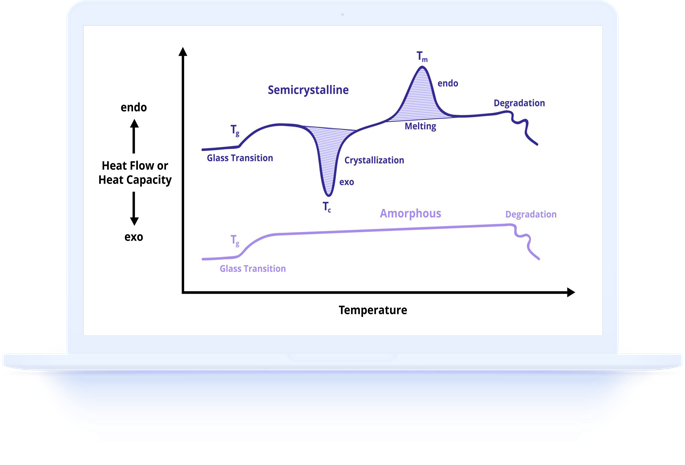
Our laboratory provides the full range of DSC measurements including glass transition temperature, melting point and crystallinity, curing analysis, thermal stability, specific heat capacity, and purity determination. We follow all applicable ASTM and ISO standards and provide detailed reports with complete methodology documentation.
With competitive pricing, flexible turnaround options, and responsive technical support, TestDSC is your partner for all thermal analysis needs. Contact us today for a consultation and quotation tailored to your specific testing requirements.
